University College London, Gold Standard Phantoms, and NVision Quantum Technologies have formed CHARM (C alibration of H yperpolarized met A bolic MR) to address a critical challenge in hyperpolarized MRI: ensuring comparable results across research centers. This technique, using 13 C-labelled imaging agents, holds promise for earlier diagnosis and treatment monitoring in oncology, neurology and cardiology.
Differences in scanner hardware and imaging protocols currently hinder wider clinical use, as data consistency is not guaranteed. The consortium is building a calibration solution to overcome this limitation. “As hyperpolarized metabolic MRI is adopted by more imaging centers, there is a growing need to ensure that measurements are comparable across sites,” explains the project, laying the groundwork for future international clinical studies.
CHARM Consortium Addresses Multi-Site Consistency in Hyperpolarized MRI
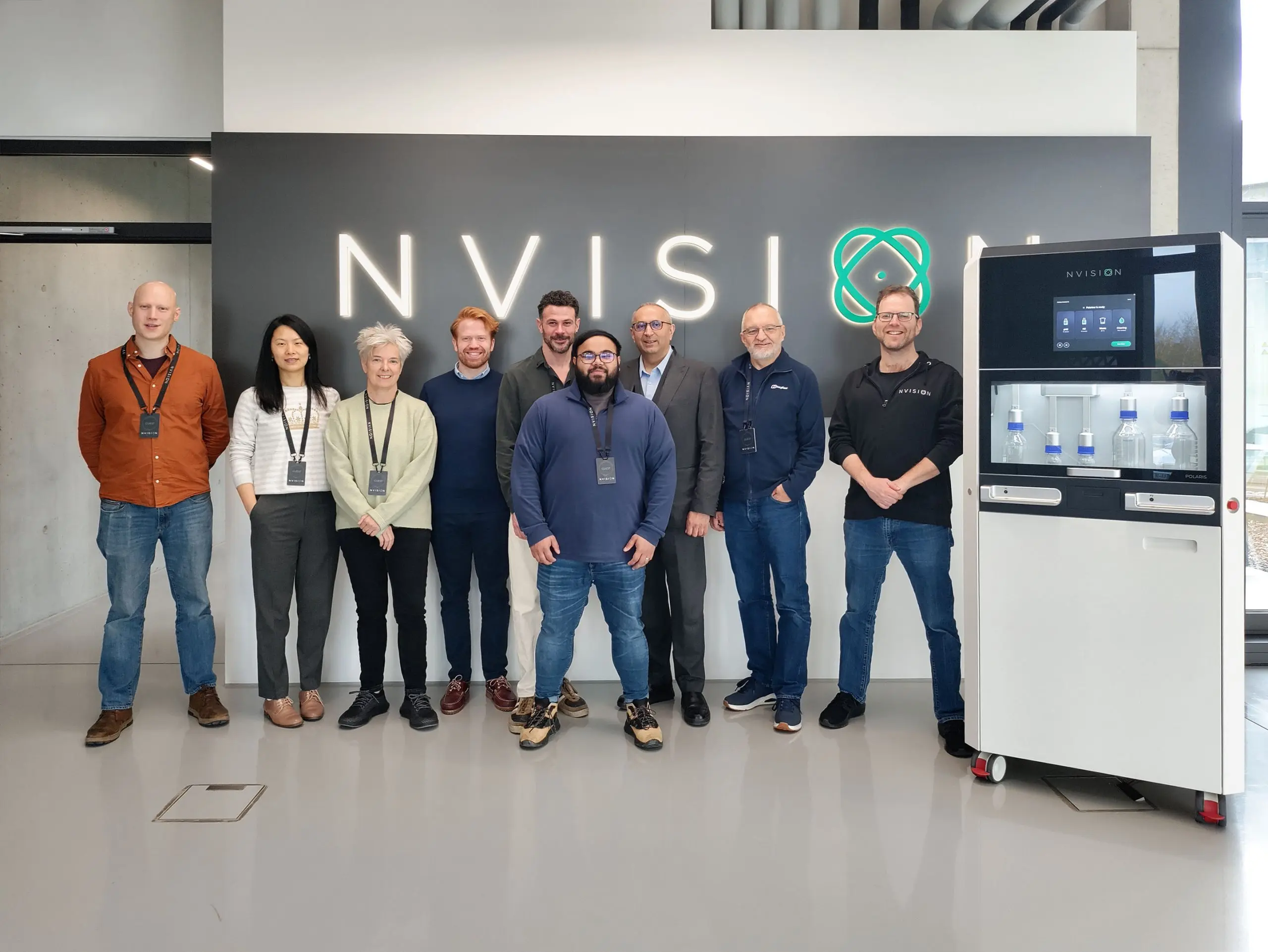
NVision Quantum Technologies’ POLARIS polarizer is central to the consortium’s approach, enabling rapid hyperpolarization of 13 C-labelled imaging agents in just two to three minutes. This speed is critical for practical, frequent scanner calibration alongside routine data acquisition, a challenge that previously limited the feasibility of multi-site metabolic MRI studies. POLARIS generated over 100 hyperpolarized doses in three weeks, demonstrating its capacity to support scalable workflows for calibration purposes, NVision Quantum Technologies says.
The team’s work focuses on creating an end-to-end, vendor-independent calibration solution, encompassing both the production of calibration doses and the analysis of resulting data. The consortium developed the calibration kit and phantom and tested them on a 3T Siemens scanner, where metabolic conversion was detected. Initial work was also carried out on a Philips 3T system.
This phantom, engineered to mimic biological conditions, is a highly reproducible reference object for assessing scanner performance. A custom analysis pipeline has been integrated into NVision’s post-processing software, streamlining data analysis and facilitating collaboration among participating institutions. “Making this practical across imaging centers requires a complete calibration workflow – from easy, rapid and cost-effective production of calibration doses to consistent acquisition and analysis of the resulting data,” the consortium stated.
A standardized set of imaging sequences is also being implemented to further ensure consistency across different MR systems. The consortium’s efforts extend beyond hardware and software. They are also developing Standard Operating Procedures (SOPs) for processing raw scanner data, ensuring a uniform approach to generating calibration data applicable to dynamic metabolic images. The ultimate goal is to establish a reliable and reproducible calibration process, allowing researchers to confidently compare hyperpolarized MRI measurements obtained at different locations and accelerate the translation of this powerful imaging technique into clinical practice.

See today’s quantum computing news on Quantum Zeitgeist for the latest breakthroughs in qubits, hardware, algorithms, and industry deals.