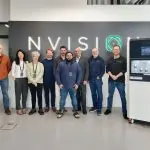
A $600,000 research award from the North Carolina Collaboratory will fund Yosuke Kanai, PhD, of UNC-Chapel Hill’s work applying quantum-mechanical simulations to improve rare earth magnet performance at Vulcan Elements. The partnership unites Kanai’s 25 years of computational materials research with Vulcan’s magnet manufacturing expertise, aiming to bolster both critical defense and commercial technology applications. “This collaboration is a model for the kind of public-private partnerships that this nation needs,” said John Maslin, Vulcan Elements’ CEO, “generating breakthrough technologies and translating them into real-world manufacturing capabilities that deliver for our economy and national security.”
UNC-Chapel Hill Quantum Simulations Enhance Magnet Performance
Vulcan Elements anticipates a substantial increase in magnet performance due to computational work at UNC-Chapel Hill, predicting atomic-level changes. This accelerated development cycle is particularly critical given the escalating demand for these magnets in sectors ranging from electric vehicles to defense systems. “This collaboration with the University of North Carolina at Chapel Hill reflects Vulcan Elements’ commitment to driving magnetics innovation and fostering the American magnetics workforce,” said John Maslin, Vulcan Elements’ CEO.
The project’s scope extends beyond simply improving existing magnet designs. It also addresses the challenge of reducing reliance on foreign supply chains. Currently, China dominates the global rare earth magnet market, controlling up to 98% of the supply.
Vulcan Elements is constructing a 1.1 million-square-foot manufacturing facility in Benson, North Carolina, with an annual capacity of 10,000 metric tons of magnet production, aiming to decouple the American supply chain from overseas dependence. Jeff Warren, PhD, executive director of the NC Collaboratory, emphasized the broader impact of the partnership.
“This partnership is exactly the kind of work the Collaboratory was created to support when we were established by the NC General Assembly—connecting research expertise in our state with industry in order to solve real-world challenges,” Warren stated. “By bringing Dr. Kanai’s computational research together with Vulcan’s synthesis and manufacturing capabilities, we can help advance innovation that has implications well beyond the laboratory.” The collaboration’s dual-use focus, serving both national security and commercial applications, highlights the strategic importance of domestic magnet production and the role of advanced materials research.
This collaboration with the University of North Carolina at Chapel Hill reflects Vulcan Elements’ commitment to driving the next generation of magnetics innovation and fostering the American magnetics workforce.
John Maslin, CEO at Vulcan Elements



See today’s quantum computing news on Quantum Zeitgeist for the latest breakthroughs in qubits, hardware, algorithms, and industry deals.