Researchers from RIKEN, IBM and Cleveland Clinic have completed the most resource-intensive heterogeneous quantum-classical (HQC) computation for quantum chemistry to date, simulating a 12,635-atom system. The workflow decomposed molecules into fragments and used up to 94 qubits on ibm_cleveland and ibm_kobe quantum processors, running 21,006 circuits for over 239 hours and collecting 3.0 x 10^9 measurement outcomes.
This work demonstrates a greater than 40-fold increase in system size and up to a 210-fold improvement in accuracy over previous methods, with HQC matching coupled-cluster (CCSD) accuracy in fragment energies. The team also presented the first HQC protein-ligand binding prediction using an automated workflow for large protein systems.
RIKEN, IBM, and Cleveland Clinic Run Quantum Chemistry on 12,635-Atom System
The simulation of two protein-ligand complexes, containing 11,608 and 12,635 atoms respectively, represents a new scale for heterogeneous quantum-classical (HQC) calculations in quantum chemistry. Fragment electronic configurations were sampled across two 156-qubit quantum processors, ibm_cleveland and ibm_kobe, to achieve this increased complexity. The team used optimized subspace diagonalization on supercomputers Fugaku, Miyabi-G and ROQUO to compute fragment wavefunctions, a process that yielded 72.5% parallel efficiency through scalable distributed linear algebra kernels.
Researchers achieved this by distributing quantum sampling across the two 156-qubit processors, enabling the analysis of larger, more complex systems than previously possible. The team’s approach also demonstrated a mixed-basis set and an automated end-to-end workflow. The team’s success in simulating protein-ligand interactions spanning both dispersion- and electrostatics-dominated regimes highlights the versatility of the new workflow.
“As a result, we cross the 12,000-atom barrier and perform fragment calculations with accuracy higher than previously conducted using HQC methods and matching leading classical WF methods,” the authors state, emphasizing the significance of this advancement. The combination of advanced quantum processors and exascale supercomputing resources was critical to achieving both scale and accuracy, and the team’s work demonstrates the potential of hybrid quantum-classical approaches for tackling complex molecular simulations.
EWF-TrimSQD Embedding Enables 12,635-Atom Protein-Ligand Simulations
This advance surpasses the prior HQC record of 303 atoms, demonstrating a significant expansion in the complexity of molecular systems amenable to this type of simulation. The deviation between HQC and DMRG energies reached 21 mHa for the largest Trp-cage fragment and 0.1 mHa for the largest trypsin fragment, highlighting the precision of the new approach. The researchers present the first HQC protein-ligand binding prediction using a mixed-basis set during calculations on T4-Lysozyme, utilizing 3-21G for the ligand and nearby residues, and STO-3G for the remainder of the system.
ExtSQD and TrimSQD calculations were distributed across 128 GPU nodes, demonstrating the scalability of the workflow and its ability to harness substantial computational resources. As stated in the paper, “As shown in Table II, when these innovations are implemented in an optimal fashion, HQC calculations based on quantum embedding and TrimSQD fragment solutions are possible at 12,000-atom scale.” This represents a leap in the modeling of molecular systems with quantum embedding and HQC fragment solvers, overcoming limitations that previously confined simulations to considerably smaller systems.
Heterogeneous Quantum-Classical Workflow for Fragment Decomposition
This extensive runtime and qubit use demonstrate a significant escalation in the scale of quantum processing applied to complex molecular simulations, pushing the boundaries of what is currently achievable with hybrid quantum-classical approaches. Fragment calculations, critical to the success of this work, were performed using ExtSQD and TrimSQD, distributed across 128 GPU nodes, and achieved 72.5% parallel efficiency with scalable distributed linear algebra kernels. This level of efficiency highlights the importance of optimized classical computational resources in supporting HQC methods, demonstrating that progress isn’t solely dependent on increasing quantum processing power.
The team introduced innovations detailed in sections IV-C1 and IV-C2, which substantially improve the accuracy of the HQC fragment solutions, addressing a key challenge in applying quantum embedding to biomolecular systems. These improvements are essential for achieving both accuracy and realistic timescales in simulations of large molecules.
The EWF fragment calculations exploit the fundamental locality of entanglement in biomolecular systems, partitioning molecules into fragments solved independently with high-level wavefunction (WF) methods while representing the surrounding environment in a simplified, yet systematically improvable, manner. As listed in Table II, the previous “high watermark” for molecular sizes achieved in quantum embedding calculations with HQC fragment solvers was a 303-atom Trp-cage mini-protein, making this work a substantial leap forward.
Protein-Ligand Binding Prediction with Automated HQC Workflow
Supercomputers Fugaku, Miyabi-G, and ROQUO achieved 72.5% parallel efficiency while computing fragment wavefunctions via optimized subspace diagonalization, a key step in simulating complex molecular interactions. This level of performance relied on scalable distributed linear algebra kernels, demonstrating progress in managing the immense computational demands of hybrid quantum-classical (HQC) methods. This workflow addresses critical challenges in memory bandwidth, accelerator usage, and inter-node communication, areas that have previously limited the scalability of quantum embedding and HQC fragment solvers.
Algorithmic advances and software stack improvements were essential for achieving this milestone. The researchers detail innovations in Section IV of their work, including an embarrassingly parallel fragment construction method with O(1)-scaling, and TrimSQD, an HQC fragment calculation technique. The automated framework, described in Section IV-D, streamlines the process from fragment generation to energy reconstruction, significantly reducing manual coordination.
Accuracy and Scalability Challenges in Biomolecular Quantum Chemistry
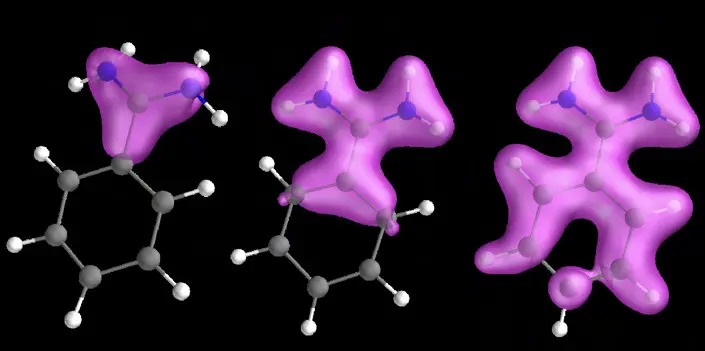
The sheer scale of the computation undertaken to model these biomolecular systems demanded innovations in both algorithm design and software implementation. The work addresses a core limitation in applying quantum embedding methods, the balance between computational cost for fragment construction and the accuracy of the fragment solver itself, by introducing a quantum embedding method with O(1)-scaling and an embarrassingly parallel construction process. This approach allows for the efficient handling of systems exceeding 12,000 atoms, a significant leap beyond previous HQC studies focused on smaller, drug-like molecules like amantadine.
The resulting fragment calculations not only surpassed previous HQC methods in accuracy but also matched the performance of leading classical wavefunction methods, a key validation of the approach. The approximately independent nature of the EWF fragments enabled significant parallelization of their solutions, a critical factor in achieving high performance on large-scale computing infrastructure.
While acknowledging the broad landscape of quantum embedding methods, the researchers focused on EWF due to its systematic improvable nature and potential for scalability, a decision supported by the results obtained. The team’s work demonstrates a systematic improvement in accuracy, exceeding previous methods like ExtSQD, and opens the door to more reliable predictions of protein-ligand binding, an essential process in structure-based drug discovery.
HQC Fragment Solvers Complement Classical Simulations
Exploiting spatial locality within quantum embedding methods allows for a promising path toward scalable quantum-mechanical simulations, and the current work demonstrates a significant advance in that direction through algorithmic and implementation improvements in fragment solutions. The study achieved this by combining a lower-scaling fragment construction with innovations detailed in Table III, enabling simulations of protein-ligand complexes of unprecedented size. Specifically, the team focused on reducing limitations previously confining these simulations to smaller systems, and the results demonstrate a substantial leap in capabilities for modeling molecular systems.
A key element of this progress lies in the hybrid approach, using both quantum and classical computational resources. The implications of this work extend beyond simply increasing the size of simulated systems. By overcoming limitations that previously confined these simulations, the researchers have opened new avenues for exploring complex biomolecular interactions, and the team’s innovations represent a step toward realizing the full potential of quantum computing in the field of molecular modeling.
👉 More information
🗞 Crossing the 12,000-atom barrier with heterogeneous quantum-classical supercomputing: quantum chemistry of protein-ligand complexes
✍️ Kenneth M. Merz, et al.
🧠 ArXiv: https://arxiv.org/pdf/2605.01138



See today’s quantum computing news on Quantum Zeitgeist for the latest breakthroughs in qubits, hardware, algorithms, and industry deals.