Continuous-wave four-photon Hong-Ou-Mandel interference, a process central to photonic quantum information protocols, is now characterised with greater detail than previously possible. A method resolves its complex temporal structure by recording all photon arrival times and mapping those timings onto a three-dimensional coincidence histogram. This approach preserves subtle time correlations often lost when using standard measurement techniques, enabling optimisation of data analysis to balance signal strength against precision in identifying interference effects.
The team refined how to analyse multi-photon interactions; key building blocks for future quantum technologies. By capturing detailed timing information normally lost during measurement, they can better understand continuous-wave light sources used in these systems. The new method records all photon arrival times and maps them onto a three-dimensional display revealing subtle time relationships between photons. Researchers at the Fraunhofer Institute developed an improved method to analyse multi-photon interactions; essential building blocks for future quantum technologies.
They have refined how to characterise continuous-wave four-photon Hong-Ou-Mandel (HOM) interference, a process central to photonic quantum information protocols, with greater detail than previously possible. Imagine dropping two pebbles into a pond; if timed just right, their waves cancel each other out at one point, this is similar to what happens in HOM interference where photons “interfere” and sometimes disappear due to precise timing. This approach preserves delicate temporal correlations often lost when using standard measurement techniques; it’s like setting a camera shutter speed for a very short “snapshot” to capture events happening within that brief moment.
three-dimensional histograms enable post-processed optimization of coincidence windows
compared to previous methods. This advance crossed an important threshold for practical continuous-wave quantum key distribution, requiring sufficient signal strength despite losses within fibre optic networks. Fully mapping relative arrival times onto a three-dimensional histogram enabled post-processing optimisation of coincidence windows; this technique previously faced limitations due to fixed window sizes that discarded valuable timing information.
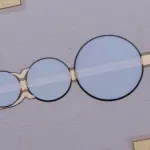
By preserving these subtle time relationships, data analysis can now be tailored to specific experimental needs and surpass the inherent limitations of averaging over static measurement periods. Simultaneously generating long coherence photons essential for continuous wave experiments within microring resonators and detecting events via ultrafast timing measurements contributed significantly to this improvement.
A novel interference mapping technique defines an important quality control standard
Characterising multi-photon interference is vital as scientists strive to build practical photonic quantum networks which rely on entanglement distributed over long distances using devices like quantum repeaters and keys. However, current work establishes this detailed method as a benchmark rather than demonstrating outright superior performance across all source types. While quantifying exactly how much improvement their technique offers compared to existing methods remains open, its value as a new standard against which future improvements can be measured in building photonic quantum networks is significant.
Successfully mapped subtle timing differences within photon interactions, a key step towards optimising entanglement swapping and long distance communication protocols. The new method resolves the timing structure within four-photon Hong-Ou-Mandel interference, a fundamental process in photonic quantum information, by capturing every photon arrival time and charting these events on a three-dimensional display; preserving subtle temporal relationships normally lost during measurement. Detailed analysis allows active optimisation of data processing to balance signal strength against precision when identifying interference effects, moving beyond limitations imposed by fixed coincidence windows used previously.
Establishing this technique as a benchmark will aid development of continuous wave sources for future quantum networks, particularly those relying on entanglement distribution and complex protocols like swapping. This detailed mapping of photon arrival times offers scientists a valuable benchmark for refining entanglement swapping and long distance communication protocols over the coming decade, effectively bringing practical quantum networks closer.
This research successfully mapped the timing structure within four-photon Hong-Ou-Mandel interference using ultrafast detection and a three-dimensional coincidence histogram. By recording all photon arrival times, rather than averaging data with fixed windows, the method preserves temporal correlations critical to continuous-wave processes. The resulting analysis enables optimization of signal strength versus precision in identifying interference effects, providing a new standard for evaluating sources used in photonic quantum network protocols. This detailed mapping aids development of continuous wave sources intended for entanglement distribution and complex communication protocols.
👉 More information
🗞 Looking Beyond Visibility: Resolving the Temporal Structure of Continuous-Wave Four-Photon Hong-Ou-Mandel Interference
✍️ Sabine Häussler, Meritxell Cabrejo-Ponce, Ana Maria Torres, Karen Lozano-Mendéz and Fabian Steinlechner (Fraunhofer Institute for Applied Optics and Precision Engineering); Baghdasar Baghdasaryan (Friedrich Schiller University)
🧠 ArXiv: https://arxiv.org/abs/2610.21909

See today’s quantum computing news on Quantum Zeitgeist for the latest breakthroughs in qubits, hardware, algorithms, and industry deals.