
Researchers from the High Magnetic Field Laboratory of the Hefei Institutes of Physical Science of the Chinese Academy of Sciences, collaborating with Hong Kong University of Science and Technology, have identified a previously overlooked phenomenon within odd-parity magnets. This finding reveals that these magnetic systems exhibit momentum-dependent spin splitting despite lacking a net magnetic moment, potentially enabling topological superconductivity without external magnetic fields.
The team demonstrated that non-relativistic spin splitting and a hidden Zeeman field work together to stabilize superconductivity, creating a protection mechanism similar to that found in Ising superconductivity. According to the researchers, the findings provide a more complete understanding of odd-parity magnet band structures and highlight their potential as a platform for robust, magnetic-field-free topological superconductivity.
Hidden Zeeman Field Stabilizes Odd-Parity Magnet Superconductivity
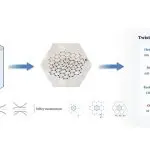
The band structure of odd-parity magnets (OPMs) incorporates a previously unrecognised hidden Zeeman field (HZF), a discovery with implications for creating robust topological superconductivity. This HZF, arising from time-reversal-symmetry breaking, coexists with non-relativistic spin splitting (NSS) within OPMs, offering a pathway to superconductivity independent of external magnetic fields. An analytical model focusing on a f-wave magnet on a triangular lattice revealed that NSS originates from spin-current-loop patterns, while the HZF directly stems from the breaking of time-reversal symmetry.
This allows for the coexistence of conventional s-wave superconductivity with a substantial HZF, extending beyond the Pauli limit, with Zeeman splitting potentially reaching hundreds of millielectronvolts. This mechanism offers a promising route toward fault-tolerant quantum computing by eliminating the sensitivity to disorder often associated with externally-induced superconductivity, and opening new avenues for materials design in the field.

See today’s quantum computing news on Quantum Zeitgeist for the latest breakthroughs in qubits, hardware, algorithms, and industry deals.