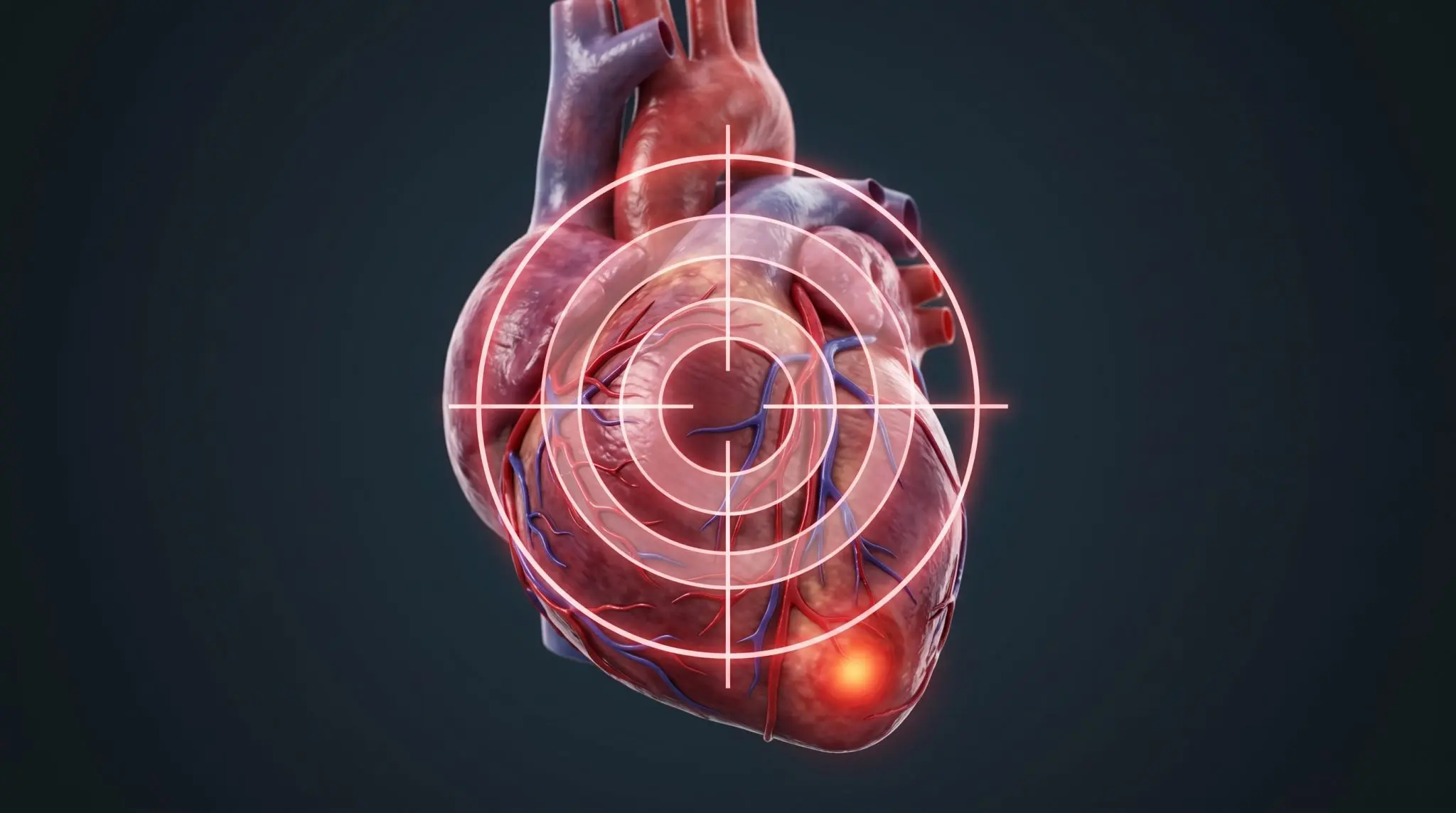
Florida Atlantic University researchers report achieving 90.26% accuracy in predicting heart disease using a novel Quantum Support Vector Machine with Angle Encoding. The study, published in the MDPI AI Journal, which has an impact factor of 6.5, systematically evaluated five quantum feature mapping techniques and four quantum machine learning classifiers using data from 918 patients. “Our research demonstrates that quantum machine learning can be a powerful new tool for healthcare analytics,” said Arslan Munir, Ph.D., professor at FAU, highlighting the potential to model complex clinical data and improve disease prediction.
Quantum Support Vector Machine Achieves 90% Heart Disease Prediction Accuracy
A Quantum Support Vector Machine utilizing angle encoding attained 90.26% accuracy in predicting heart disease, a result exceeding typical performance with conventional machine learning approaches applied to complex clinical datasets. The study details how this quantum model achieved 92.16% sensitivity and 83.42% specificity, alongside an area under the curve (AUC) of 0.93.
This level of predictive capability stems from the model’s ability to effectively represent intricate relationships within patient clinical data. Arslan Munir, Ph.D., and Stella Batalama, Ph.D., dean of the College of Science, highlight the broader implications of this work, with Batalama stating, “This work illustrates the growing potential of quantum computing to contribute to advances in healthcare and medicine.” FAU is actively investing in quantum computing infrastructure and faculty expertise, and Munir’s research exemplifies the intersection of quantum computing, artificial intelligence, and healthcare.
Our research demonstrates that quantum machine learning can serve as a powerful new paradigm for healthcare analytics.
Arslan Munir, Ph



See today’s quantum computing news on Quantum Zeitgeist for the latest breakthroughs in qubits, hardware, algorithms, and industry deals.