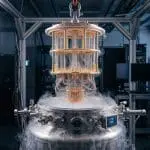
Oak Ridge National Laboratory has deployed Pathfinder, the Department of Energy’s first commercially procured quantum computer, a 20-qubit IQM Radiance system designed to integrate quantum computing with existing high-performance computing, artificial intelligence, and simulation capabilities. The new system expands ORNL’s quantum research potential, supporting advances in areas like error correction and scientific applications crucial for future discovery. This deployment marks a step toward harnessing the power of quantum technology for complex scientific challenges. The lab stated this investment signals a commitment to the rapidly evolving field. Simultaneously, ORNL engaged a different generation of scientists, partnering with Kingston Elementary School to introduce fifth-grade students to nuclear science through hands-on learning about radiation and chain reactions.
IQM Radiance System Advances Quantum-HPC Integration
The newly installed IQM Radiance system, dubbed “Pathfinder” by ORNL researchers, represents a deliberate strategy to fuse quantum computing capabilities with existing high-performance computing infrastructure, artificial intelligence initiatives, and complex simulation environments. This integration aims to create a synergistic environment where quantum processors can accelerate solutions to problems currently intractable for even the most powerful classical supercomputers. The 20-qubit configuration of the Radiance system allows for initial exploration of quantum algorithms and error correction techniques, enabling more substantial quantum computations in the future. The deployment of Pathfinder is expected to bolster ORNL’s research into quantum-HPC integration, specifically focusing on advancements in error correction and the development of scientific applications.
Researchers will be able to leverage the quantum computer to tackle challenges in areas like materials science, drug discovery, and fundamental physics, potentially unlocking breakthroughs that would otherwise remain out of reach. This commitment to integrating quantum resources with established research programs demonstrates a long-term vision for quantum computing at the national laboratory. Beyond core research objectives, ORNL is actively engaging the next generation of scientists through outreach programs. The event utilized hands-on activities and interactive demonstrations to spark curiosity about STEM fields and illustrate the relevance of nuclear science in everyday life; this initiative underscores a broader commitment to public engagement and workforce development within the scientific community, ensuring that future generations are equipped to tackle the challenges and opportunities presented by emerging technologies like quantum computing.
ORNL’s JACC Framework Simplifies Advanced Computing Deployment
Oak Ridge National Laboratory is streamlining access to its advanced computing resources with the development of JACC, a new framework for the Julia programming language. Designed to lower software hurdles, JACC facilitates the deployment of scientific applications on complex systems, promising to accelerate research across multiple disciplines. The JACC framework is intended to complement this hardware investment by providing a more efficient software environment for researchers utilizing these powerful tools. The need for JACC stems from the complexity of modern scientific computing, where software often lags behind hardware capabilities. Researchers frequently encounter significant challenges in adapting applications to take full advantage of advanced architectures, hindering progress and increasing development time. By simplifying the deployment process, JACC aims to unlock the full potential of ORNL’s computing resources, enabling scientists to focus on discovery rather than technical implementation.
The lab highlighted that this framework will support advances in quantum-HPC integration, error correction, and a range of scientific applications. Beyond bolstering computational research, ORNL is actively broadening STEM engagement at the primary school level. This outreach effort underscores a commitment to fostering the next generation of scientists and engineers, connecting fundamental research with educational opportunities. The lab’s multifaceted approach, combining advanced computing frameworks with public engagement, signals a strategic investment in both scientific advancement and workforce development.
See today’s quantum computing news on Quantum Zeitgeist for the latest breakthroughs in qubits, hardware, algorithms, and industry deals.