Researchers are expanding the Data Relativistic Uncertainty (DRU) framework with a theoretical extension and interpretive paradigm for image enhancement. This work models images not as fixed data, but as integrating the concept of wave-particle duality to explain how DRU operates. The team specifically addresses an Explainable AI (XAI) gap within the existing DRU framework, focusing on understanding how the system mitigates illumination bias and noise. By leveraging this physics-to-AI approach, the researchers aim to provide a rigorous explanation for DRU’s robustness, establishing a foundation that enhances the expressivity of enhancement networks in structural fidelity and aesthetic quality.
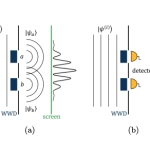
The pursuit of increasingly realistic image enhancement is taking an unexpected turn, moving beyond purely data-driven approaches to incorporate principles of quantum physics. This isn’t about using artificial intelligence; it’s about modeling the underlying physics of light itself, a shift that promises greater robustness and interpretability. Central to this advancement is a theoretical expansion of how images are processed. Instead of treating images as fixed, deterministic states, the team models them as probabilistic entities, drawing a direct parallel to wave-particle duality, a cornerstone of quantum mechanics, and allowing for a more nuanced representation of illumination uncertainty. “By modeling images as probabilistic wave functions rather than deterministic states, the paradigm explicitly integrates wave-particle duality to illustrate the system flow of how DRU leverages the intrinsic physical uncertainty of light,” the researchers explain. This approach offers a pathway to interpretability by mapping the enhancement process to state collapse. The loss function calculation, according to the study, exhibits a structural mapping analogous to the dynamic evolution of a definite state observation or particle-like measurement. This allows the model to calibrate each sample’s contribution based on its probability, effectively mitigating illumination bias and improving robustness against noise. The researchers formalize this process by introducing a network which maps input images into a space. This network outputs Relativistic Probability (RP) values which quantify the physical likelihood of each potential illumination state. They state that uncertainty is not an external parameter, but an intrinsic property of the image itself. By weighting gradients with these RP values, the framework can interpretably calibrate each sample’s contribution to the learning process, leading to more fluid and robust optimization paths. This physics-to-AI paradigm, they believe, bridges the gap between AI explainability and the fundamental principles governing light.
The convergence of physics and artificial intelligence is yielding novel approaches to longstanding challenges in image processing, moving beyond simply improving performance to understanding how these systems arrive at their results. While DRU has demonstrated strong performance, understanding its internal mechanisms, particularly how it handles illumination bias and noise, remains crucial. The team proposes a physics-to-AI paradigm, beginning with a component that maps input images into a space where illumination states coexist. This process is described by the equation Ψ(I) = fθ(I) = {P1, P2,…, Pn}, capturing inherent physical uncertainties previously ignored by deterministic models. The number of illumination states, ‘n’, is determined by the specific enhancement network configuration. Central to this approach is the concept of superposition, formalized as |Φ⟩ = ∑i=1nPi|si⟩ subject to Pi ≥ 0, ∑i=1nPi = 1, allowing the model to consider a range of possibilities before settling on a final interpretation. Probabilities are then assigned to each state, quantifying the physical likelihood of each illumination level. This framework extends to the loss function itself, which exhibits a structural mapping. The total objective ℒ is calculated as ℒ = ∑Pᵢ⋅ℓᵢ, effectively weighting each potential illumination state’s contribution based on its probability. The researchers claim this duality-driven mechanism explicitly models illumination uncertainty, preventing the over- or under-enhancement issues common in traditional deterministic models.
Researchers are developing a new theoretical framework that moves beyond simply improving image enhancement algorithms to fundamentally reimagining how they understand the process of illumination itself. According to the researchers, this allows for a more accurate representation of inherent illumination uncertainty, a factor often overlooked in traditional, deterministic image processing models. This probabilistic representation is formalized mathematically, with the team stating that a single input can be associated with multiple potential illumination levels. The researchers emphasize that this isn’t about adding more data or computational power, but about building a theoretical foundation that connects the mechanics of light to the algorithms designed to process it. The implications extend beyond simply achieving better image enhancement. The loss function calculation itself exhibits a structural mapping analogous to the dynamic evolution of a definite state observation, effectively resolving illumination bias during model optimization. “Crucially, unlike traditional methods optimizing conditional variance via maximum likelihood estimation, the loss function calculation exhibits a structural mapping analogous to the dynamic evolution of a definite state observation, ensuring a more stable and reliable optimization process.” This work, therefore, represents a significant step towards a more physically grounded and interpretable approach to artificial intelligence in image processing.
This work, building upon the Data Relativistic Uncertainty (DRU) framework [6], isn’t merely about refining algorithms; it’s about providing a theoretical expansion that connects the physics of light with artificial intelligence, offering a pathway to more interpretable and robust image processing. Researchers are targeting a critical “Explainable AI (XAI) gap” within DRU. A core element of this advancement is providing a formal theoretical discussion for the Data Relativistic Uncertainty (DRU) framework, treating image restoration as a structural mapping to a probabilistic state collapse. This isn’t simply applying AI techniques; it’s a reimagining of the image enhancement process itself, grounded in fundamental physical principles. This probabilistic representation captures physical uncertainties often ignored by conventional deterministic models. This is formalized as a linear combination: |Φ⟩ = ∑ᵢ¹ⁿ Pᵢ|sᵢ⟩ subject to Pᵢ ≥ 0, ∑ᵢ¹ⁿ Pᵢ = 1. Critically, rather than treating uncertainty as an external parameter, the researchers embed it as an intrinsic property of the state distribution. This approach allows for a novel loss function calculation, exhibiting a structural mapping. The total objective, ℒ, is formulated as ℒ = ∑ Pᵢ⋅ℓᵢ, where I is the input image, sᵢ denotes the i-th potential illumination state, and ℓᵢ represents the task-specific loss. This unified perception-to-aesthetic metric, therefore, provides a crucial analytical tool for quantifying coupled error components and elucidating the theoretical roots of DRU’s robustness.
While artificial intelligence routinely delivers visually stunning image enhancements, the underlying reasons for its success have often remained opaque. This isn’t merely an incremental improvement in algorithms; it’s a reimagining of image processing rooted in wave-particle duality. This study provides a theoretical expansion of the DRU framework. Rather than treating images as fixed data, the researchers model them as probabilistic entities, detailed in their study, allowing for the explicit integration of inherent illumination uncertainty, a dimension previously overlooked in many AI-driven enhancement systems. “By characterizing the behavior of DRU as a general system flow, a physics-to-AI paradigm bridging Wave-Particle Duality and DRU is proposed,” they write, establishing a conceptual link between quantum mechanics and image processing. This theoretical framework isn’t simply an analogy; it provides a theoretical expansion of how DRU operates. The team explains that the Relativistic Probability values aren’t treated as external parameters but as intrinsic properties of the image itself, representing the inherent physical uncertainty. The implications extend beyond improved image quality. This approach, they claim, not only mitigates illumination bias but also maintains robustness against data noise, leading to more robust and reliable image enhancement.
Source: https://arxiv.org/abs/2607.01731

See today’s quantum computing news on Quantum Zeitgeist for the latest breakthroughs in qubits, hardware, algorithms, and industry deals.