Mitsubishi Electric and Quantinuum are initiating a strategic partnership focused on applying quantum computing to complex industrial challenges, beginning with computational fluid dynamics. The companies have signed a memorandum of understanding to jointly explore how Quantinuum’s trapped-ion quantum systems can enhance Mitsubishi Electric’s expertise in areas like factory automation and energy systems. This collaboration aims to identify high-impact use cases and develop hybrid quantum-classical approaches for engineering workflows, acknowledging that early engagement is key to securing long-term advantages as the technology matures. “We are pleased to begin this collaboration with Mitsubishi Electric as we work toward meaningful quantum utility to industrial engineering,” said Rajeeb Hazra, President and CEO of Quantinuum, emphasizing the potential of combining their capabilities to address complex design and simulation hurdles.
Mitsubishi Electric and Quantinuum Establish Quantum Computing Collaboration
The pursuit of practical quantum computing has focused on specific applications as Mitsubishi Electric Corporation and Quantinuum formalized their intent to collaborate with a non-binding memorandum of understanding. This initial stage represents a cautious yet proactive approach to quantum adoption within a major industrial player, acknowledging the technology’s potential while avoiding immediate, large-scale commitment. Instead of broadly exploring quantum possibilities, the partnership will specifically target computational fluid dynamics (CFD) as a primary application, signaling a move beyond theoretical exercises toward solving concrete engineering problems already central to Mitsubishi Electric’s operations. This focus on CFD, a computationally intensive task, suggests an attempt to demonstrate quantum advantage in a domain where current classical methods are demonstrably strained. Mitsubishi Electric will leverage its established expertise in areas like electromagnetic field analysis and thermal fluid simulation, drawing on decades of experience in factory automation, energy systems, and building technologies.
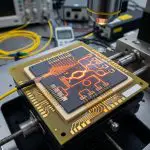
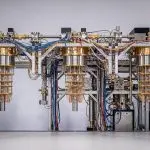
Quantinuum will provide access to its trapped-ion quantum systems, a technology utilizing electrically charged atoms held by electromagnetic fields, and offer specialized guidance in quantum algorithm development. This arrangement highlights Quantinuum’s strength in building and operating high-fidelity quantum hardware, a critical factor for tackling complex industrial simulations. The companies share a belief that early engagement is crucial for securing a competitive edge in the emerging quantum landscape, allowing them to shape use cases, protect intellectual property, and gain access to limited quantum infrastructure. Mikio Takabayashi, Senior General Manager of Mitsubishi Electric’s Information Technology R&D Center, stated, “We are delighted to initiate discussions with Quantinuum to advance a strategic quantum computing partnership under this MOU,” adding that the collaboration aims to evaluate the feasibility of quantum technologies and explore applications that could benefit society and the environment. This MOU establishes a framework for evaluating future collaboration opportunities designed to accelerate innovation and deliver sustained value to global industry.
Quantinuum’s Trapped-Ion Systems Enable Industrial Engineering Exploration
Mitsubishi Electric’s specific focus on computational fluid dynamics (CFD) as an initial application area signals a departure from purely theoretical quantum computing exercises, instead targeting a computationally intensive engineering problem already central to their operations. This emphasis on CFD, which demands substantial processing power for accurate simulations, provides a concrete test case for evaluating the potential of quantum algorithms to outperform classical methods. Access to these high-fidelity systems, alongside expert consultation on quantum algorithm development, is a key component of the collaboration, allowing Mitsubishi Electric to directly assess the capabilities of this specific quantum computing architecture.
We are pleased to begin this collaboration with Mitsubishi Electric as we work toward meaningful quantum utility to industrial engineering. By combining Quantinuum’s leading quantum computing capabilities with Mitsubishi Electric’s deep engineering expertise, we aim to address some of the world’s most complex design and simulation challenges.
Rajeeb Hazra, President and CEO of Quantinuum



See today’s quantum computing news on Quantum Zeitgeist for the latest breakthroughs in qubits, hardware, algorithms, and industry deals.