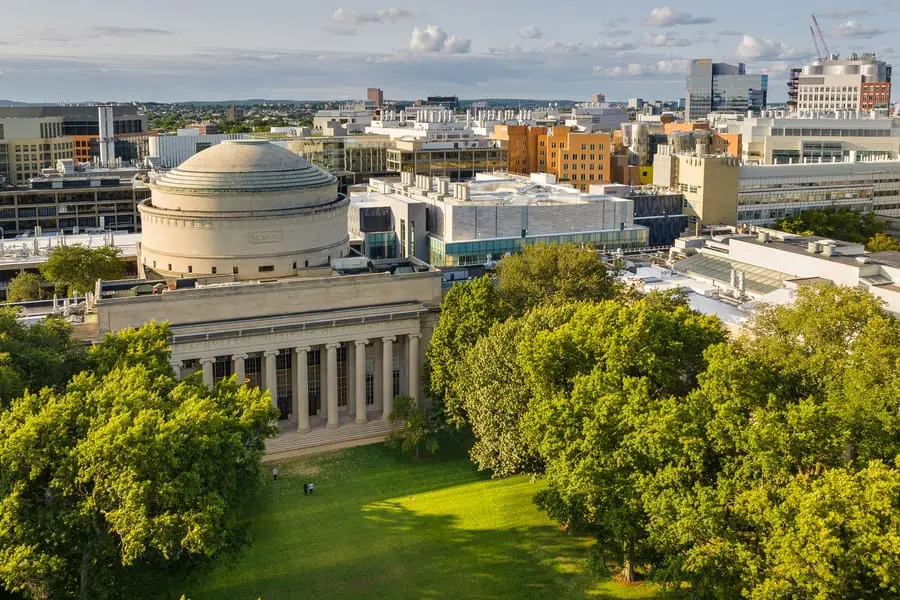
A 25 million investment from the Commonwealth of Massachusetts is launching a new Quantum Systems Laboratory (QSL) at MIT, designed to amplify existing federal funding for quantum research and establish a regional hub for innovation. Construction on the shared-use facility is slated to begin this summer, aiming to create a facility accessible to researchers throughout Massachusetts and beyond. The QSL will focus on translating quantum research into practical applications spanning life sciences and national defense, addressing a critical need for technological advancement in a competitive global landscape. “Greater Boston has the greatest concentration of quantum talent anywhere in the world,” says MIT President Sally Kornbluth, “Through the new Quantum Systems Laboratory, we will help position Massachusetts to lead the next era of quantum technologies.”
25 Million Investment Launches Massachusetts Quantum Systems Laboratory
This substantial commitment aims to position Massachusetts as a leading force in the rapidly evolving field of quantum technologies, extending beyond theoretical exploration into practical applications with significant economic and security implications. The QSL will integrate quantum computers, sensors, and interconnects, creating a comprehensive facility accessible to researchers throughout the region, not solely those affiliated with MIT. The new laboratory’s construction is scheduled to begin this summer, with a focus on providing hands-on access to advanced quantum hardware and specialized experimental capabilities. This shared-use model is central to the QSL’s mission of maximizing broad scientific, workforce, and economic benefits for the public. Researchers will be able to undertake impactful work applying quantum research across domains including life sciences, a 50 billion contributor to the Massachusetts economy, and national defense, another significant economic driver for the state.
The state’s investment will accelerate this work, transforming the lab into a multidisciplinary hub for scientists working on technologies, startup applications, and advancements in both defense and health technologies. Construction of the facility itself is projected to create over 150 full-time construction jobs, with an additional 75 to 100 positions supported across the Commonwealth in related supply chain and professional services. MIT Provost Anantha Chandrakasan notes, “Our region has unparalleled strengths in science-intensive innovations and complex technological breakthroughs that combine engineering, science, and computing,” adding that the QSL “aims to equip Massachusetts with the compute power and integrated platforms needed to lead the coming era of quantum technologies.”
Quantum Systems Laboratory Integrates Computers, Sensors, and Interconnects
The pursuit of practical quantum technologies is rapidly shifting from theoretical exploration to the construction of integrated systems, and a new facility at MIT promises to accelerate this transition. Unlike previous efforts focused on isolated components, the Quantum Systems Laboratory (QSL) is designed to function as a comprehensive facility bringing together quantum computers, sensors, and the crucial interconnects needed to transfer quantum information. This holistic approach addresses a key bottleneck in the field: the ability to not just generate quantum states, but to reliably control, measure, and network them. Construction is slated to begin this summer, transforming Building 39 on the MIT campus into a multidisciplinary hub equipped with modern experimental infrastructure. The facility’s design acknowledges the uniquely demanding requirements of quantum research, which necessitates highly controlled environments to isolate systems and maintain coherence.
Work is already underway to upgrade the building’s physical infrastructure, with the state’s investment serving to enhance these efforts and extend access to scientists throughout the region. The QSL’s focus extends beyond fundamental physics, deliberately targeting applications in both life sciences and national defense, sectors that contribute a combined 50 billion to the Massachusetts economy. This strategic alignment reflects a desire to translate research into tangible benefits, fostering job creation in academic institutions, startups, and related industries.
Ian Waitz, MIT’s vice president for research, explains that the QSL will “introduce modern experimental infrastructure to quantum research at MIT and beyond, allowing us to scale experiments and expand into critical domains in disciplines such as biology and chemistry, where we see enormous innovative potential.” The facility builds on MIT’s prior success with MIT.nano, a shared-use facility that already attracts over a fifth of its users from outside the Institute, and complements the capabilities of the Lincoln Laboratory’s SQUILL Foundry.
With the new Quantum Systems Laboratory, we aim to arm Massachusetts with the compute power and integrated platforms needed to lead the coming era of quantum technologies.”
Anantha Chandrakasan, MIT’s provost
QSL Facility Supports Regional Economic and Workforce Growth
Researchers at MIT are already laying the groundwork for a significant expansion of quantum capabilities, with construction slated to begin this summer on the Quantum Systems Laboratory (QSL). This strategic matching of funds demonstrates a commitment to leveraging resources and accelerating progress in a rapidly evolving field. The economic impact of the QSL extends beyond the laboratory itself; this infusion of employment opportunities arrives during a period of heightened economic awareness and labor market scrutiny, highlighting the facility’s potential to stimulate regional growth. The QSL is expected to nurture the burgeoning quantum startup ecosystem, building on MIT’s already impressive track record of entrepreneurial success. A report by Sloan Professors Edward Roberts and Fiona Murray details how Institute alumni entrepreneurs have created more than 30,000 active companies, employing 4.6 million people and generating annual global revenues of 1.9 trillion. These two sectors currently contribute 50 billion to the Massachusetts economy, and the QSL aims to further strengthen their position through quantum-enabled innovation.
As the new physical home of the MIT Quantum Initiative (or QMIT), the QSL will serve not only as an on-campus incubator, but more broadly, a regional hub to catalyze quantum innovation, growth, and investment in this critical R&D sector for the Commonwealth.”
Ian Waitz, MIT’s vice president for research
MIT.nano Precedent: Shared-Use Model for Quantum Innovation
The establishment of the Quantum Systems Laboratory (QSL) at MIT isn’t simply building another research facility; it’s replicating a successful model for scientific advancement proven by the existing MIT.nano center, aiming to maximize impact beyond the Institute’s walls. The state funding strategically matches existing federal investment in quantum research already underway at MIT, demonstrating a commitment to leveraging existing resources for amplified results. This open access is crucial, as the facility intends to host quantum computers alongside sensors, peripherals, and interconnects, a unique combination intended to be the first of its kind globally. This integrated infrastructure will provide hands-on experience with significant quantum hardware, addressing a key challenge in the field: the ability to move beyond simulation and into tangible experimentation. This builds upon the precedent set by MIT.nano, a facility that supports nanoscale discovery with over 200 tools and instruments, attracting over a fifth of its 1,500 users from outside MIT and fostering a thriving startup ecosystem.
The new QSL will introduce modern experimental infrastructure to quantum research at MIT and beyond, allowing us to scale experiments and expand into critical domains in disciplines such as biology and chemistry, where we see enormous innovative potential,”
Ian Waitz, MIT’s vice president for research



See today’s quantum computing news on Quantum Zeitgeist for the latest breakthroughs in qubits, hardware, algorithms, and industry deals.