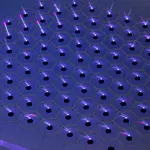
Yale researchers have, after a decade, experimentally verified a prediction about quantum excitons, composite particles behaving unexpectedly within two-dimensional materials. The team observed that excitons, despite being composed of particles with mass, move with energy directly proportional to their momentum, mirroring the behavior of massless photons. This discovery could advance quantum technologies, solar energy and LEDs by enabling faster energy transport.
Qiu’s 2014 Prediction: Exciton Momentum Proportionality in 2D Materials
Ten years after proposing a specific relationship between energy and momentum in excitons, Diana Qiu’s 2014 prediction has been experimentally verified through observations in two-dimensional materials. Researchers observed excitons in monolayer hexagonal boron nitride (hBN) exhibiting behavior typically associated with massless photons, despite being composed of particles possessing mass. This unexpected proportionality, exciton energy increasing directly with momentum, challenges conventional understanding of particle dynamics within these ultra-thin materials.
The team’s success hinged on access to high-quality hBN samples, a material Cong provided, enabling the investigation of exciton behavior. Qiu, assistant professor of materials science, explained that Cong approached the team with these samples of monolayer hexagonal boron nitride, another 2D material. The researchers then focused on measuring linear dispersion in hBN, a key indicator of the predicted proportionality.
This observation confirms that excitons can move with a fast, constant velocity and minimal scattering, potentially facilitating rapid energy transport over considerable distances. Understanding exciton dynamics is essential for determining the energy output of a system or the current from a photovoltaic device. The ability to control and optimize this movement could significantly improve the efficiency of solar cells and light-emitting diodes. The researchers acknowledge the decade-long wait for technological capabilities to align with the theoretical prediction, noting that measuring this phenomenon proved impossible until now.
To determine how much energy you can expect from a system or how much current you can expect from a photovoltaic device, you need to look at how the exciton moves through the material after it’s been excited.
Diana Qiu, assistant professor of materials science
Cong Su’s Q-EELS Technique Verifies Hexagonal Boron Nitride Excitons
The precision of Cong Su’s Q-EELS technique proved critical in observing the unexpected behavior of excitons within monolayer hexagonal boron nitride. Conventional methods lacked the resolution to discern the subtle properties of these quasiparticles, but Q-EELS, or momentum-resolved electron energy-loss spectroscopy, allowed researchers to measure both energy and momentum simultaneously. This capability enabled differentiation between intrinsic material properties and confounding factors like defects or contamination, which was an important step in validating the theoretical prediction.
Developing the high-yield freestanding monolayer hexagonal boron nitride required five years of work in Su’s lab at the Yale Energy Sciences Institute. The material’s unique properties then became apparent during experimentation at Oak Ridge National Laboratory with Steffi Woo. The resulting Q-EELS intensity maps displayed a remarkable similarity to simulated images, confirming that excitons in the material behaved as predicted.
So we decided, ‘OK, now that we have this hBN, why don’t we go ahead and try to measure this linear dispersion in hBN?’?
Qiu
Monolayer hBN Excitons Achieve 100,000 m/s Velocity, Confirming Prediction
This speed, achieved in the two-dimensional material, demonstrates a linear relationship between exciton energy and momentum, a characteristic typically reserved for massless particles like photons. The team initiated the experimentation after Cong Su provided high-quality samples of the hBN material, prompting the question of whether the material would exhibit the predicted behavior. The confirmation relied on a technique called Q-EELS, which allowed precise measurement of the subtle properties of these quasiparticles, differentiating intrinsic material characteristics from confounding factors.
Conventional methods lacked the necessary resolution for such analysis, making this verification particularly challenging until now. The resulting data revealed a striking similarity between observed Q-EELS intensity maps and simulated images, solidifying the confirmation of Qiu’s theoretical framework. The challenge is that, after this prediction, basically nobody was actually able to measure this until now. This unexpected behavior, mass-containing particles moving with constant velocity and minimal scattering, has implications for several technologies.
The ability to transport energy quickly and efficiently could improve the performance of quantum devices, solar cells, and light-emitting diodes. The research team’s success highlights the power of combining theoretical prediction with advanced experimental techniques.


See today’s quantum computing news on Quantum Zeitgeist for the latest breakthroughs in qubits, hardware, algorithms, and industry deals.