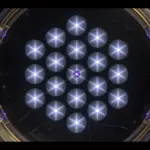
Google Quantum AI researchers have demonstrated a measurable form of quantum contextuality using a superconducting processor with up to 105 qubits, turning a long-debated quantum property into a practical benchmark. The team illustrates this principle with a simple grid puzzle, one where filling in +1 or -1 values simultaneously requires an even and odd number of -1s, making a solution impossible with classical methods.
“Their answers are not looked up in a hidden table written in advance; the table does not exist,” explain Shashwat Kumar and Rodrigo Cortiñas, Research Scientists at Google Quantum AI, Google Research. While a classical strategy allows Alice and Bob to win 8 out of 9 rounds of a game based on this puzzle, the researchers report their quantum processor achieves a 98.3% win rate, exceeding the classical limit and suggesting contextuality may be a fundamental resource powering quantum algorithms.
Quantum Contextuality Solves Impossible Grid Game
The processor achieved a 98.3% win rate in a game predicated on a mathematically impossible grid puzzle, demonstrating a measurable advantage over classical computing strategies. The team’s success isn’t about solving the impossible grid, but using quantum contextuality to avoid needing a solution altogether, allowing Alice and Bob to consistently win rounds of the game. This demonstration hinges on the principle that quantum systems do not possess pre-existing values for properties until measured, a concept that challenged even Albert Einstein.
Unlike classical bits, qubits do not hold a definite value until observed, meaning their response is inherently dependent on the measurement context. This contextuality allows the quantum processor to consistently outperform classical approaches, which are limited by the need for pre-defined values.
The team’s experiment used up to 105 qubits to test this principle, pushing the boundaries of quantum hardware scalability. The game served as a sensitive benchmark for the quantum hardware, revealing subtle errors that standard random-circuit tests often miss. The researchers ran the “magic square game” on their Willow processor, observing a consistent win rate exceeding the 8 out of 9 rounds achievable with classical strategies.
This performance wasn’t merely theoretical; the experiment provided “a number that says: the contextuality is in this machine in this quantity,” according to the team, offering a quantifiable measure of quantum advantage. Maintaining contextuality as the number of qubits increases is important for building practical quantum computers, because quantum effects are fragile, and every added qubit brings noise that can wash them out.
The results showed that contextuality remained robust even as the system scaled to 71 qubits, suggesting that this property could be a fundamental resource for powering future quantum technologies. The team encoded a 2D hidden linear function problem on the processor grid, achieving success probabilities above the 0.5 classical bound.
Magic Square Game Demonstrates 98.3% Quantum Win Rate
Alice and Bob, playing this game, fill a grid with +1 or -1 values based on row and column rules, aiming for matching values at intersections. The team discovered that noise within the system caused approximately one loss for every 60 rounds played, providing a quantifiable measure of error rates. This level of precision is helpful for refining quantum processors and improving their stability. The researchers then quantified the degree of contextuality exhibited by the processor using a Bell-Kochen-Specker inequality, a method related to Bell tests for quantum entanglement.
The resulting measurement, denoted as χ, is calculated from the products of the rows and columns Alice and Bob compute during the game. For example, the calculation of R1, R2 and R3, and C1, C2 and C3, involves multiplying the values in each row and column.
The work involved collaboration with academic partners and relied on the combined efforts of those who built and maintained the hardware, control electronics, cryogenics and software. The team’s findings are visually represented in a diagram of the quantum magic square game, alongside a bar chart comparing the 98.3% hardware win rate against the 88.9% classical bound.
Bell-Kochen-Specker Inequality Measures Contextuality at χ = 5.590
590. This value, derived from the products of rows and columns calculated during the magic square game, demonstrates a level of contextuality exceeding what classical systems can achieve. Specifically, the calculation of χ involves summing the products of rows (R1, R2, R3) and subtracting the products of columns (C1, C2, C3), a process revealing the inherent non-classical nature of the processor’s responses. The ability to measure contextuality with this precision offers a new benchmark for evaluating quantum hardware, one that complements standard random-circuit tests.
These conventional tests often fail to detect subtle errors, while the magic square game and its associated measurement of χ proved sensitive enough to reveal performance limitations. This advantage extends beyond the game itself, impacting the design of shallow.
A 2018 theorem established that certain problems, like finding a hidden linear function, can be solved by constant-depth circuits, a feat impossible for classical circuits of similar depth. The underlying principle driving this efficiency is contextuality, meaning the processor’s responses are not pre-determined but emerge from the measurement process itself. As the researchers explain, the constant depth is important; it signifies that the circuit’s complexity does not increase with the size of the problem, a feat enabled by the contextual nature of the quantum computation.
The team’s findings, published in Science, demonstrate that contextuality isn’t merely a theoretical curiosity but a demonstrable property of their superconducting quantum processors, even as the number of qubits scales up to 105. “Einstein once famously asked whether the moon is there when nobody looks,” the researchers note, drawing a parallel to the fundamental question of whether physical properties exist independently of measurement. Their work suggests that, at least in the quantum realm, the act of measurement fundamentally shapes reality, and this property can be harnessed for computational advantage.
GHZ Parity Game Sustains Quantum Advantage Across 71 Qubits
The ability to consistently outperform classical strategies in quantum tasks extended to 71 qubits using a GHZ parity game, demonstrating sustained quantum advantage on Google’s superconducting hardware. This result, detailed in recent work, demonstrates a measurable form of quantum contextuality, a principle where a system’s properties aren’t predetermined but emerge through measurement, and provides a new benchmark for assessing quantum processor performance. The game itself involves players sharing an entangled state and attempting to predict outcomes, a task where classical approaches are fundamentally limited.
The team’s experiments revealed a quantifiable measure of contextuality, represented by a value of χ, exceeding the classical bound of 4. Their processor achieved χ = 5.590 ± 0.008 through 540 measurements repeated 1,000 times, a result comfortably above the classical limit and only 7% from the theoretical maximum.
This sensitivity makes it a valuable tool for identifying and mitigating sources of noise in quantum hardware. The implications of this work extend beyond game-playing, connecting to a nearly century-old debate about the nature of reality itself. This principle is also linked to “magic states” essential for error-corrected quantum computers, which the team has recently prepared using a technique called magic state cultivation. Measuring contextuality across many qubits, therefore, allows for probing an open question in physics and computer science: what gives quantum computers their edge?



See today’s quantum computing news on Quantum Zeitgeist for the latest breakthroughs in qubits, hardware, algorithms, and industry deals.