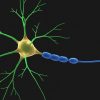
University of Maryland Physics Professor Wolfgang Losert is leading a multi-university research initiative funded by the U.S. Army Research Office to explore a largely unstudied component of the human brain, astrocytes, and their potential to improve artificial intelligence. Current AI systems primarily mimic neurons, but these cells comprise only half of the brain’s total volume; the remaining half is dominated by astrocytes, star-shaped cells whose computational role has remained mysterious until recently. The project, a Multi-University Research Initiative, aims to integrate the principles of these biological mechanisms with traditional computing hardware, potentially creating AI that learns faster and adapts more reliably. “We’re identifying algorithms based on the half of the brain that’s often hidden from view,” explained Losert, who envisions a “hybrid AI” that more closely mirrors human cognitive function.
Astrocytes and Neurons: Biological Basis for Hybrid AI
Astrocytes, constituting roughly half of all cells within the human brain, are becoming a critical focus for artificial intelligence research. For decades, AI development has prioritized mimicking neuronal function while largely overlooking these star-shaped glial cells. Wolfgang Losert’s team is not simply attempting to replicate neuronal networks; they are investigating how astrocytes contribute to cognitive processes like learning, memory, and adaptation.
Initial explorations, published in Neurocomputing, introduced a hybrid AI network integrating artificial neurons and astrocytes, revealing a crucial ratio for optimal performance. When the team experimented with the proportions of astrocytes and neurons, they discovered that the fastest-learning networks had roughly twice as many astrocytes as neurons, a ratio that closely echoes estimates of the actual astrocyte-to-neuron ratio in the human brain. This suggests astrocytes are not passive support cells, but active participants in efficient computation. Further research, detailed in Physical Review Research, modeled brain cell communication incorporating astrocyte-driven rhythms, leading to an algorithm called “rhythmic sharing,” in which connections within an AI network continuously pulse and shift rather than staying fixed. Losert explained that this algorithm demonstrated improved performance in detecting warning signs earlier and more reliably than existing AI tools, even predicting failures in systems like water treatment facilities and jet engines.
‘Rhythmic Sharing’ Algorithm Mimics Brain Cell Communication
Astrocytes, long considered merely supportive cells in the brain, are now emerging as critical components in the pursuit of more sophisticated artificial intelligence. For decades, AI development has focused almost exclusively on replicating neuronal function, overlooking the fact that these electrically active cells comprise only approximately half of the brain’s total cell count. University of Maryland researchers are investigating astrocytes and their potential for AI systems. A new Multi-University Research Initiative (MURI) aims to unlock the mysteries of the brain’s less-understood components. Losert’s team has moved beyond simply modeling neuronal networks, developing a “hybrid AI” approach that integrates artificial neurons with artificial astrocytes to mimic the complex communication patterns observed in biological brains. “This work showed us an ideal structure for brain cells to compute efficiently,” noted Wolfgang Losert, highlighting the importance of this balance. This algorithm demonstrated superior performance in detecting warning signs earlier and more reliably in complex data streams, outperforming existing AI tools in simulations of critical infrastructure failures and cyberattacks, and earning Wolfgang Losert and Hoony Kang the University of Maryland Invention of the Year award.
Training artificial intelligence to mimic the natural neural rhythms of the brain can absolutely revolutionize its ability to be an adaptive and intuitive tool.
This Multi-University Research Initiative (MURI) seeks to integrate astrocytes, star-shaped cells comprising roughly half of all brain cells, into next-generation artificial intelligence systems. Wolfgang Losert’s team isn’t simply mimicking neurons; they are pursuing what he calls “hybrid AI,” a fusion of biological computation principles with traditional computing methods. This algorithm demonstrated a practical advantage over conventional AI, detecting warning signs in simulated environments, like a water treatment facility under cyberattack or failing jet engines, earlier and more reliably.
Astrocytes, contrary to previous beliefs, are much more active participants in how the brain learns, remembers and adapts.
Early Anomaly Detection with Astrocytes in Dynamic Systems
Researchers are now demonstrating that incorporating principles of astrocyte function into AI algorithms can yield systems capable of faster, more reliable detection of subtle shifts in complex data streams. The MURI is funded by the U.S. Army Research Office. Wolfgang Losert’s team discovered that AI networks mirroring the human brain’s approximate two-to-one ratio of astrocytes to neurons, a ratio that closely echoes estimates of the actual astrocyte-to-neuron ratio in the human brain, exhibited significantly enhanced learning capabilities. Testing this algorithm on simulated data from critical infrastructure, including water treatment facilities under cyberattack and jet engines nearing failure, demonstrated that it detected warning signs earlier and more reliably than existing AI tools. The system’s ability to detect disruptions in rhythm before they manifest as overt failures suggests a pathway toward more resilient and adaptive AI. “Systems trained to recognize normal conditions can fail silently when conditions gradually shift,” Wolfgang Losert explained, “But here, we found that this astrocyte-based algorithm is always listening and synchronizing.”
Networks with both neurons and astrocytes learned significantly better than networks made of only one or the other.

See today’s quantum computing news on Quantum Zeitgeist for the latest breakthroughs in qubits, hardware, algorithms, and industry deals.