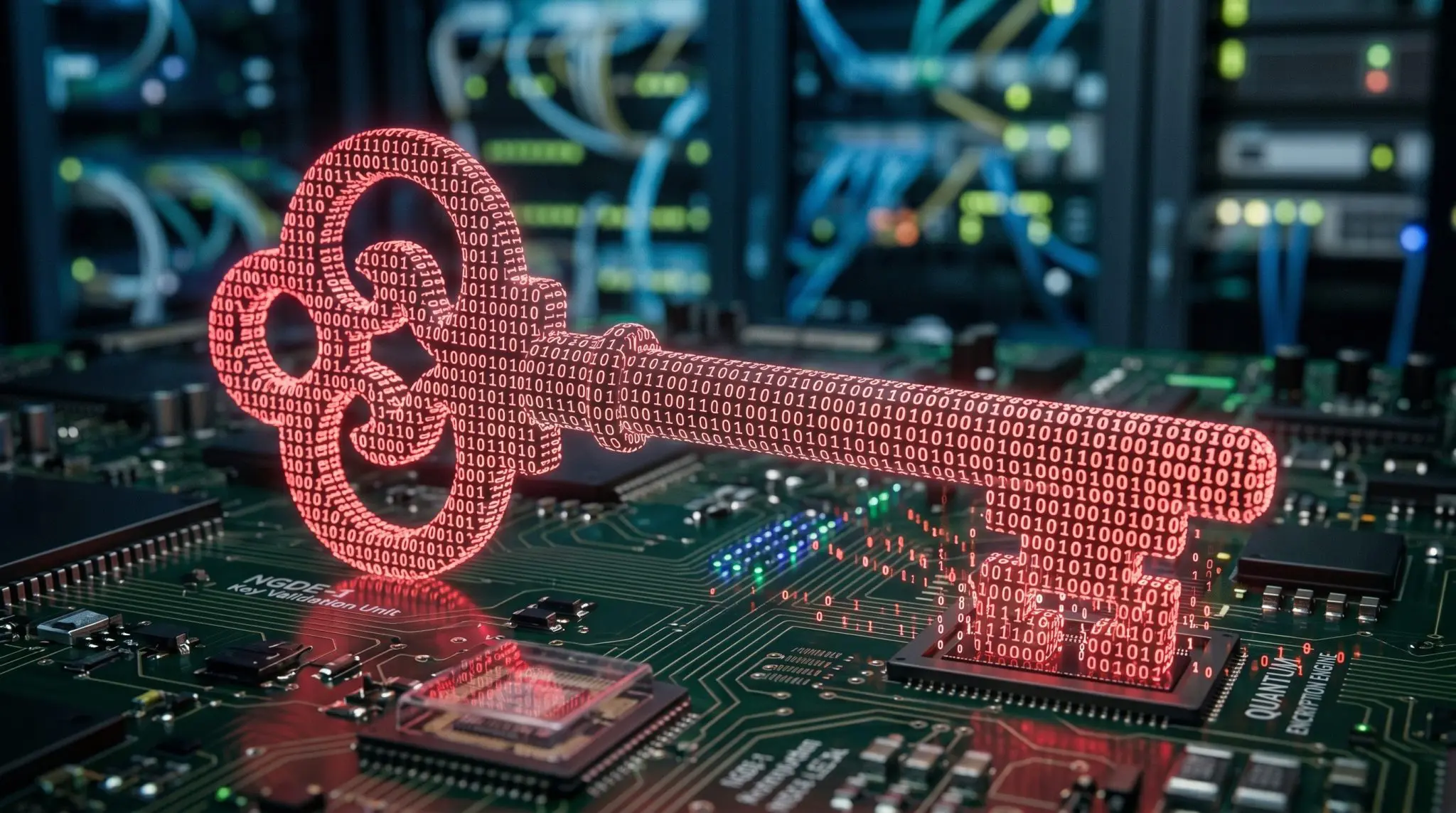
Surfshark has fortified its implementation of the WireGuard VPN protocol against future quantum attacks, addressing a vulnerability that extends beyond encryption to how security keys are created and shared. The company reports that encrypted data could be stolen now and decrypted years later as quantum computing advances, prompting the update now available on iOS and macOS.
“Your encrypted data could be stolen today — and decrypted years from now,” warns Surfshark, explaining the impetus behind securing both key exchange and authentication with the ML-KEM and ML-DSA standards. This move shields users from both “steal now, decrypt later” scenarios and potential real-time interception.
ML-KEM and ML-DSA Secure Post-Quantum WireGuard
The implementation of two cryptography standards, ML-KEM and ML-DSA, now secures key exchange and authentication within Surfshark’s WireGuard protocol. These additions address vulnerabilities exposed by the potential arrival of quantum computing, specifically the risk of both intercepting data in real time and storing encrypted information for future decryption. Securing both key exchange and authentication together is essential for comprehensive protection against these evolving threats.
ML-KEM, used for key exchange, generates a shared key derived from a complex, intentionally noisy multi-dimensional grid known as a lattice. Both the user’s device and the server independently calculate the same key from this lattice, a process designed to be computationally intractable for quantum computers.
ML-DSA, responsible for authentication, employs a similar lattice-based approach to create digital signatures; the server uses its private key and the noisy grid to generate a signature, then transmits its public certificate for verification by the user’s device, Surfshark says. The choice of lattice-based cryptography is deliberate, as it presents a mathematical challenge that currently resists known quantum algorithms. Unlike traditional encryption methods relying on the difficulty of factoring large numbers, lattice problems lack a known quantum shortcut, offering a potential path to long-term security.
This approach differs from simply increasing key lengths in existing algorithms like AES-256, which, while currently considered safe from quantum attacks due to their length, do not address the vulnerability in the key exchange process itself. The most significant weakness, Surfshark explains, is how that encryption key is created and shared.
Currently, the secure WireGuard update is available for users on macOS and iOS platforms, with plans to extend support to additional operating systems in the future. The same dual-standard approach, ML-KEM for key exchange and ML-DSA for authentication, was also applied to Dausos, Surfshark’s custom VPN protocol, which is also available on macOS and offers the same level of quantum-resistant protection, according to the company.
This integration provides a proactive defense against potential future attacks, rather than waiting for widespread quantum computing accessibility, allowing users to safeguard their data’s confidentiality not only in the present but also against potential decryption years down the line, mitigating the risk of long-term data compromise. The company emphasizes that users do not need to wait for the widespread availability of quantum computers to benefit from this enhanced security.

See today’s quantum computing news on Quantum Zeitgeist for the latest breakthroughs in qubits, hardware, algorithms, and industry deals.