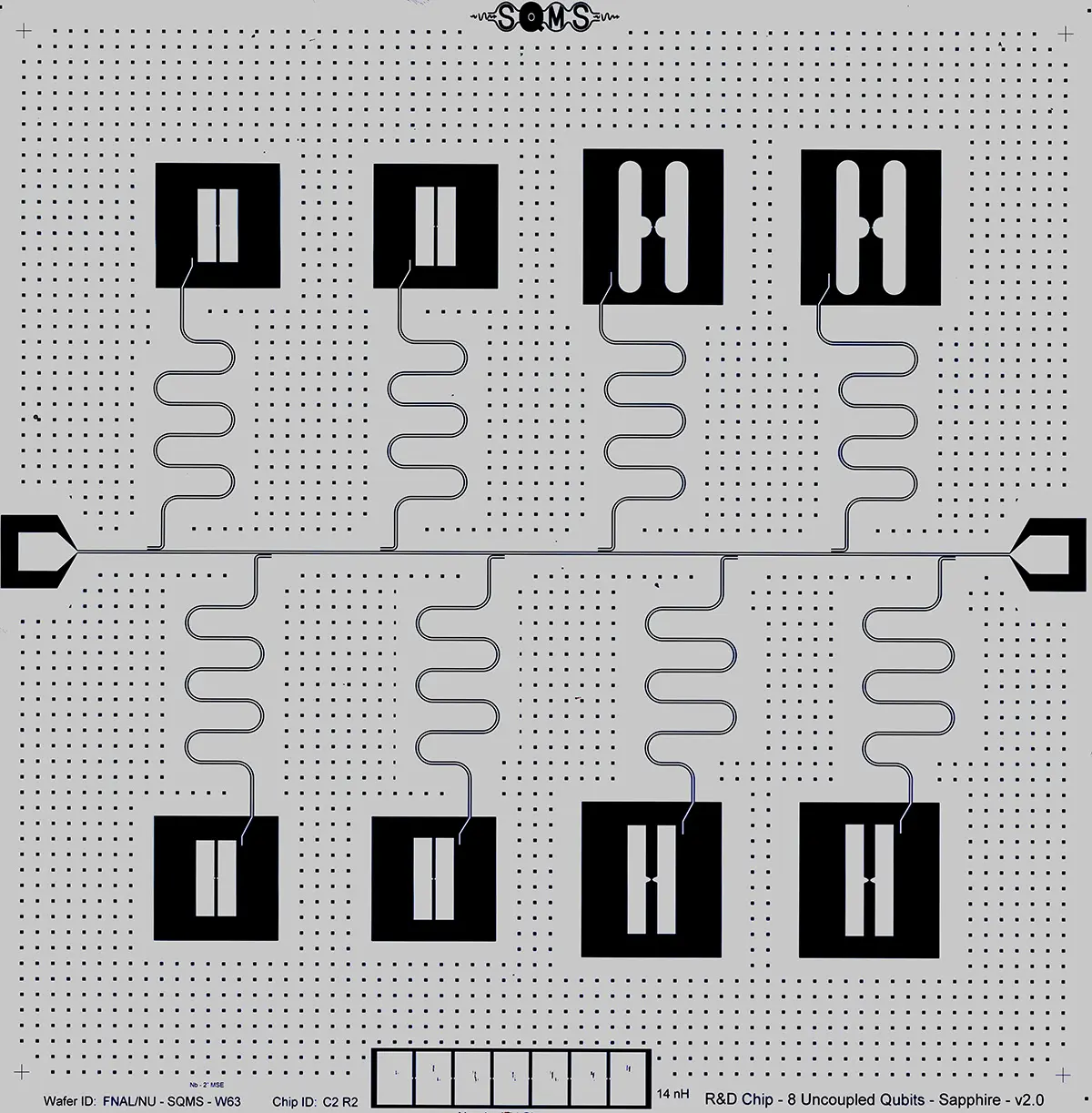
Researchers from the Fermi National Accelerator Laboratory-led SQMS Center have linked the surfaces, interfaces and geometries of qubit materials directly to variations in device performance through a study of 22 superconducting quantum devices. The unusually large collaboration, spanning six institutions and seven characterization techniques, employed a blinded methodology, analyzing materials without knowing which device performed how, to ensure unbiased results.
“Advancing quantum information science is fundamentally tied to our ability to control matter at the atomic level,” according to Bindu Nair, associate director of Basic Energy Science at the U.S. Department of Energy. This research provides a scientifically grounded guide to material defects, essential for building reliable quantum technologies.
SQMS Center Links Material Defects to Qubit Performance
Researchers pinpointed correlations between specific material characteristics and qubit performance through a uniquely unbiased approach, analyzing 22 superconducting quantum devices without prior knowledge of their individual functionalities. The team employed a non-destructive initial assessment phase, using multiple characterization methods to identify features before deploying more invasive techniques, a strategy allowing for an objective decision-making process in linking defects to performance variations. This methodology, rarely seen in qubit research, helped establish reliable connections between material flaws and device behavior.
The study’s design deliberately minimized bias, with characterization teams remaining blind to qubit performance data until after analysis was complete. This allowed for a comprehensive quantification of observed features, ranging from surface roughness to interface quality, and ultimately facilitated the identification of generalizable trends that would have been difficult to discern from examining single devices or employing isolated characterization techniques.
The resulting data provides a roadmap for improving materials processing, fabrication techniques and surface treatments to enhance qubit coherence. Deep expertise in superconducting radiofrequency (SRF) cavities, originally developed for particle accelerators, underpins the SQMS Center’s approach to qubit design and fabrication.
This expertise allows for the creation of SRF-based qubits that achieve among the longest coherence times currently measured in superconducting systems. The center’s work builds on a $125 million investment received in late 2025 to scale its superconducting quantum technology, and follows the February 2026 report of a multimode quantum processor exhibiting coherence lifetimes exceeding 20 milliseconds.
As quantum processors grow in complexity, the performance of the entire system is limited by the weakest qubit, making it essential to minimize performance variations across the chip. “As we scale to larger quantum processors, performance isn’t set by our best qubits — it’s set by our worst ones, since a single low-performance qubit can drag down the fidelity of any computation that relies on it,” researchers explained. The team’s analysis revealed that surfaces, interfaces and geometries of the qubit materials directly influence performance, moving beyond simple defect identification to establish a clear link between material properties and actual device behavior.
The magneto-optical imaging technique used provided important information about the homogeneity of the superconducting state, identifying fabrication defects and material variations before large-scale deployment. “The challenge we gave ourselves was a blind study where we didn’t reveal the energy relaxation lifetimes ( T 1 ) — how quickly an excited quantum state loses energy — of the devices before we started a comprehensive study of the qubits,” a researcher stated.
The findings offer insights into critical design questions, such as optimal sidewall angles for etching and the ideal depth for trenches in qubit fabrication. “We have wondered ourselves: What sidewall angle should we engineer our etch to have? How deep should the trench go? How much should we prioritize these lithographic features?” they added.
As we scale to larger quantum processors, performance isn’t set by our best qubits – it’s set by our worst ones, since a single low-performance qubit can drag down the fidelity of any computation that relies on it.
Andrew Bestwick, chief technology officer at Rigetti
Blind Study Design Minimizes Bias in Device Analysis
The unusually rigorous design of a recent study ensured an unbiased assessment of material defects impacting superconducting qubit performance, a critical step toward improving quantum device reliability. Researchers deliberately withheld energy relaxation lifetime data, a key indicator of qubit quality, from the teams characterizing the physical properties of 22 superconducting quantum devices. This “blind” approach, rarely employed in qubit research, allowed for an objective evaluation of how features like surface oxides, sidewall angles, and trench depths correlated with device function.
This methodology was essential for identifying genuine links between fabrication characteristics and qubit behavior, explained Matt Kramer, distinguished scientist at Ames National Laboratory. “The first tests we did were non-destructive, with many of those methods allowing us to recognize features which we could then look at with higher resolution and employ more invasive methods,” Kramer said.
“This approach allowed an unbiased decision tree to look for features that could be linked to variations in qubit performance.” The collaborative effort, led by the SQMS Center, involved six institutions and used seven distinct characterization techniques, creating a uniquely comprehensive dataset. The analysis revealed that the depth of trenches etched around qubit structures, the angle of their sidewalls and the thickness of surface oxides were consistently associated with variations in qubit performance. These features, observed through techniques like electron microscopy and X-ray photoelectron spectroscopy, provide specific targets for fabrication improvements.
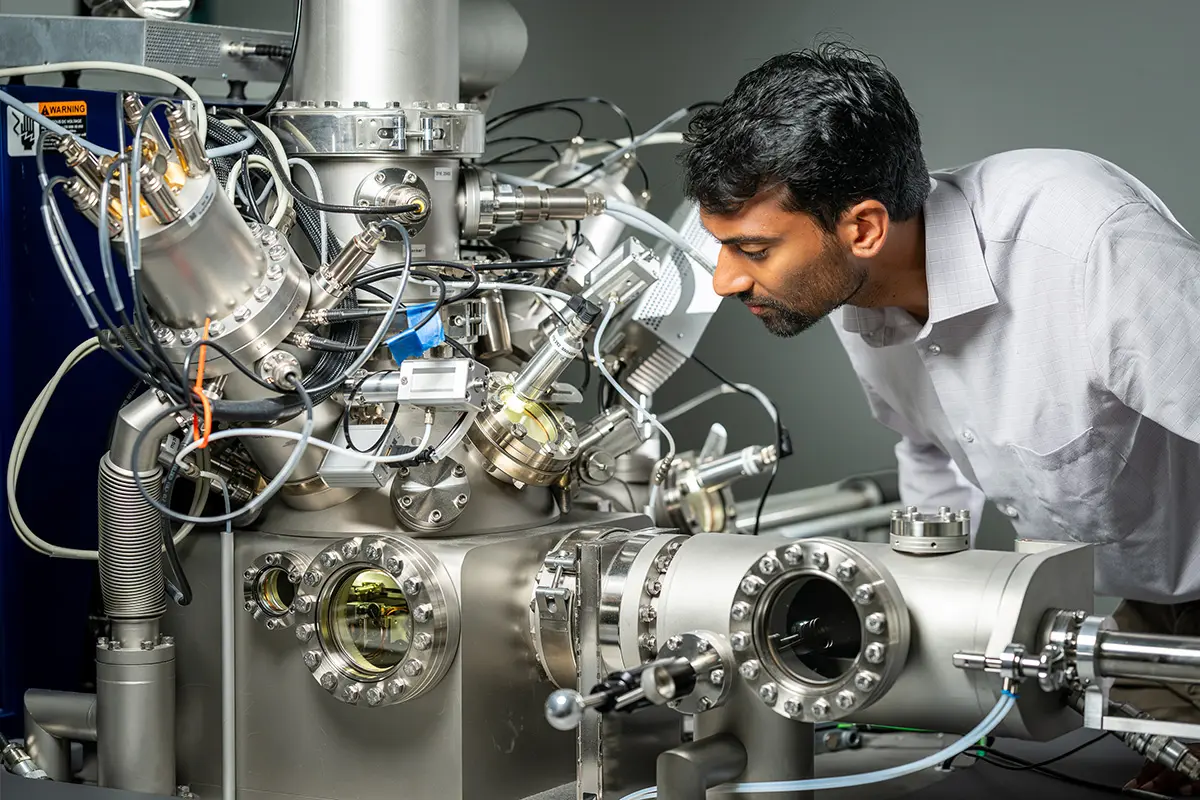
Fermilab’s Materials Science Laboratory, the NUANCE Center at Northwestern University and the Sensitive Instrument Facility at Ames National Laboratory provided the advanced instrumentation necessary for this detailed analysis. The scale of the study, examining 22 devices, was important for identifying generalizable trends, rather than anomalies specific to a single qubit. Researchers emphasize that this study is a foundational step toward building more reliable quantum processors, not a final solution.
While the initial analysis focused on energy relaxation, the team plans to extend the investigation to dephasing and T2 coherence, another critical parameter influencing gate fidelity in multi-qubit systems. “Narrowing that spread across a chip matters just as much as pushing our best qubits further, and that’s exactly the kind of problem this study starts to give us a scientific handle on,” said a researcher.
Seven Characterization Techniques Examine 22 Transmon Qubits
The study’s scale, 22 superconducting transmon qubits, enabled researchers to move beyond identifying potential qubit defects to linking specific material characteristics to actual device behavior, a key step for improving fabrication processes. By systematically comparing high-performing and low-performing devices, the team uncovered correlations between surface and interface properties and qubit coherence, a measure of how long a qubit can maintain its quantum state.
This approach, rarely used in qubit research, involved a blinded materials characterization study where performance data was initially hidden from the materials scientists, minimizing bias in their analysis. The SQMS Center applied techniques honed over two decades of SRF cavity research to the realm of superconducting qubits, using the ability to understand and improve material performance at a fundamental level.
This cross-disciplinary approach involved six institutions, Fermilab, Northwestern University, Rigetti Computing, Ames National Laboratory, the National Institute of Standards and Technology and the National Physical Laboratory, each contributing specialized characterization capabilities. “What makes this work unique is not only the scale of the study, but the breadth of expertise brought together through SQMS,” explained a researcher. Seven distinct characterization techniques were employed, ranging from microscopy to spectroscopy, to probe the qubit materials. Terahertz spectroscopy, performed at Ames National Laboratory, allowed researchers to map defects at the sidewalls of devices and identify geometric anomalies.
Time-of-flight secondary ion mass spectroscopy and X-ray photoelectron spectroscopy, conducted at Fermilab, revealed the chemical composition of surface oxides and their impact on qubit performance. “No single measurement tells the whole story,” said Akshay Murthy, deputy director of the SQMS Center. “The strength of this study is that it brought together many techniques, many devices and many partners.
By combining those data sets, we were able to identify generalizable trends that would be very difficult to see from one device or one characterization method alone.” The study’s findings offer a scientifically grounded basis for refining fabrication processes, enabling manufacturers to target specific defects and improve qubit coherence. The SQMS study, researchers say, gives companies a stronger basis for determining which changes are worth pursuing. This is particularly relevant as quantum processors scale to include more qubits and more complex connections, where maintaining coherence across the entire system becomes increasingly challenging.
Niobium Oxides and Surface Features Impact Coherence
Variations in the thickness of niobium oxide layers, even at the single-nanometer scale, demonstrably affect superconducting qubit performance, according to a recent analysis using seven distinct characterization techniques. This level of detail is important as quantum processors scale, where the performance of the weakest qubit dictates the overall system capability. Researchers analyzed the devices without knowing their individual performance metrics, minimizing bias when correlating material features with coherence times.
This allowed for an unbiased decision tree to identify features linked to qubit performance, beginning with non-destructive methods and escalating to more invasive techniques as needed. Time-of-flight secondary ion mass spectrometry conducted at both Materials Science Laboratory and Northwestern University’s NUANCE Center, pinpointed impurities and locations within the qubits. In February 2026, SQMS reported a multimode quantum processor with a coherence lifetime beyond 20 milliseconds, among the longest ever measured in a superconducting system.
This non-destructive technique allows for rapid assessment of qubit performance before large-scale fabrication, streamlining the development process. The ultimate goal is to establish a roadmap for future materials engineering, enabling the creation of more reliable and high-performing quantum processors.
Correlated Defects Guide Improvements to Qubit Fabrication
Researchers analyzed 22 superconducting quantum devices using seven distinct characterization techniques, a scale of coordinated effort rarely seen in qubit materials science. This approach, detailed in recent findings from the SQMS Center, allows for targeted improvements to fabrication processes, rather than relying on trial-and-error adjustments. To minimize bias, the materials characterization was performed “blinded,” meaning the team analyzing the qubit materials did not know how each device had performed during testing.
Each institution involved, a collaboration spanning six organizations, independently documented observed features and quantified them, only correlating the data with performance metrics after analysis was complete. This rigorous methodology, explained researcher Akshay Murthy, enabled the team to identify generalizable trends that would have been obscured by preconceived notions or limited perspectives.
The team’s focus on nanoscale differences is significant; macroscopic defects like surface scratches showed no correlation to performance in this device set, suggesting that subtle material properties are paramount. The study’s implications extend beyond academic understanding, offering a pathway toward more reproducible qubit fabrication. This roadmap toward reproducible qubits is central to SQMS’s broader mission of establishing the scientific foundations for scalable quantum computing.
“That makes the study more than a retrospective analysis of device performance,” Bestwick said. The ability to rapidly assess qubit performance before large-scale fabrication, using non-destructive techniques like magneto-optical imaging performed at Ames National Laboratory, is a key component of this strategy.
The challenge we gave ourselves was a blind study where we didn’t reveal the energy relaxation lifetimes ( T 1 ) – how quickly an excited quantum state loses energy – of the devices before we started a comprehensive study of the qubits.
Matt Kramer, distinguished scientist at Ames National Laboratory
We have wondered ourselves: What sidewall angle should we engineer our etch to have? How deep should the trench go? How much should we prioritize these lithographic features?
Andrew Bestwick, chief technology officer at Rigetti
This study was based on systematically comparing high-performing versus low-performing devices side-by-side.
Alexander Romanenko, SQMS technology leader
In industry, process changes must be made carefully and in a controlled way to keep fabrication stable and reproducible.
Andrew Bestwick, chief technology officer at Rigetti




See today’s quantum computing news on Quantum Zeitgeist for the latest breakthroughs in qubits, hardware, algorithms, and industry deals.