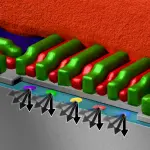
At SLAC National Accelerator Laboratory, scientist Shannon Harvey is tackling one of quantum computing’s biggest hurdles: creating qubits that can be manufactured at scale. Harvey focuses on quantum dots, a type of qubit uniquely suited for mass production, demanding both precision and a creative approach to manipulating information. These aren’t your typical bits of data; manipulating these “zero-dimensional, information-carrying ripples in quantum space” requires a surprising blend of “mental and manual dexterity.” Harvey said that what she loves about working in quantum information is the ability to use today’s technologies to explore nature’s quantum features, something that until recently would have seemed incredible. As a collaborator with the DOE’s Q-NEXT research center, Harvey’s work aims to harness these quantum features for advancements ranging from drug discovery to secure communication.
Quantum Dots as Scalable Qubit Technology
Quantum dots offer a pathway toward practical quantum computing due to their potential for large-scale fabrication, a critical hurdle in realizing functional quantum processors. Harvey’s work centers on confining electrons within these quantum dots, spaces smaller than the electron’s wavelength, forcing them to adopt discrete energy levels that can represent quantum information. This confinement transforms the particle and allows scientists to fine-tune its properties for data storage and transmission. The ability to tune quantum dots, like a radio operating at different frequencies, is a significant benefit, but the true power lies in scalability. “The real selling point of quantum dot qubits is that they’re scalable,” Harvey said, explaining the potential to integrate millions, or even billions, of these qubits onto a single chip. This density is crucial for building a quantum computer capable of tackling complex problems. However, scaling up introduces a significant obstacle: noise.
A chip densely populated with quantum dots is susceptible to interference that disrupts the qubit’s delicate quantum state. “You want to be able to control the qubit’s energy. If there’s some noise that’s causing the energy to fluctuate in time, you’ll lose knowledge of what your qubit is doing, lose control, and then the qubit stops being useful,” Harvey explained. Her research isn’t solely about silencing this noise, but about creating an environment where a large number of quantum dots can operate harmoniously, exchanging data without error. This requires a multidisciplinary approach, drawing on materials science, computer science, and engineering, alongside fundamental physics, and benefits from the collaborative atmosphere at SLAC, where Harvey interacts with researchers across diverse fields, including cosmology.
The real selling point of quantum dot qubits is that they’re scalable.
Shannon Harvey, scientist at SLAC National Accelerator Laboratory
Harvey’s Multidisciplinary Approach to Qubit Fabrication
Shannon Harvey’s work at SLAC National Accelerator Laboratory centers on fabricating quantum dots, a qubit type distinguished by its potential for scalable manufacturing; this focus addresses a core challenge in realizing practical quantum computation. Harvey’s approach isn’t solely about physics, however, but a deliberate integration of diverse scientific disciplines, born from a fascination with the multifaceted nature of research itself. Manipulating qubits, described as “zero-dimensional, information-carrying ripples in quantum space”, demands not only theoretical understanding but also considerable practical skill. Harvey notes the often-overlooked “mental and manual dexterity” required to finesse these dimensionless bits of information, highlighting a creative dimension frequently absent from discussions of quantum research. Driven by a desire to connect with the tangible world, Harvey transitioned from a childhood love of novels to a passion for experimental physics.
This enthusiasm extends to the practical aspects of her work; she combines theoretical problem-solving with hands-on tasks like soldering and welding. As a collaborator with Q-NEXT, a DOE National Quantum Information Science Research Center, Harvey’s team is focused on increasing the density of quantum dots on a chip, aiming for millions or even billions on a surface the size of a drink coaster. However, increasing density introduces a significant hurdle: noise. Harvey’s work isn’t simply about creating qubits, but about creating an environment where they can function reliably. The challenge lies in controlling the qubit’s energy and mitigating fluctuations caused by environmental noise, which can render the qubit useless. She describes the need to create conditions for a large number of quantum dots to operate effectively, investigating factors like optimal spacing, temperature, and connection methods.
This requires collaboration across disciplines, exemplified by her interactions with cosmologists at SLAC’s Millikelvin Facility, demonstrating the benefits of an environment where diverse expertise converges. Harvey’s journey, from a reluctant science student to a dedicated quantum researcher, underscores the importance of curiosity and a willingness to embrace the multifaceted nature of scientific exploration, a pursuit she anticipates enjoying for years to come.
What I love about working in quantum information is that we can use today’s technologies to play with nature’s quantum features, something that until recently would have seemed incredible.
Shannon Harvey, scientist at the U.S. Department of Energy’s (DOE) SLAC National Accelerator Laboratory
Controlling Noise in High-Density Quantum Dot Systems
These quantum dots, envisioned as a mass-producible type of qubit, offer a promising pathway toward building powerful quantum processors, but their very density introduces significant hurdles. Scalability offers advantages in affordability, consistency, and compatibility with existing technologies, but also amplifies the problem of signal degradation. The core issue, Harvey clarifies, is maintaining control over the qubit’s energy state. This necessitates a multifaceted approach, extending beyond mere noise reduction to encompass materials science, computer science, and engineering. Harvey’s team is actively investigating optimal spacing between quantum dots to minimize interference, ideal operating temperatures, and the best methods for connecting these qubits to surrounding structures, which themselves contribute to the noise. The research demands a deep understanding of how to manage these challenges and maintain reliable data transmission. This pursuit requires a uniquely interdisciplinary skillset.
She draws inspiration from collaborations with cosmologists at SLAC’s Millikelvin Facility, highlighting the open environment and cross-pollination of ideas that characterize the national laboratory. “It’s very different from what you see in academia,” Harvey noted, emphasizing the special contributions national labs can make to scientific advancement. Ultimately, Harvey’s goal is to create an environment where these quantum dots can perform reliably, a result of the complex interplay between fundamental physics and practical engineering required to unlock the potential of quantum computation.
You want to be able to control the qubit’s energy. If there’s some noise that’s causing the energy to fluctuate in time, you’ll lose the knowledge of what your qubit is doing, lose control. And then the qubit stops being useful.
Shannon Harvey, scientist at SLAC National Accelerator Laboratory
SLAC’s Millikelvin Facility Enables Cross-Disciplinary Quantum Research
The pursuit of scalable quantum computing demands not only innovative qubit designs but also environments conducive to their delicate operation, and at SLAC National Accelerator Laboratory, a unique facility is fostering both. Shannon Harvey, a Q-NEXT collaborator, focuses on quantum dots, a promising qubit type due to their potential for mass production, and the challenges inherent in densely packing these nanoscale components onto a chip. This process, described as “squeezing” the particle for information, is fundamental to the functionality of quantum dots as qubits. The SLAC Millikelvin Facility, however, provides more than just the tools for this manipulation; it fosters an environment of cross-disciplinary collaboration.
Harvey emphasizes the benefits of this open environment, noting, “It’s a really open environment. We lack walls literally. I’ve learned a lot from the other people in the building who have very different expertise than I have. I never knew how similar the things I think about are to the people who are doing experiments for cosmology.” This interaction with researchers from fields like cosmology, also utilizing the facility, highlights the unique advantages of a national laboratory setting.
I was amazed. All these pieces of equipment that I had spent painstaking hours in my Ph.D. building myself – now I could click and buy them. I thought, ‘Wow. If I’d had this back then, I could have done my Ph.D. in two months,’,'” Harvey said.
Shannon Harvey, scientist at SLAC National Accelerator Laboratory


See today’s quantum computing news on Quantum Zeitgeist for the latest breakthroughs in qubits, hardware, algorithms, and industry deals.