
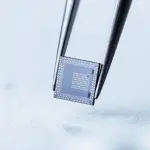
SemiQon has begun testing multiplexer chips within the NQCP Spin Qubit Pilot Line, a collaboration initiated in October 2025, to address a critical limitation in quantum computer development. A limited number of microwave and RF ports on dilution refrigerators hinders the measurement of increasing numbers of qubits in a single cooling cycle. “Every additional qubit multiplies the wiring problem inside the fridge,” explains SemiQon CTO Janne Lehtinen, and cryogenic switching offers a solution. NQCP has committed to validating SemiQon’s technology for the wider scientific community, potentially accelerating access to improved hardware.
NQCP Validates SemiQon’s Cryo-CMOS Multiplexers for Spin Qubit Measurement
NQCP researchers have begun characterizing SemiQon’s superconducting microwave/RF switch to assess its performance with superconducting qubits, a key step in validating the technology for broader use. This focus on the switch’s suitability for superconducting qubit experiments expands the scope of the partnership beyond spin qubit measurements, indicating a versatile approach to cryogenic control and readout electronics.
The partnership’s structure is designed for mutual benefit; a researcher at NQCP explains, “From the start, the collaboration with SemiQon has been very synergetic.” They note that when research groups work with each other, there are typically elements of both collaboration and competition present, but with a company, expectations are clear. In this case, both benefit when new products are put into real use. This collaborative model differs from typical academic partnerships, with a clear emphasis on translating research into tangible hardware improvements.
They stated that their goal is to validate several samples from a fab batch, or even an entire batch, simultaneously. SemiQon’s cryo-CMOS transistor, launched in November 2024 and now commercially available, achieves heat dissipation levels a thousand times lower than conventional room-temperature devices.
Janne Lehtinen of SemiQon emphasizes the broader implications of this work, stating, “In the long run, our collaboration with the team at the NQCP contributes to a broader industry goal: developing scalable, high-speed measurement systems that are essential for the future of quantum computing.” The team is currently in the early stages of testing, but anticipates demonstrating the technology’s performance in a real qubit setup, at the cryogenic temperatures at which qubits operate. The collaboration is expected to continue and evolve, with ongoing discussions about future directions.
When chips must be cooled one at a time, the process to characterize and to better understand the devices is very time consuming. Eventually, our goal is to validate several samples from a fab batch, or even an entire batch, simultaneously.
Dr. Francesco Borsoi, Assistant Professor and Spin Qubit Pilot Line Lead at the Niels Bohr Institute
Superconducting RF Switch Characterization within NQCP’s Qubit Platforms
NQCP researchers have completed initial characterization of SemiQon’s superconducting microwave/RF switch, assessing its performance within a superconducting qubit experiment. The testing involved a prototype switch, with results now confirmed by the NQCP team, indicating a relatively swift progression from device delivery to experimental validation. Each qubit requires dedicated wiring for control and readout, creating a significant constraint as identified by SemiQon.
In the long run, our collaboration with the team at the NQCP contributes to a broader industry goal: developing scalable, high-speed measurement systems that are essential for the future of quantum computing.
Janne Lehtinen, CTO of SemiQon


See today’s quantum computing news on Quantum Zeitgeist for the latest breakthroughs in qubits, hardware, algorithms, and industry deals.