Welcome to this week’s quantum technology digest. The past seven days brought substantial activity across several areas of quantum development, from hardware advancements to software integration and security solutions. This digest covers progress in error correction, computer construction, and access to quantum resources.
Several companies are pushing the boundaries of fault-tolerant computing. Quantinuum reported a major fidelity boost with logical qubits, while Atom Computing secured significant funding to accelerate its approach. PsiQuantum and QuEra Computing announced concrete steps toward building and deploying utility-scale, fault-tolerant systems, with the latter targeting a 2028 launch on AWS.
Beyond hardware, IBM focused on improving quantum circuit design with language models and simplifying the transition to post-quantum cryptography. IonQ advanced both quantum key distribution for existing networks and high-fidelity entanglement, and RIKEN activated a hybrid quantum-HPC supercomputer. HPE also signaled a commitment to broader quantum access through industry collaborations.
1. Quantinuum Achieves 800x Fidelity Boost with Logical Qubits on Commercial System

Quantinuum demonstrated logical qubits with 800 times the fidelity of their physical counterparts, a result published in Nature. The company achieved this error correction improvement using its System Model H2 hardware, in collaboration with Microsoft. This advancement includes efficient qubit encoding, generating 48 logical qubits from 98 physical qubits, and marks progress toward practical, fault-tolerant quantum computing capable of handling real-world problems. Quantinuum also successfully teleported a logical qubit with high fidelity, as detailed in a Science publication.
2. PsiQuantum Starts Building First Utility-Scale Quantum Computer in Australia
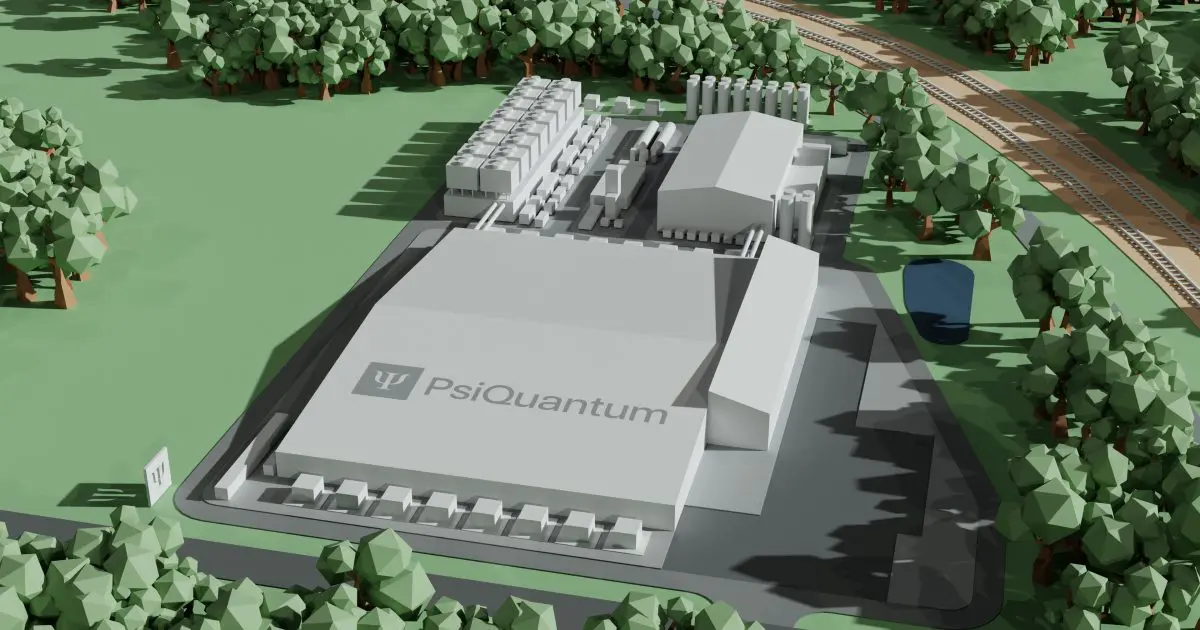
PsiQuantum has begun construction on a facility in Moreton Bay Central, Australia, to house what it intends to be the world’s first utility-scale, fault-tolerant quantum computer. The company is building a large-scale cryogenic infrastructure to support the photonic quantum chips and expects delivery of a major cryoplant in the second half of 2026. This project aims to address error issues limiting current quantum computers and enable advancements in fields like medicine and finance. PsiQuantum also plans to integrate with local educational institutions to develop a skilled quantum workforce.
3. Atom Computing Secures $300M to Advance Fault-Tolerant Quantum Computing

Atom Computing received over $300 million in funding, including commitments from the U.S. Department of Commerce and Third Point Ventures, to accelerate development of its neutral-atom quantum computers. The company was first to demonstrate quantum error correction using this technology and has already surpassed 1,000 qubits. This investment will focus on scaling qubit counts, improving fidelity, and building reliable, fault-tolerant processors for enterprise and government use, with a commercial deployment already in progress with Microsoft.
4. Duke & IonQ Demonstrate High-Fidelity Entanglement in Three-Qubit Network

Researchers at Duke University and IonQ, Inc. achieved 84.1 to 88.1 percent fidelity in remotely entangling qubits, creating the first fully-distributed Greenberger, Horne, Zeilinger (GHZ) state with individually controlled atomic qubits. The experiment utilized barium-138 ions and photonic interconnects to establish a three-node quantum network, surpassing previous demonstrations limited by qubit type or ensemble methods. This work confirms the feasibility of scalable, modular quantum computers reliant on remote entanglement and closes a critical detection loophole for robust communication.
5. QuEra Plans 2028 Launch of Fault-Tolerant Quantum Computer on AWS

QuEra Computing will deploy its Libra fault-tolerant quantum computer on Amazon Web Services in 2028. The system aims for over 256 error-corrected logical qubits and a logical error rate of 10⁻⁶, enabling approximately one million reliable quantum operations. This development represents a shift toward engineering practical quantum computation, building on validated research from QuEra, Harvard, and MIT. AWS anticipates this technology will become essential for solving complex customer problems.
6. IBM Maps Quantum Operations to Language Models for Improved Circuit Design

Researchers at IBM Research have created a method to map unitary operators, essential components of quantum computation, into the latent space of large language models. This allows the LLM to directly process quantum information using Pauli transfer matrices, improving performance in Clifford’T circuit synthesis by over threefold with a data increase to 9.2 million circuits. The work demonstrates scaling potential and enables language-guided circuit design, potentially accelerating quantum compilation and the development of more efficient quantum algorithms. This approach moves beyond textual interpretations of quantum operations, allowing the LLM to understand and generate circuits with greater precision.
7. RIKEN Launches ROQUO: Quantum-GPU Supercomputer for Advanced Computing

RIKEN, with funding from NEDO, has activated “ROQUO,” a hybrid quantum-HPC supercomputer at its Kobe campus. The system combines the Fugaku supercomputer with IBM Quantum System Two and a Quantinuum trapped-ion computer, creating a unique three-system platform. ROQUO aims to improve quantum computing simulations, accelerate algorithm development, and explore applications like quantum machine learning by integrating quantum and classical resources. Researchers will use ROQUO to address computational problems beyond the scope of conventional supercomputers.
8. IonQ Launches Scalable Quantum Key Distribution for Existing Networks
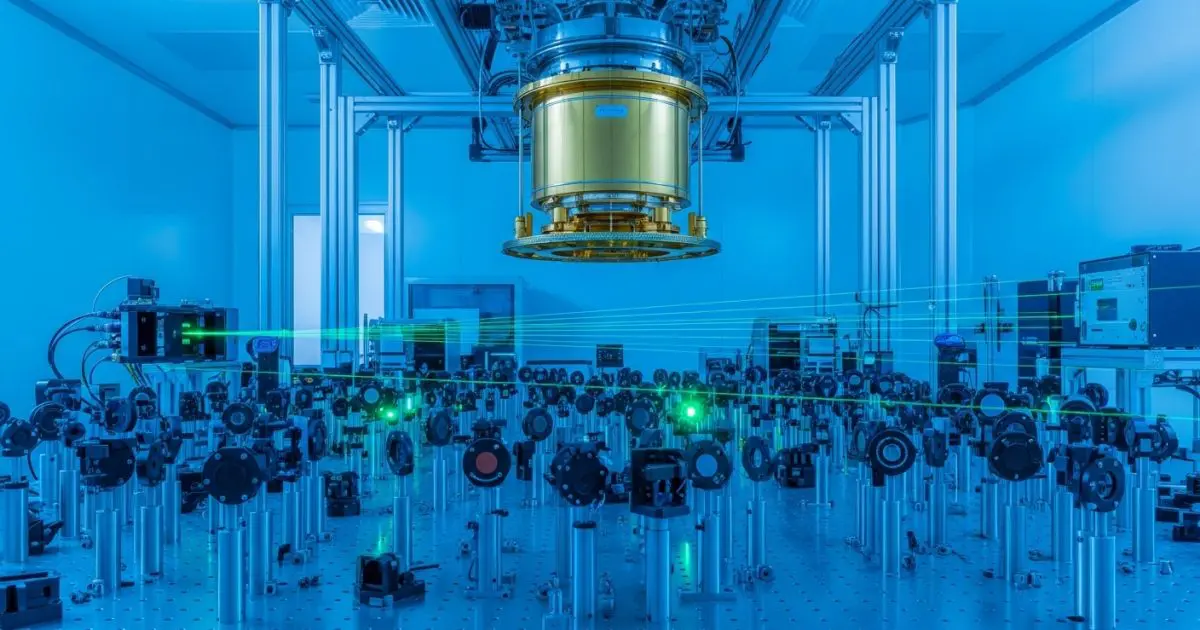
IonQ introduced Clavis XG Multiplex, a new system for quantum key distribution (QKD) designed for use in standard metropolitan fiber networks. The company reports 61% of organizations fear a “harvest now, decrypt later” attack, prompting demand for proactive security. Unlike prior QKD systems, Clavis XG Multiplex allows quantum and classical data to share networks, reducing implementation costs and complexity. This product integrates with IonQ’s existing software and aims to provide a practical path to long-term data protection.
9. HPE Pursues Scalable Quantum Access Through Industry Partnerships

Hewlett Packard Enterprise is collaborating with eight quantum computing companies—Intel, IQM, Qblox, Quantinuum, QuEra Computing, Quantum Machines, Rigetti, and Riverlane—to integrate quantum systems with its Cray supercomputing platform. This effort aims to build a full-stack hybrid computing platform supporting diverse qubit modalities and essential error correction. HPE intends to benchmark quantum workloads on existing HPC infrastructure, focusing on applications in science, security, and industry, and currently builds three of the world’s fastest exascale supercomputers.
10. IBM Designs API for Smoother Transition to Quantum-Resistant Encryption

A team from IBM Research has created a new cryptographic API design to simplify the shift to post-quantum cryptography. The design addresses limitations in current APIs by decoupling key creation from specific algorithms, using an “intent” vocabulary to define security needs instead. This approach achieves a six-fold increase in cryptographic agility, allowing updates without extensive code rewrites and supporting key evolution through rotation and migration. While scalability with very large key sets requires further assessment, the system represents a move toward operational cryptographic updates and reduced organizational risk.



See today’s quantum computing news on Quantum Zeitgeist for the latest breakthroughs in qubits, hardware, algorithms, and industry deals.