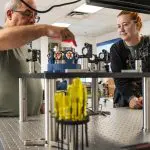
New Mexico is allocating $3 million to the University of New Mexico’s Quantum New Mexico Institute (QNM-I) to expand quantum research and workforce development. This investment is part of a larger state commitment exceeding $450 million, intended to establish New Mexico as a national leader in quantum innovation through university-lab-industry partnerships and a new entrepreneur-in-residence program.
“The future of quantum is being built today, and New Mexico has a unique opportunity to lead,” said Economic Development Cabinet Secretary Rob Black. University of New Mexico President Steven Goldstein added, “This partnership allows us to build on the extraordinary work of UNM’s faculty.”
$3 Million Investment Expands Quantum New Mexico Institute’s Priorities
This funding prioritizes expanding quantum education programs, reaching educators and high school students to cultivate a skilled workforce for the growing industry. Quantum Insider projects the global quantum technology industry will exceed $4 billion by 2028, and New Mexico aims to capture a significant portion of that growth. A key component of this strategy is the establishment of an entrepreneur-in-residence program at UNM, designed to translate laboratory discoveries into viable businesses and create economic opportunities within the state.
University-lab-industry partnerships will also receive support, facilitating the transfer of quantum technologies from academic research into commercial applications. Vice President for Research Ellen Fisher explained that, “This investment helps ensure that discoveries and advances made in our laboratories can become real-world solutions, transformative student experiences, and economic opportunities for many New Mexicans.” The state’s total commitment to building a quantum ecosystem exceeds $450 million, signaling a long-term strategy beyond this initial partnership. QNM-I’s research focuses on applications spanning computing, sensing, communications, and national security, areas expected to be significantly impacted by advancements in quantum science.
The future of quantum is being built today, and New Mexico has a unique opportunity to lead.



See today’s quantum computing news on Quantum Zeitgeist for the latest breakthroughs in qubits, hardware, algorithms, and industry deals.