

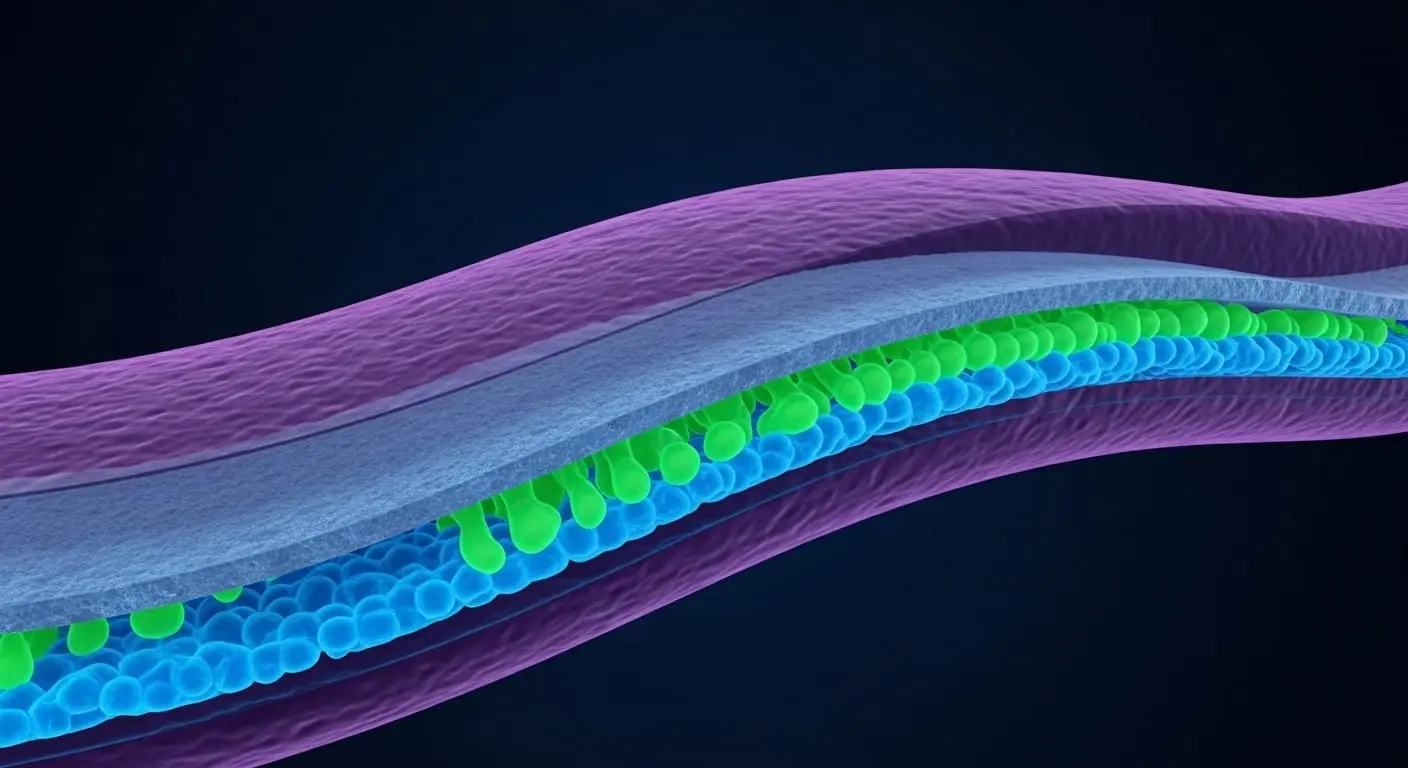
A thorough investigation into representing and transforming viewpoints for quantum processes within the process-matrix formalism has been completed by Luca Apadula and colleagues at University of Vienna. Existing frameworks for causal reference frames and time-delocalized subsystems represent coordinate parametrizations of a single, overarching perspective-neutral object. A genuine perspective emerges when operational divisions are made within a quantum process, clarifying the limits of transformations that attempt to alter perspectives without changing these divisions. The team constructs explicit maps to unitarily transform perspectives by either reshuffling notions of past and future, or by extending the process with quantum reference frames to enable a shared spatiotemporal structure. This advances understanding of the empirical realisation of abstract process matrices and the fundamental nature of quantum perspectives.
Quantum reference frames stabilise transformations between relative viewpoints
Extending quantum processes with quantum reference frames proved central to achieving unitary transformations between differing perspectives. These reference frames, functioning as shared “clocks and rulers” incorporated into the quantum system, provide a common spatiotemporal structure against which events can be measured. Without this shared background, altering a perspective inevitably reshuffles global notions of past and future. A scaffold was effectively created by adding these reference subsystems, allowing for the consistent localization of events across different viewpoints, much like constructing a stable base before rearranging elements on top of it. Previously, attempts to switch perspectives struggled with fixed time boundaries, but this approach allows for consistent localization. These reference frames act as shared “clocks and rulers” embedded within the quantum system, establishing a common spatiotemporal structure.
Unitary Transformations Relate Causal and Time-Delocalized Quantum Descriptions
Unitary transformations between causal reference frames (CRF) and time-delocalized subsystems (TDS) have now been achieved, a feat previously impossible without altering the global notions of past and future. This breakthrough, demonstrated through extending quantum processes with subsystems defining quantum reference frames, overcomes limitations established in 2026 regarding perspective switching while preserving time order. CRF and TDS are coordinate parametrizations of a single, underlying perspective-neutral object, effectively different ways to describe the same quantum event, analogous to viewing a film from different starting points.
This allows complementary perspectives to be unitarily related, providing a shared spatiotemporal structure and advancing understanding of how abstract process matrices can be empirically realised. Complementary causal reference frames (CRF) and time-delocalized subsystems (TDS), methods for describing indefinite causal order, can be unitarily related, meaning they are different mathematical descriptions of the same quantum event. This builds upon work from 2026 which initially identified limitations in switching between these perspectives without disrupting the established order of events.
The achievement relied on extending quantum processes with subsystems that act as quantum reference frames, creating a shared spatiotemporal structure, a common ground for comparing these different viewpoints. This extension allows for transformations between CRF and TDS while maintaining a consistent global past and future, resolving a key challenge in representing quantum causality. Furthermore, the team confirmed that these transformations preserve the operational statistics of the process, ensuring predictions remain consistent regardless of the chosen perspective.
Quantum viewpoint shifts and the necessary relaxation of temporal order
David Awschalom and his colleagues are increasingly focused on understanding how different observers perceive quantum events, a challenge demanding new ways to represent and transform perspectives. Their work highlights an important trade-off, however; achieving these unitary transformations, or shifts in viewpoint, often requires a degree of temporal flexibility, potentially altering the established order of cause and effect. Demonstrating a method to preserve a global sense of past and future by extending the quantum process with additional subsystems is possible, but the practical implications of adding these ‘quantum reference frames’ remain largely unexplored.
Acknowledging that shifting viewpoints in quantum mechanics necessitates potentially altering the order of events is not a setback, but a clarification of fundamental limits. These findings do not invalidate the approach; instead, they precisely define where perspective changes become genuinely challenging, demanding careful consideration of time itself. David Awschalom and his team offer a pathway for exploring how different observers might experience quantum reality by demonstrating methods to maintain a consistent past and future, even with these shifts.
Altering an observer’s viewpoint in quantum mechanics can necessitate a reshuffling of events, challenging established notions of cause and effect. However, a consistent order can be maintained by extending quantum processes with ‘quantum reference frames’. This work establishes that seemingly disparate descriptions of quantum processes, causal reference frames and time-delocalized subsystems, are not fundamentally different but rather alternative coordinate systems representing a single quantum object. David Awschalom and his colleagues have demonstrated that unitary transformations, shifts in viewpoint, between these frameworks are achievable, resolving a long-standing challenge in quantum theory by identifying this underlying unity. Importantly, these transformations can be performed either by accepting a reshuffling of temporal order or by extending the process with quantum reference frames, effectively creating a shared context for observation.
The researchers demonstrated that differing descriptions of quantum processes, such as causal reference frames and time-delocalized subsystems, represent alternative ways of viewing a single quantum object. This clarifies that changing an observer’s viewpoint in quantum mechanics can alter the order of events, but a consistent past and future can be maintained by extending the process with additional subsystems. The study establishes that unitary transformations between these perspectives are achievable, resolving a challenge in quantum theory by identifying this underlying unity. The authors suggest this work informs the broader question of how abstract process matrices can be empirically realised.
👉 More information
🗞 Frame perspectives for process matrices: from coordinate parametrization to spacetime representation
🧠 ArXiv: https://arxiv.org/abs/2604.02873



See today’s quantum computing news on Quantum Zeitgeist for the latest breakthroughs in qubits, hardware, algorithms, and industry deals.



