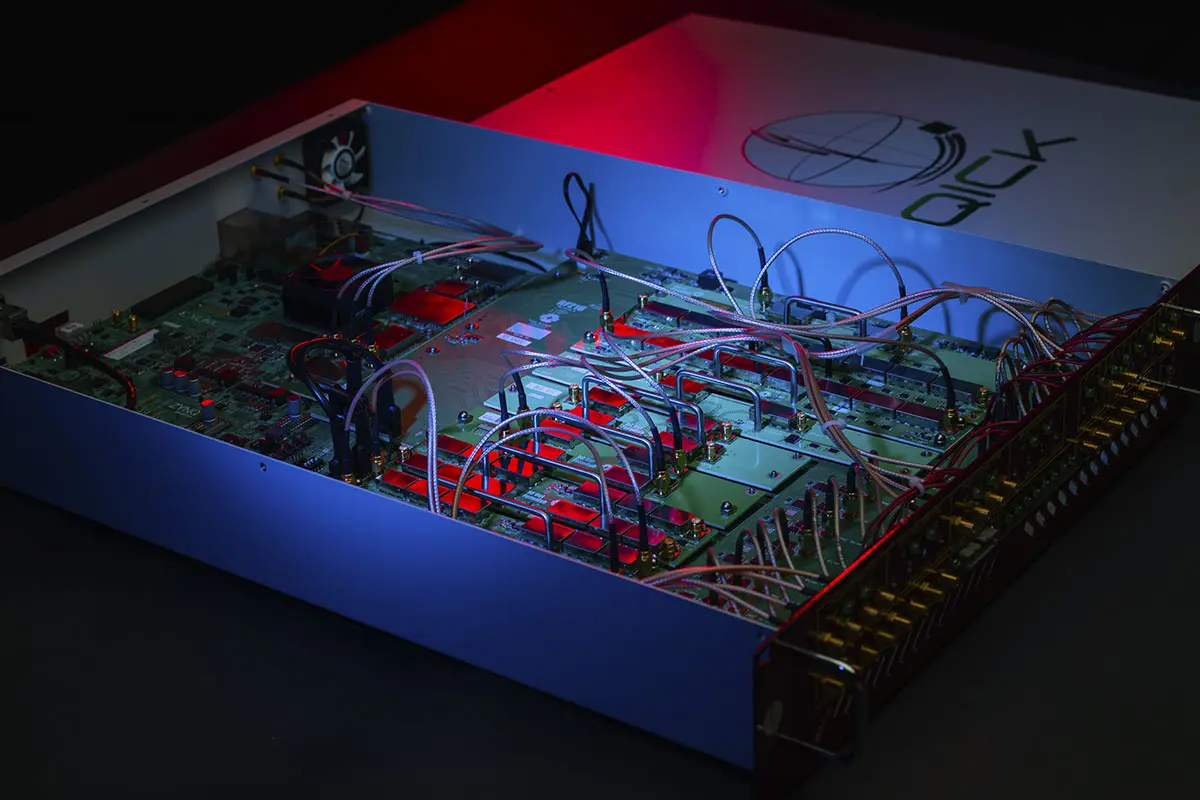
Fermilab’s open-source Quantum Instrumentation Control Kit, or QICK, is now central to a new quantum hardware makerspace established by Microsoft Quantum in Maryland’s Discovery District. The center aims to connect researchers from academia, industry, and government, providing hands-on experience with real quantum systems. Fermilab plans to expand QICK’s capabilities, adapting the control and readout system for use with a wider range of qubit types, and this work marks a step in broadening access to quantum tools and fostering development within the emerging field.
Microsoft Quantum Makerspace Launches with Fermilab Partnership
This collaboration directly addresses a need for hands-on quantum training, providing researchers across academia, national laboratories, and industry with a flexible tool for developing quantum applications. The makerspace will offer access to real quantum hardware alongside the expertise needed to utilize it effectively, which is a critical step in fostering growth within the emerging quantum community.
Anna Grassellino, chief technology officer and associate laboratory director for the Technology Directorate at Fermilab, expressed enthusiasm for the partnership, stating, “We are thrilled that Microsoft has chosen QICK to be part of the quantum hardware makerspace and look forward to working with them on other projects as well.” Fermilab’s commitment to maintaining QICK as an open-source resource is central to this effort, allowing a broad range of users to contribute to its development and tailor it to their specific needs.
Over 500 scientists worldwide already use QICK to refine qubit performance, demonstrating its existing value to the field and potential for expansion. The partnership extends beyond simply providing a tool for training; Microsoft and Fermilab are actively working to broaden the applicability of quantum-control technologies across diverse hardware platforms. Charles Tahan, Partner at Microsoft Quantum, explained that the collaboration also focuses on exploring how tools like QICK can be seamlessly incorporated into educational curricula.
This emphasis on education reflects a shared understanding that a skilled quantum workforce is essential for realizing the full potential of the technology. Fermilab’s development of QICK initially received primary support through its partnership in the Quantum Science Center, a DOE National Quantum Initiative Science Research Center headquartered at Oak Ridge National Laboratory.
Building on this foundation, Fermilab continues to use its decades of experience in superconducting radiofrequency technology, originally developed for particle accelerators, to advance quantum computing. Grassellino reinforced this commitment, adding, “Fermilab is committed to keeping QICK open source to allow users from academia, the national labs and industry to train the quantum workforce and build applications on top of QICK.” By openly sharing results and tools, both Fermilab and Microsoft aim to accelerate progress within the expanding quantum ecosystem and drive innovation in quantum information science.
We are thrilled that Microsoft has chosen QICK to be part of the quantum hardware makerspace and look forward to working with them on other projects as well. Fermilab is committed to keeping QICK open source to allow users from academia, the national labs and industry to train the quantum workforce and build applications on top of QICK.
Anna Grassellino, chief technology officer and associate laboratory director for the Technology Directorate at Fermilab
Fermilab’s QICK Adapts to Diverse Qubit Technologies
This expansion demonstrates a deliberate strategy to move beyond a single qubit technology, increasing QICK’s utility for a wider range of quantum computing architectures and research groups. The adaptability stems from a design philosophy prioritizing modularity and open-source principles, allowing external teams to contribute drivers and interfaces for diverse hardware. “Our work with Fermilab extends beyond training,” said Charles Tahan, Partner, Microsoft Quantum. Fermilab’s involvement extends beyond simply providing the QICK software; the laboratory’s scientists are actively working with Microsoft to refine the system’s compatibility with different qubit types.
This expertise informs the design of QICK, enabling precise control and readout of quantum states. Fermilab’s quantum networking testbeds, connecting its campus to Argonne National Laboratory and the University of Illinois, provide a platform for testing and validating QICK’s performance in a real-world quantum communication environment. The laboratory’s multifaceted approach, encompassing qubit development, control systems, and networking infrastructure, positions it as a key player in the advancement of quantum technologies.
Fermilab is committed to keeping QICK open source to allow users from academia, the national labs and industry to train the quantum workforce and build applications on top of QICK.
Anna Grassellino, chief technology officer and associate laboratory director for the Technology Directorate at Fermilab




See today’s quantum computing news on Quantum Zeitgeist for the latest breakthroughs in qubits, hardware, algorithms, and industry deals.