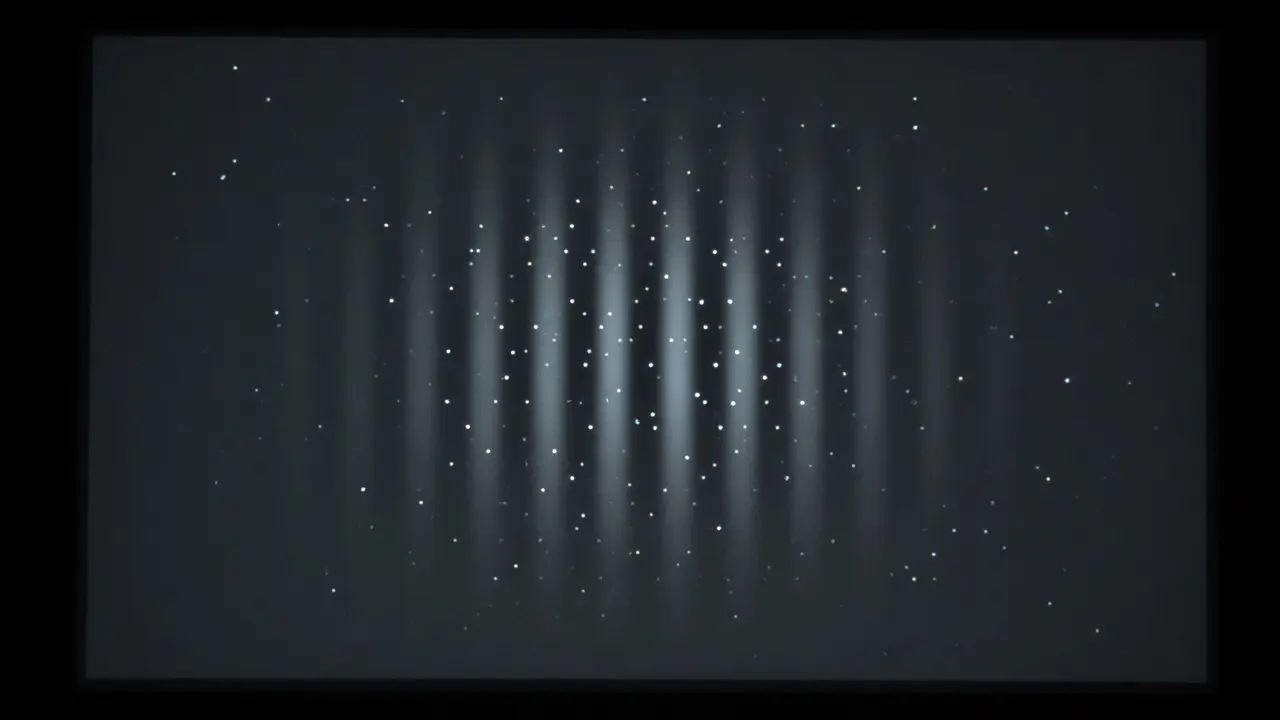
Experimental evidence confirms electron-metal decoherence driven by quantum Brownian motion; electrons lose coherence when interacting with metal surfaces, realising a proposal from two decades ago. An open quantum platform using electron-microchannel systems enables clear observation of this decoherence and its continuous adjustment. This resolves discrepancies in previous experiments utilising silicon surfaces which yielded much weaker effects than predicted by theory.
Experiments confirm a long-standing theory regarding electron coherence loss near metal surfaces via “quantum Brownian motion”. The process describes energy dissipation and fluctuating forces affecting electron movement, linking it directly to environmental entanglement. Establishing an open quantum platform using free electrons allows for the observation and adjustment of this effect, resolving inconsistencies found with earlier silicon surface experiments. Experiments verify that electrons lose ‘coherence’, essentially losing track of their movement at the smallest scales, similar to how pinpointing the location of a rapidly vibrating string becomes difficult over time, when near metal surfaces.
This loss happens via “quantum Brownian motion”, envisioning random “kicks” from surrounding atoms disrupting an electron’s path like pollen jiggling in air but on a quantum level; this process links environmental entanglement directly to energy dissipation and fluctuating forces affecting electron movement. For two decades, researchers have sought proof for the Anglin-Paz-Zurek proposal, a detailed set of tools describing *how* this decoherence occurs, and these findings establish free-electron systems as ideal platforms for studying such effects, resolving inconsistencies found with earlier silicon experiments. But if surface properties sharply impact coherence, we can be certain that observed changes are due to fundamental physics rather than experimental artefacts?
Electron Microchannels Enable Observation of Strong Electron-Metal Decoherence
A dramatic increase in measured decoherence rate, reaching 100μm−2, surpasses rates below 0.001μm−2 achieved by previous interferometer experiments. This breakthrough allows unambiguous detection of electron-gold interactions, previously limited by weak signal strength and experimental constraints. Utilising an ‘open quantum platform’ with electron-microchannel systems enables precise control over free electrons interacting with metal surfaces; this setup facilitated observation of motional decoherence through diffraction patterns.
Physicists have realised the Anglin-Paz-Zurek proposal after two decades, establishing these microchannels as ideal platforms for exploring open quantum phenomena and validating theories like Caldeira-Leggett quantum dissipation using free electrons. Clear signatures of electron-metal decoherence were observed alongside tunability achieved via adjustments to experimental parameters. Diffraction patterns revealed a measured decoherence rate reaching 144μm−2 when electrons interacted with gold surfaces, a significant increase compared to earlier interferometer experiments yielding rates below 0.001μm−2.
Analysis of peak separations within those diffraction patterns calibrated the propagation distance of electrons; this calibration accurately measures beam broadening caused by decoherence while fringe visibility measurements at varying distances confirmed theoretical predictions regarding optimal conditions for diffractometers and interferometers. While these findings advance understanding of fundamental processes, practical quantum devices or limitations in advanced microscopy techniques remain beyond current reach.
Direct observation of quantum Brownian motion validates predicted mechanisms of electron decoherence
Definitive demonstration of electron motional decoherence via quantum Brownian motion finally realizes a long-sought theoretical prediction, though scalability remains an open question given reliance on carefully crafted microchannels to isolate electrons from noise. These structures are inherently limited in complexity and may not easily translate to larger systems or materials beyond the gold surfaces tested here; however, this demonstration is profoundly important despite genuine hurdles for complex system scaling. The physicists have definitively proven a key mechanism driving electron decoherence, theorized decades ago but never before observed directly in such an experiment. This confirms that loss of an electron’s precise movement information arises from quantum Brownian motion, explaining how interactions with surrounding materials cause electrons to lose their ‘quantumness’. This validation prompts investigation into alternative material platforms or methods for enhancing scalability without sacrificing control over environmental noise.
This research provided experimental evidence linking quantum Brownian motion to motional decoherence in electrons, a process central to understanding the transition from quantum to classical behavior. By observing electron-metal interaction within microchannel systems, researchers demonstrated tunable decoherence rates reaching 144μm−2 and confirmed predictions of Caldeira-Leggett theory regarding energy dissipation. The findings resolve a two-decade search for direct observation of this effect, establishing these systems as potential open quantum platforms for free-electron optics. This work validates theoretical models describing how interactions with materials cause electrons to lose their quantum properties.
👉 More information
🗞 Experimental evidence for quantum Brownian motion in electron-metal decoherence
✍️ Wayne Cheng-Wei Huang (National Tsing Hua University); Zilin Chen (Northwestern University); Herman Batelaan (University of Nebraska-Lincoln)
🧠 ArXiv: https://arxiv.org/abs/2610.37293



See today’s quantum computing news on Quantum Zeitgeist for the latest breakthroughs in qubits, hardware, algorithms, and industry deals.