A quantum computer is one of the most talked about and least understood machines in modern technology. Headlines swing between promises of miracle cures and warnings that the internet is about to break, and it is hard to tell which claims are grounded. This guide cuts through the noise with the practical points a newcomer actually needs.
The aim here is a clear briefing rather than a physics lecture. Each section below covers one thing worth knowing about quantum computers, from how they differ from ordinary machines to how you can try one yourself this week. For a deeper treatment of the underlying science, our complete guide to quantum computing walks through the physics in full.
Table of Contents
A Quantum Computer Is Not Just a Faster PC
The most common misconception is that a quantum computer is simply a regular computer with more horsepower. It is not. A normal computer stores information in bits, each one locked to either 0 or 1, and it works through problems one definite step at a time.
It stores information in qubits, which follow the rules of quantum physics. A qubit can hold a combination of 0 and 1 at the same time, a property called superposition, and qubits can be linked together through entanglement so that they behave as a single connected system. Those two effects let the machine explore an enormous space of possibilities at once rather than checking options one by one.
This difference is structural, not cosmetic. A quantum computer is a different kind of machine built to attack a different kind of problem, in much the same way that a sailing boat and a car both move you around but suit completely different journeys. If you want the underlying physics explained from scratch, this overview of how a quantum computer works is a solid starting point.
What Goes On Inside a Quantum Computer
The power of a quantum computer comes from three features of quantum physics that ordinary machines cannot use. None of them has a tidy everyday equivalent, but each one becomes easier to picture with a simple comparison.
The first is superposition. A classical bit is always a definite 0 or 1, while a qubit can hold a weighted blend of both at the same time. A loose mental picture is a spinning coin that is neither heads nor tails until it settles, and a quantum computer works with many such coins at once.
The second is entanglement, a link between qubits that has no familiar counterpart. When two qubits are entangled, measuring one immediately constrains the other, even though neither held a fixed value beforehand. Entanglement is what lets a group of qubits behave as a single connected system rather than a row of separate switches.
The third is interference. A quantum program steers the qubits with operations called quantum gates, and those gates are arranged so that the paths leading to wrong answers cancel out while the path to the right answer is reinforced. The run ends with measurement, which collapses the qubits back to ordinary 0s and 1s and returns a result you can read.
These three effects only deliver an advantage when they work together. Remove any one of them and a quantum computer loses the edge that makes the demanding engineering worthwhile.
The Main Types of Quantum Computer
There is no single agreed blueprint for a quantum computer. Several distinct hardware approaches are being built in parallel, and each one stores a qubit in a different physical system with its own balance of strengths and weaknesses.
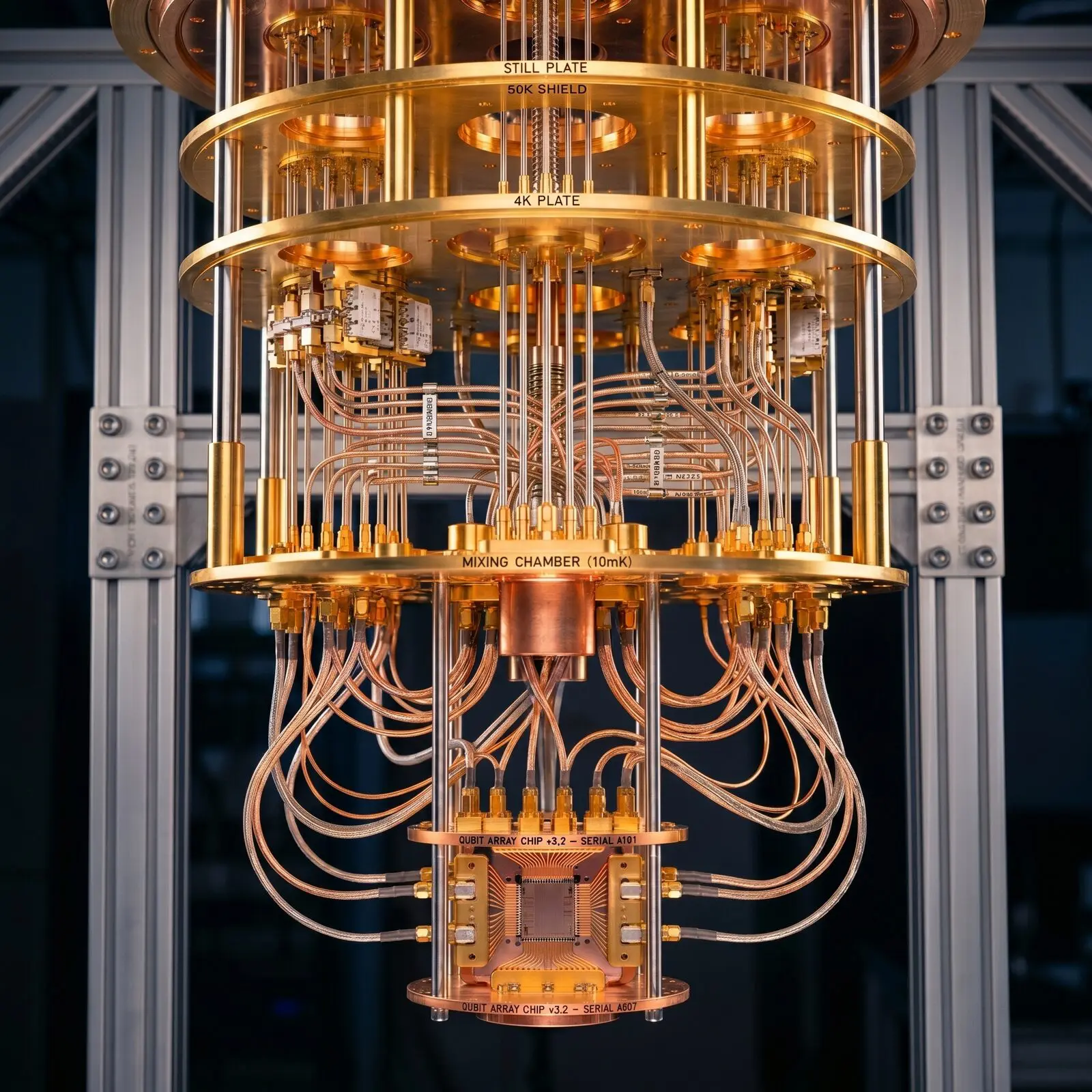
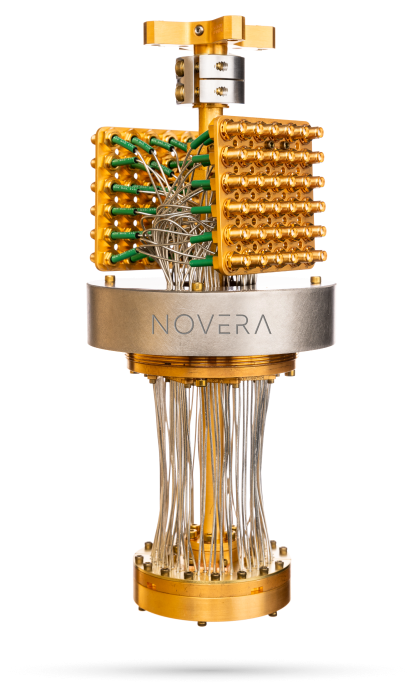
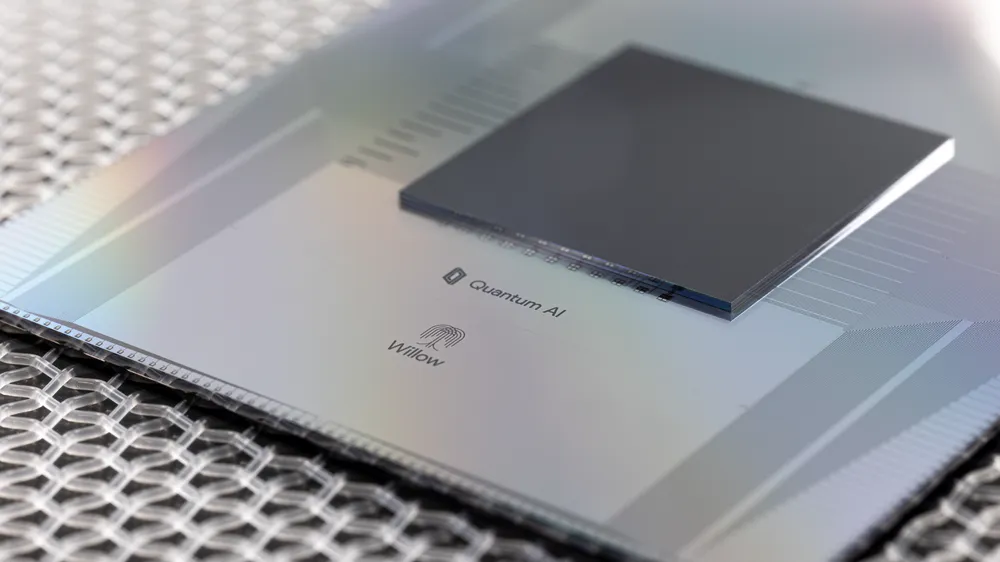
- Superconducting qubits use tiny circuits chilled to close to absolute zero. They are the most mature approach and power the processors from Google, IBM, and Rigetti, including several of the chips pictured in this guide.
- Trapped-ion qubits hold individual charged atoms in place with electromagnetic fields and control them using lasers. They reach very high accuracy and long-lived qubits, and they are used by IonQ and Quantinuum.
- Neutral-atom qubits arrange ordinary atoms into grids with focused laser beams known as optical tweezers. The approach scales to thousands of qubits and is pursued by QuEra, Pasqal, and Atom Computing.
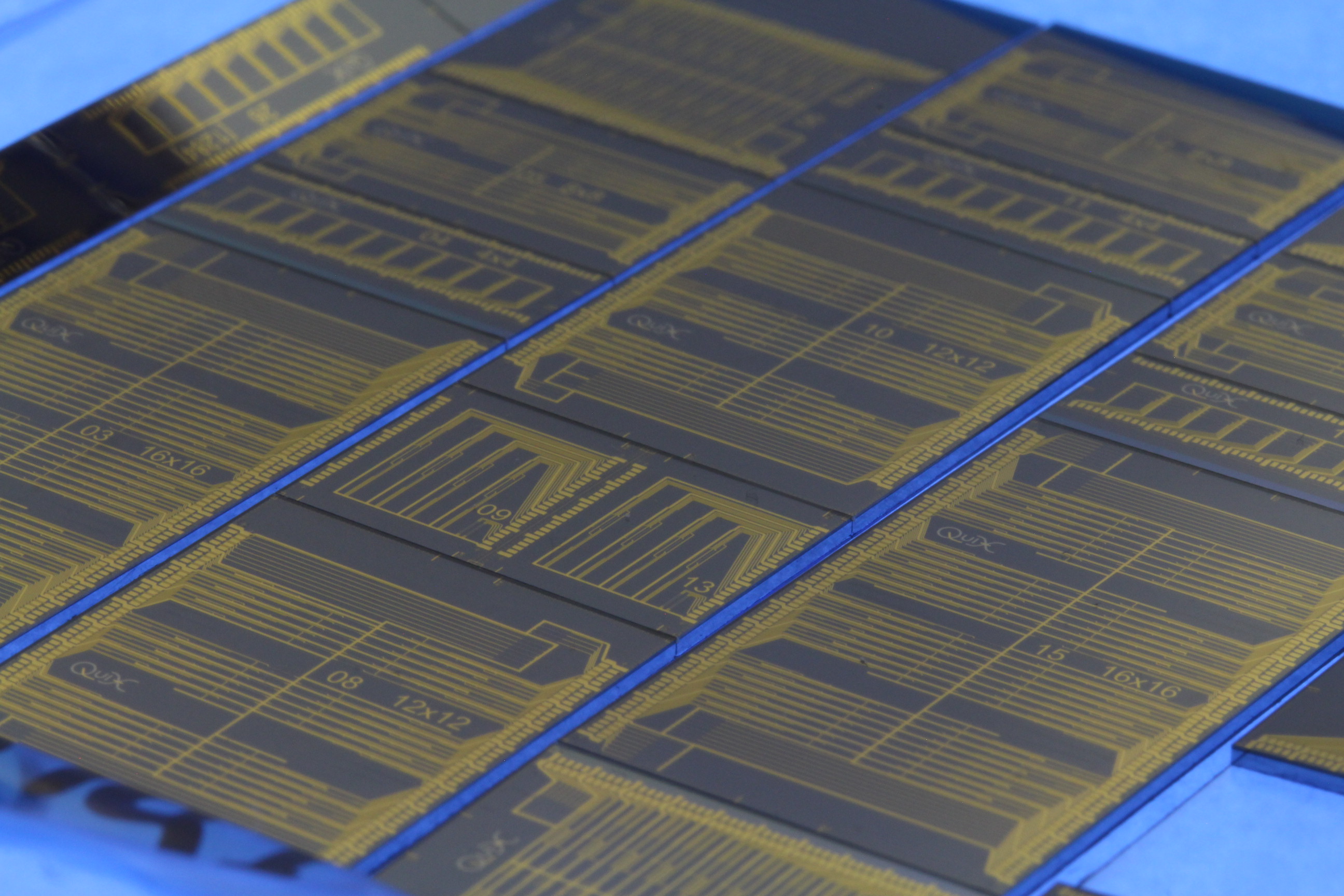
- Photonic qubits encode information in single particles of light and process it with optical circuits. Photonic machines can run at room temperature, a real practical advantage, and firms such as Xanadu, PsiQuantum, and QuiX Quantum build them.
- Silicon-spin qubits store information in the spin of single electrons inside silicon chips. They are the least mature of the five, yet they could borrow directly from the existing semiconductor industry, a path Intel and Diraq are pursuing.
The field has not chosen a winner, and it may never need to. Different designs could end up suiting different jobs, much as classical computing settled on separate processors for general work, graphics, and artificial intelligence.
How a Quantum Computer’s Power Is Measured
It is tempting to judge a quantum computer by its qubit count alone, the way a classical machine is often judged by its memory. That single number is misleading, because a large pile of unreliable qubits can be worth less than a small set of stable ones.
Specialists track several measures at once. Gate fidelity describes how accurate each individual operation is, and even small gains matter because errors multiply across a long calculation. Coherence time describes how long a qubit holds its quantum state before noise erases it.
A further distinction separates physical qubits from logical qubits. A physical qubit is a single piece of hardware, while a logical qubit is a stable, error-corrected qubit built from many physical ones working together. The number of logical qubits a machine can sustain is a far better guide to real capability than the raw physical count.
Composite benchmarks try to capture all of this in one figure. Scores such as quantum volume combine qubit count, connectivity, and error rates, which makes it easier to compare machines built on different hardware. When you read an announcement, the quality measures tell you more than the headline number.
It Will Not Replace Your Laptop
Because quantum computers sound so powerful, people often assume they will soon sit on every desk. That is not where the technology is heading. For ordinary tasks such as writing documents, editing video, or running a website, a classical computer is faster, far cheaper, and far more reliable.
Quantum hardware only earns its keep on problems with a particular mathematical shape, and most everyday computing has no such structure. The useful comparison is the graphics card, which accelerates specific work like rendering and machine learning without ever replacing the main processor. A quantum computer plays a similar specialist role, handling the hard subproblem while a classical computer runs everything around it.
Today’s Machines Are Powerful but Noisy
Quantum computers are real, working machines, and they are improving quickly. Google has shown exponential error suppression with its 105-qubit Willow chip, IBM has delivered processors that run circuits with thousands of two-qubit gates, and researchers at Caltech have assembled an array of more than 6,000 atomic qubits.
Even so, current hardware is fragile. Qubits lose their quantum behaviour in a fraction of a second, and every operation carries a real chance of error. Specialists call this the noisy intermediate-scale quantum era, and it limits how long and how complex a useful calculation can be. Progress in quantum error correction is the main reason to expect that limit to lift over the next few years.

What Quantum Computers Are Actually Good At
Quantum hardware is a specialist technology, so the honest question is not whether it is powerful but where that power applies. Four areas stand out as the most promising, and they explain why governments and companies are investing so heavily.
- Chemistry and materials. Simulating molecules is naturally a quantum problem, so quantum computers are expected to help design drugs, catalysts, and battery materials that classical machines struggle to model.
- Optimisation. Routing fleets, scheduling factories, and balancing financial portfolios all involve searching huge numbers of options, and certain quantum algorithms offer a speed advantage on these searches.
- Cryptography. The same mathematics that threatens today’s encryption also drives the design of the quantum-safe standards meant to replace it.
- Machine learning. Researchers are testing quantum methods for sampling and pattern recognition, although a clear practical advantage here has not yet been proven.
Notice what is missing from that list. Quantum computers are not a general shortcut for faster software, and they will not speed up the apps you already use. Their value is concentrated in problems that are themselves quantum or combinatorial in nature.
Quantum Computers and Artificial Intelligence
Quantum computing and artificial intelligence are often mentioned in the same breath, and the overlap between them is growing. The two technologies are distinct, but each raises useful questions for the other.
On one side, researchers are testing whether quantum hardware can speed up parts of machine learning. Quantum methods are being explored for measuring similarity between data points, for training certain models, and for sampling from complex probability distributions. A clear, practical advantage for everyday machine learning has not yet been demonstrated, so this stays an active research question rather than a settled result.
On the other side, classical artificial intelligence is already helping to build quantum computers. AI tools assist with calibrating fragile hardware, designing better quantum circuits, and decoding the error-correction data that fault tolerance depends on. In that practical sense the two fields are advancing side by side.
It is worth treating bold claims here with care. The phrase quantum AI is sometimes used loosely in marketing, and a healthy habit is to ask whether a specific result came from real quantum hardware or from a classical simulation of it. Our guide to quantum machine learning covers this crossover in more depth.
The Encryption Threat and Q-Day
The scariest headline about quantum computers is that they will break encryption, and the underlying concern is genuine. An algorithm published by Peter Shor in 1994 shows that a powerful enough quantum computer could unpick the RSA and elliptic-curve encryption that protects banking, messaging, and government systems.
The important word is powerful enough. The machines that exist today are far too small and too noisy to run that attack against real keys, and most experts place the genuine risk somewhere in the next decade. The threat still matters now because of harvest-now-decrypt-later, the practice of storing encrypted data today in order to unlock it once the hardware catches up.
This is why the response is already underway. The United States standards body NIST has finalised a set of post-quantum cryptography standards, and our guide to post-quantum cryptography explains how the migration works. Major technology providers have already started moving sensitive systems onto algorithms designed to survive a quantum attack.
Security specialists have a name for the moment a quantum computer first becomes capable of this attack. They call it Q-Day, and its exact date is unknown, both because the necessary hardware does not yet exist and because a private or state-run breakthrough might not be announced. Recent estimates have pointed toward the end of the decade, which is sooner than many earlier forecasts assumed.
The gap between awareness and action remains wide. Surveys of large organisations have found that the great majority still have no concrete plan for migrating to quantum-safe encryption, even though data they protect today may still be sensitive years from now. For records with a long shelf life, such as medical histories or state secrets, the safe assumption is that planning should already be underway.
The practical response does not require owning a quantum computer. It means taking an inventory of where vulnerable encryption is used, ranking systems by how long their data must stay secret, and adopting the post-quantum standards as products that support them arrive. Most experts frame the change as a multi-year infrastructure project rather than a single switch to be flipped later.
You Can Use a Quantum Computer Today
You do not need a laboratory or a large budget to get hands-on with this technology. Cloud platforms put real quantum processors within reach of anyone with an internet connection, and several offer a free way in.
- IBM Quantum provides free access to genuine quantum processors through a web browser, along with structured learning material.
- Amazon Braket offers pay-as-you-go access to hardware from several different vendors, plus managed simulators.
- Microsoft Azure Quantum connects users to multiple quantum providers and includes starter credits for new accounts.
The software side is just as approachable. Open-source frameworks such as Qiskit, Cirq, and PennyLane let you write a quantum program in Python and run it on a simulator or on real hardware. If you want a structured path, our guide to learning quantum computing sets out the courses and tools worth starting with.
What a Quantum Computer Costs and Who Is Buying
Owning a quantum computer outright is expensive. A full on-premise system, once the cooling, control electronics, and shielding are included, typically runs into tens of millions of dollars, which puts it beyond all but the largest institutions.
Most users never buy one. Cloud access has become the normal route, with providers renting time on real hardware by the second or by the circuit and offering free tiers for learning. This model means a student and a multinational bank can run jobs on the same processor while working from very different budgets.
The buyers of full systems are a fairly specific group. They include national laboratories, government research agencies, large universities, and a handful of corporations in finance, pharmaceuticals, and aerospace that want hands-on access and direct control. Banks, carmakers, and chemical companies have all funded quantum programmes of this kind.
For most organisations the sensible first step is not a purchase at all. It is a small pilot project on cloud hardware, aimed at building in-house skill and working out which problems, if any, are worth revisiting once the machines mature.
Quantum Computing Around the World
Quantum computing has become a matter of national strategy, not only commercial competition. Governments treat it as important to economic strength and security, and they are funding it on a scale that reflects that view.
The United States hosts the largest cluster of quantum computing companies and channels federal money through agencies focused on research and defence. China has invested heavily, with particular strength in quantum communication and a strong record of published research. The European Union runs a coordinated programme, and countries including Germany, France, and the Netherlands have added large national strategies on top of it.
Smaller nations have carved out real positions as well. The United Kingdom, Canada, Australia, Japan, and others each host respected research centres and a growing set of companies. Cumulative government investment in quantum technology worldwide now runs well into the tens of billions of dollars.
For a reader the takeaway is straightforward. The scale and spread of this commitment make it very likely that progress continues steadily, whatever the short-term swings in private investor enthusiasm.
How to Tell Quantum Hype From Substance
Quantum computing attracts bold marketing, so a few simple habits help you read announcements with a clear head. The most useful one is to distrust raw qubit counts. A press release boasting thousands of qubits says little on its own, because noisy qubits that cannot hold a state are of limited use.
Look instead for the quality measures that specialists track. Gate fidelity describes how accurate each operation is, coherence time describes how long a qubit survives, and error rates describe how often a calculation goes wrong. A modest number of high-quality qubits beats a large number of unreliable ones.
It also helps to separate a demonstration from a product. Many milestones are genuine scientific results on carefully chosen test problems rather than evidence of commercial advantage. Reading claims with that distinction in mind turns most hype back into something measurable.
How We Got Here, a Short History
The quantum computer began as a theoretical idea rather than a machine. In the early 1980s the physicists Yuri Manin and Richard Feynman independently suggested that a computer built on quantum principles could simulate nature in ways an ordinary machine never could.
The idea gained rigour over the following decade. David Deutsch described a universal quantum computer in 1985, and in 1994 the mathematician Peter Shor published an algorithm showing that such a machine could break widely used encryption. Shor’s result turned an academic curiosity into a field with serious funding behind it.
The engineering then caught up slowly. IBM placed a small quantum processor on the cloud in 2016, which let anyone run experiments on real hardware for the first time. Google reported a narrow speed milestone in 2019, and its Willow chip later showed that error rates could be driven down as a processor grew larger.
The pace has clearly increased since then. What once took two decades to move from theory to a handful of fragile qubits is now measured in processors with hundreds of them, and the open question has shifted from whether quantum computers work to how soon they become genuinely useful. Our full history of quantum computing walks through the milestones in detail.
Where Quantum Computing Goes Next
The central goal for the field is fault tolerance, the point at which error correction lets a quantum computer run long calculations reliably despite noisy hardware. Reaching it means combining many physical qubits into a smaller number of stable logical qubits.
Industry roadmaps cluster around the end of this decade. IBM and Google both target useful, error-corrected machines around 2029, and Quantinuum aims for universal fault tolerance by 2030. Cumulative government investment in quantum technology has now passed 54 billion dollars, which makes sustained progress far more likely than a sudden collapse of interest. For a fuller view of the companies and timelines involved, see our directory of quantum computing companies.
Classical and Quantum Computers Compared
The contrast between the two kinds of machine is easier to see side by side. The table below sums up the practical differences that matter to a newcomer.
| Aspect | Classical Computer | Quantum Computer |
|---|---|---|
| Basic unit | Bit, fixed at 0 or 1 | Qubit, a blend of 0 and 1 |
| Best for | Everyday general-purpose computing | Simulation, optimisation, cryptography |
| Maturity | Decades of refinement | Early, improving quickly |
| Error rates | Effectively negligible | High, the main current limit |
| Where you run it | Your own device | Mostly cloud access today |
| Cost to own | From a few hundred dollars | Tens of millions, or rent by the second |
Seen this way, the two machines are partners rather than rivals. A quantum computer takes on the narrow, hard problems where it has an edge, while a classical computer continues to do almost everything else.
Key Terms
A handful of terms come up repeatedly in any discussion of quantum computers. This short glossary keeps them in one place so the rest of the coverage is easier to follow.
- Qubit: the basic unit of quantum information, able to hold a blend of 0 and 1 rather than a single fixed value.
- Superposition: the property that lets a qubit represent several states at once until it is measured.
- Entanglement: a link between qubits whose states are correlated and cannot be described separately.
- Quantum gate: a basic operation that changes the state of one or more qubits, the building block of a quantum program.
- Coherence time: how long a qubit holds its quantum state before noise destroys it.
- NISQ: the current noisy intermediate-scale quantum era, with useful but error-prone machines.
- Quantum error correction: techniques that combine many physical qubits into a smaller number of stable logical qubits.
- Fault tolerance: the stage at which error correction lets a quantum computer run long calculations reliably.
- Q-Day: the still-unknown future date when a quantum computer can break today’s standard encryption.
These terms cover most of what a newcomer meets in news coverage. A far deeper reference is available in our full quantum computing glossary.
Frequently Asked Questions
What is a quantum computer in simple terms?
A quantum computer is a machine that processes information using the rules of quantum physics rather than ordinary electronics. Instead of bits that are fixed at 0 or 1, it uses quantum bits, or qubits, that can hold a blend of both values at once, which lets the machine work through certain very hard problems in ways a normal computer cannot.
Is a quantum computer faster than a normal computer?
It depends entirely on the task. For everyday work such as browsing, email, or video, a normal computer is faster, cheaper, and more practical. A quantum computer only pulls ahead on a narrow set of problems with the right mathematical structure, such as simulating molecules or certain optimisation puzzles.
Can a quantum computer break encryption?
A large, error-corrected quantum computer running Shor’s algorithm could break the RSA and elliptic-curve encryption that protects much of the internet. No machine available today is anywhere near powerful enough to do this, but the threat is real enough that NIST has already published encryption standards designed to resist quantum attacks.
How much does a quantum computer cost?
Buying an on-premise quantum computer typically costs tens of millions of dollars once cooling and control systems are included. Most people never need to buy one, because cloud providers rent access by the second, and several offer free tiers for learning and research.
Can I use a quantum computer myself?
Yes. IBM, Amazon, and Microsoft all provide cloud access to real quantum hardware, and IBM offers a free tier that anyone can sign up for. With a web browser and a Python framework such as Qiskit, you can run a small program on a genuine quantum processor in an afternoon.
Will quantum computers replace classical computers?
No. The expert consensus is that quantum computers are specialised accelerators, not general-purpose replacements. The realistic future is hybrid, with quantum processors handling specific hard subproblems inside workflows that classical computers still run.
What is a qubit?
A qubit, short for quantum bit, is the basic unit of information in a quantum computer. Unlike a classical bit that is fixed at 0 or 1, a qubit can hold a blend of both states at once, and linking many qubits together through entanglement is what gives the machine its reach.
Why do quantum computers need to be kept so cold?
Most quantum computers chill their hardware to within a fraction of a degree of absolute zero. At that temperature the qubits are shielded from heat and vibration that would otherwise disturb their fragile quantum states and cause errors. Photonic machines are an exception, since they can operate at room temperature.
How can I start learning about quantum computing?
A sensible first step is to read a plain-language guide and then sign up for a free cloud platform such as IBM Quantum. From there, open-source tools like Qiskit let you write and run small programs, and structured online courses cover the underlying mathematics at your own pace.
What is Q-Day?
Q-Day is the informal name for the future moment when a quantum computer becomes powerful enough to break the encryption that protects most internet traffic. No machine can do this today, and the exact date is unknown, but the prospect is the main reason organisations are moving to quantum-safe cryptography now.
How many qubits does a useful quantum computer need?
There is no single number, because it depends on the problem and on qubit quality. A few hundred high-quality logical qubits could tackle valuable chemistry problems, while breaking modern encryption is generally estimated to need on the order of a million physical qubits.
Who builds quantum computers?
The field includes large technology firms such as IBM, Google, and Microsoft, specialist public companies including IonQ, Rigetti, and D-Wave, and well-funded private firms such as Quantinuum and PsiQuantum. Hundreds of smaller companies supply the parts, software, and services around them.
The honest summary is that quantum computers are real, genuinely useful for a specific set of problems, and still some years away from their full promise. Treating them as specialist tools rather than magic boxes is the fastest way to understand the news that keeps arriving.
If you want to go deeper, our complete guide to quantum computing is the natural next step. It covers the physics, the hardware approaches, and the quantum industry in full detail.



See today’s quantum computing news on Quantum Zeitgeist for the latest breakthroughs in qubits, hardware, algorithms, and industry deals.