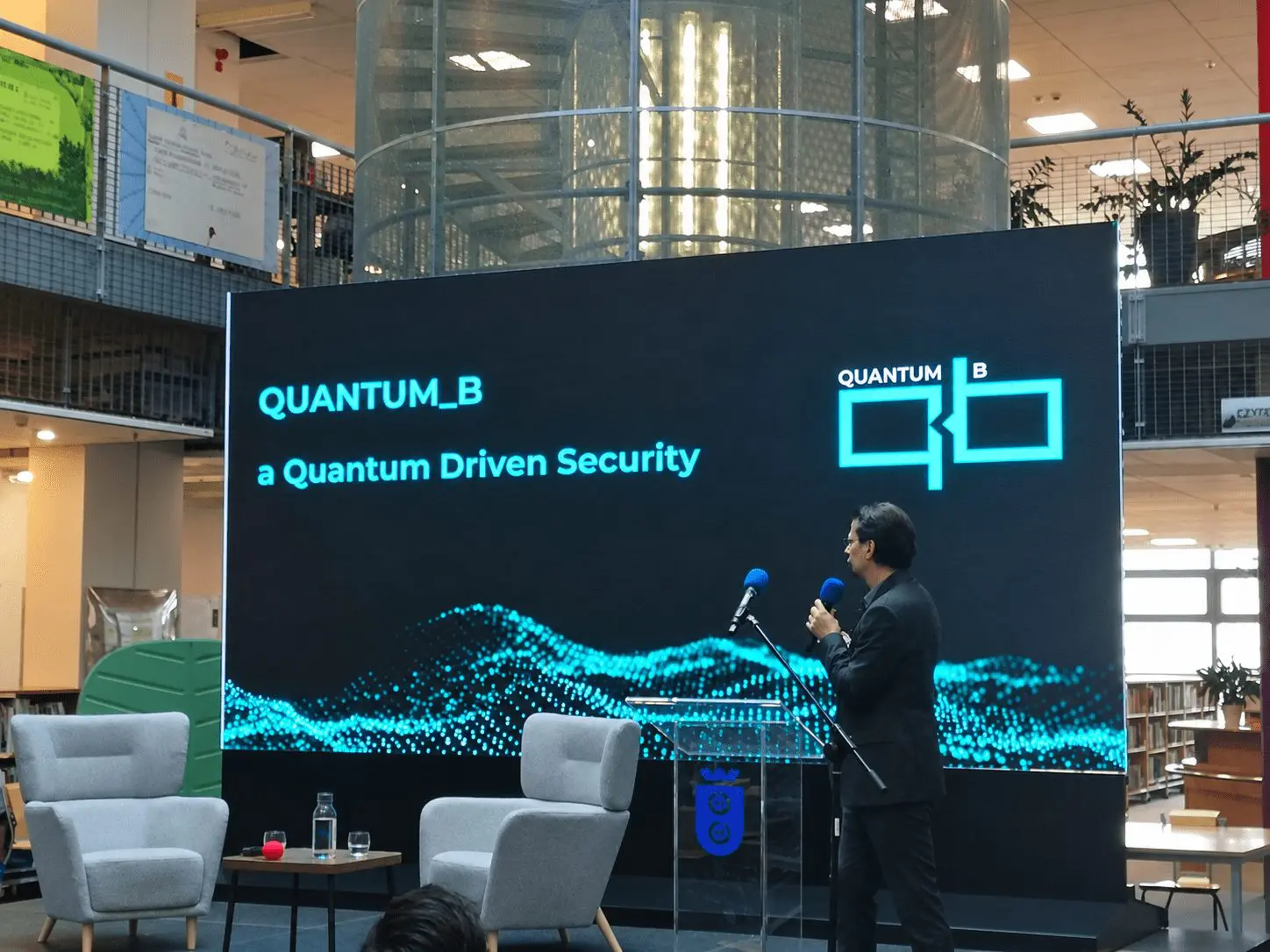
Paweł Kowalik, Financial & Project Manager at Quantum B, warned companies about an approaching deadline for post-quantum security preparations while speaking at the Q-Con Quantum Conference 2026 in Gdańsk on September 10-11. Kowalik addressed “Q-Day,” the moment a quantum computer could compromise current encryption methods, framing the issue as a ticking clock for product development. He explained that building security into products from the design stage avoids later, costly changes. The Q-Con programme highlighted the growing need for quantum solutions across sectors including cybersecurity, finance, and critical infrastructure.
Paweł Kowalik Defines “Q-Day” and Post-Quantum Security Risks
Quantum B used the Startup Meetup: Quantum & Space and Q-Con Quantum Conference 2026, held September 10-11 in Gdańsk, to emphasize the urgency of preparing for post-quantum security threats. Q-Day signifies the moment a quantum computer possesses the capability to compromise currently used encryption methods, potentially exposing sensitive data and undermining digital trust. Kowalik detailed the implications for companies still in the product development phase, explaining that integrating post-quantum security at the design stage offers a more efficient path than retrofitting systems later.
He cautioned that delaying these measures could result in significant and complex alterations to existing infrastructure. The Q-Con programme reflected this broad concern, with sessions dedicated to quantum applications spanning cybersecurity, finance, and even space technologies.
The conference programme highlighted the diverse range of sectors anticipating disruption from quantum computing, including critical infrastructure and dual-use solutions. Kowalik stated that “Q-Day refers to the point at which a cryptographically relevant quantum computer could break some of the cryptographic methods widely used today,” underscoring the potential for decryption, impersonation, and erosion of confidence in digital signatures. This concentrated focus on proactive security measures signals a shift toward anticipating, rather than reacting to, the quantum threat.




See today’s quantum computing news on Quantum Zeitgeist for the latest breakthroughs in qubits, hardware, algorithms, and industry deals.