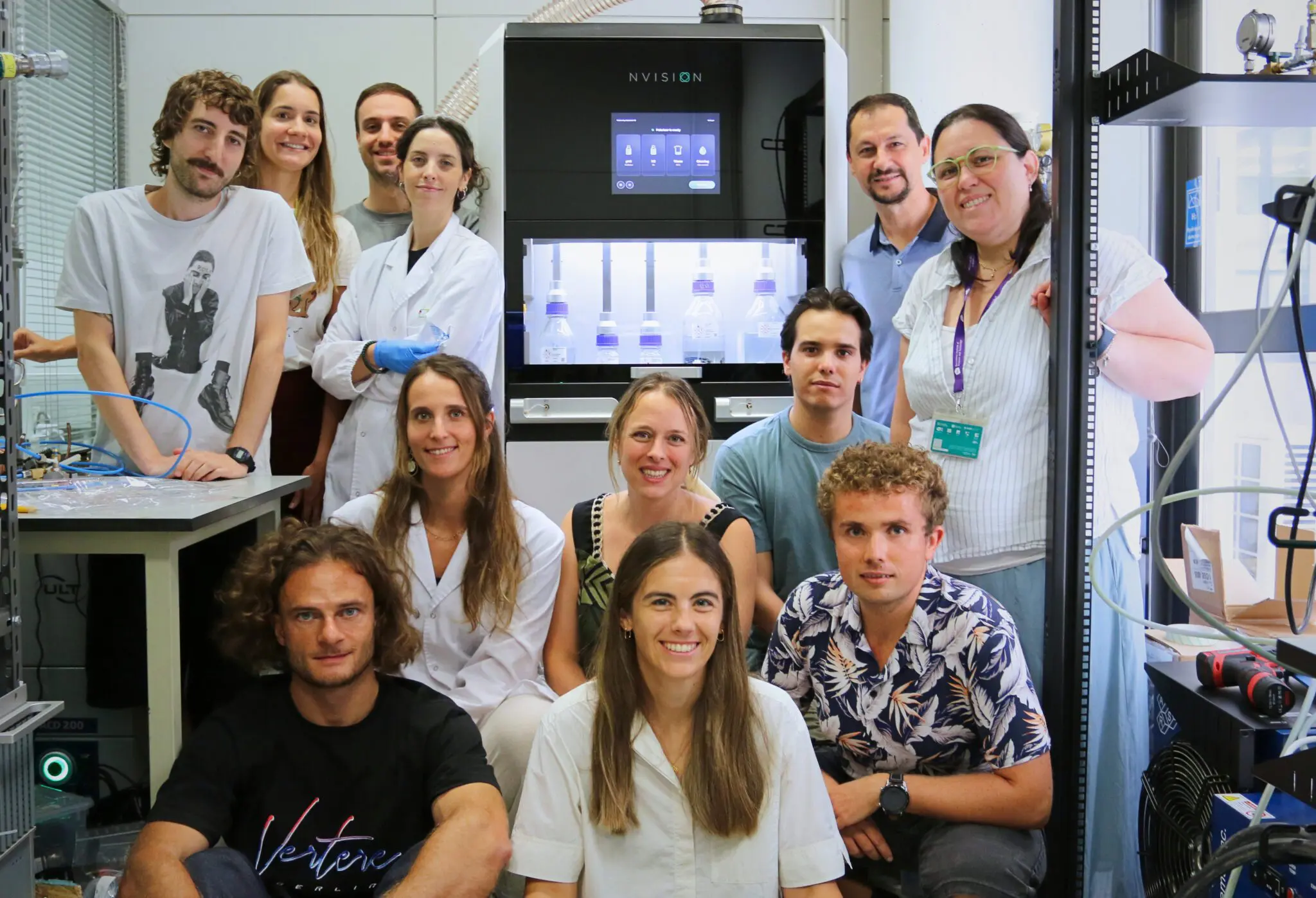
The Institute for Bioengineering of Catalonia (IBEC) has installed a POLARIS system in Barcelona, initiating its participation in the new €8.3 million Q-AID project. This four-year initiative establishes a European network for quantum-enhanced metabolic imaging, with a second system deployed at the University of Antwerp. Researchers will use the technology to study glioblastoma and ovarian cancer, focusing on how metabolic differences impact disease progression; as Dr. Irene Marco-Rius explains, “Hyperpolarized MR gives us a very early window into how disease metabolism changes and responds to treatment.”
POLARIS System Launches Barcelona’s Q-AID Quantum-MRI Network
The installation of a POLARIS system at the Institute for Bioengineering of Catalonia (IBEC) in Barcelona establishes a key node in the newly formed Q-AID network, a four-year, €8.3 million initiative designed to standardize quantum-enhanced MRI across Europe. This deployment, mirrored simultaneously at the University of Antwerp, marks a shift from theoretical development toward a coordinated, multi-institutional research infrastructure.
The Q-AID project, funded by the European Union’s Digital Europe Programme, aims to connect research sites with shared technology, workflows and data standards to facilitate large-scale studies of cancer and neurological diseases. The creation of this standardized network addresses a critical hurdle in the advancement of quantum-enhanced MRI, moving beyond isolated laboratory successes toward reproducible results and broader clinical application.
This coordinated approach allows for comparative analysis of data generated across different institutions, accelerating the validation of metabolic imaging biomarkers. “This is about more than installing individual systems,” said Prof. Myriam Chaumeil, Head of Research at NVision.
“Q-AID is building the technical, scientific, and operational foundation for a new generation of quantum-enhanced MRI, connecting research sites, shared infrastructure and expertise to enable large-scale, multi-center studies across cancer and neurological diseases.” Beyond the immediate focus on cancer research, the Q-AID network is also developing cancer-on-chip models, where metabolic imaging with the POLARIS system could provide novel insights into disease biology and responses to therapies. The project’s scope extends to establishing a European supply chain for the specialized materials and consumables required for hyperpolarized MRI, ensuring the sustainability of the network and facilitating wider adoption of the technology.
This comprehensive approach, encompassing technology development, data infrastructure and clinical validation, positions Q-AID as a key step toward realizing the full potential of quantum-enhanced MRI in the fight against cancer and neurological disorders. The project, running from April 2025 through March 2029, is coordinated by NVision Quantum Technologies, bringing together partners from seven European countries. IBEC’s involvement builds upon its existing expertise in hyperpolarized imaging, expanding its capacity to investigate real-time metabolic processes, Q-AID says.
Irene Marco-Rius, Group Leader of the Molecular Imaging for Precision Medicine group at IBEC, has been developing this capability since 2021, and anticipates that POLARIS will accelerate research efforts. Marco-Rius said, “POLARIS will make this generation of hyperpolarized substrates faster and more accessible, while empowering new researchers to work with this technique.” The Q-AID project also integrates artificial intelligence to support data analysis, further enhancing the efficiency and accuracy of metabolic imaging. By combining quantum-enhanced MRI with AI-powered tools, researchers aim to accelerate the development and validation of biomarkers, ultimately opening the way to the integration of this technology into routine clinical research and patient care.
Within Q-AID, we will study glioblastoma and ovarian cancer, where differences in tumor metabolism could provide important insights into disease progression and treatment response.



See today’s quantum computing news on Quantum Zeitgeist for the latest breakthroughs in qubits, hardware, algorithms, and industry deals.