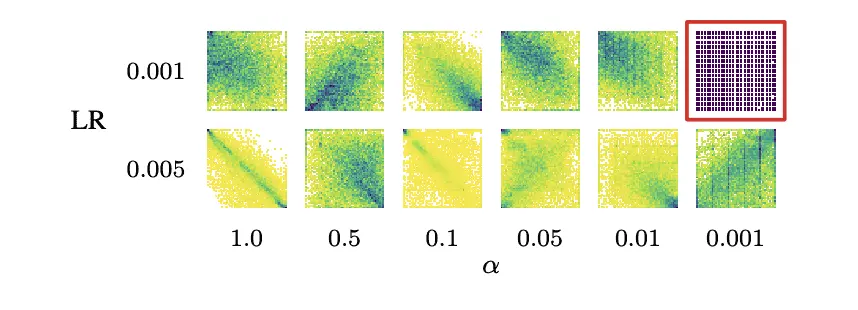
Researchers from Helmholtz Munich, Technical University of Munich, KTH Royal Institute of Technology, and Max Planck Institute for Informatics have developed a framework called PRESTO to map the multiverse of machine learning models. The framework addresses concerns about the reliability and robustness of machine learning models, particularly the variability in their embeddings. The team proposes multiverse analysis as a solution to the reproducibility crisis in machine learning, which involves assessing all possible combinations of choices in machine learning models. PRESTO uses persistent homology to capture essential features of latent spaces, providing a structure-driven alternative to existing performance-driven approaches.
Introduction to Multiverse Analysis in Machine Learning
Jeremy Wayland, Corinna Coupette, and Bastian Rieck, researchers from Helmholtz Munich, Technical University of Munich, KTH Royal Institute of Technology, and Max Planck Institute for Informatics, have developed a framework called PRESTO to map the multiverse of machine learning models that rely on latent representations. This development comes in response to concerns about the reliability and robustness of machine learning models. The researchers argue that the variability in the embeddings of these models is poorly understood, leading to unnecessary complexity and untrustworthy representations.
The Need for Multiverse Analysis
The researchers argue that the rapid development and deployment of new machine learning models have outpaced our understanding of their inner workings. This lack of understanding can lead to a reproducibility crisis in machine learning, threatening to impede progress and reduce real-life impact. The researchers propose multiverse analysis as a solution to this problem. Multiverse analysis involves assessing the results of all possible combinations of choices in machine learning models, rather than keeping individual choices hidden or implicit.
The Role of Representation in Multiverse Analysis
In multiverse analysis, each set of mutually compatible choices gives rise to a different analytical universe. The researchers argue that the highly influential class of latent-space models, including Variational Auto Encoders (VAEs), Large Language Models (LLMs), and Graph Neural Networks (GNNs), exhibits variability in latent representations. This representational variability can be influenced by even relatively small hyperparameter changes, which can radically alter the embedding structure of latent-space models.
Introducing PRESTO: A Framework for Multiverse Analysis
The researchers introduce PRESTO, a topological multiverse framework designed to describe and directly compare both individual latent spaces and collections of latent spaces. PRESTO uses persistent homology to capture essential features of latent spaces, allowing the researchers to measure the pairwise dissimilarity of embeddings and statistically reason about their distributions. The researchers also provide theoretical stability guarantees for topological representations of latent spaces under projection.
Practical Applications of PRESTO
The researchers demonstrate the utility of PRESTO through extensive experiments in numerous latent-space multiverses. They develop practical tools to measure representational hyperparameter sensitivity, identify anomalous embeddings, compress hyperparameter search spaces, and accelerate model selection. The researchers argue that their work improves our understanding of representational variability in latent-space models and offers a structure-driven alternative to existing performance-driven approaches in the responsible machine learning toolbox.
The article titled “Mapping the Multiverse of Latent Representations” was published on February 2, 2024. The authors of this article are Jeremy Wayland, Corinna Coupette, and Bastian Rieck. The article was sourced from arXiv, a repository of electronic preprints approved for publication after moderation, hosted by Cornell University. The DOI reference for this article is https://doi.org/10.48550/arxiv.2402.01514.

See today’s quantum computing news on Quantum Zeitgeist for the latest breakthroughs in qubits, hardware, algorithms, and industry deals.