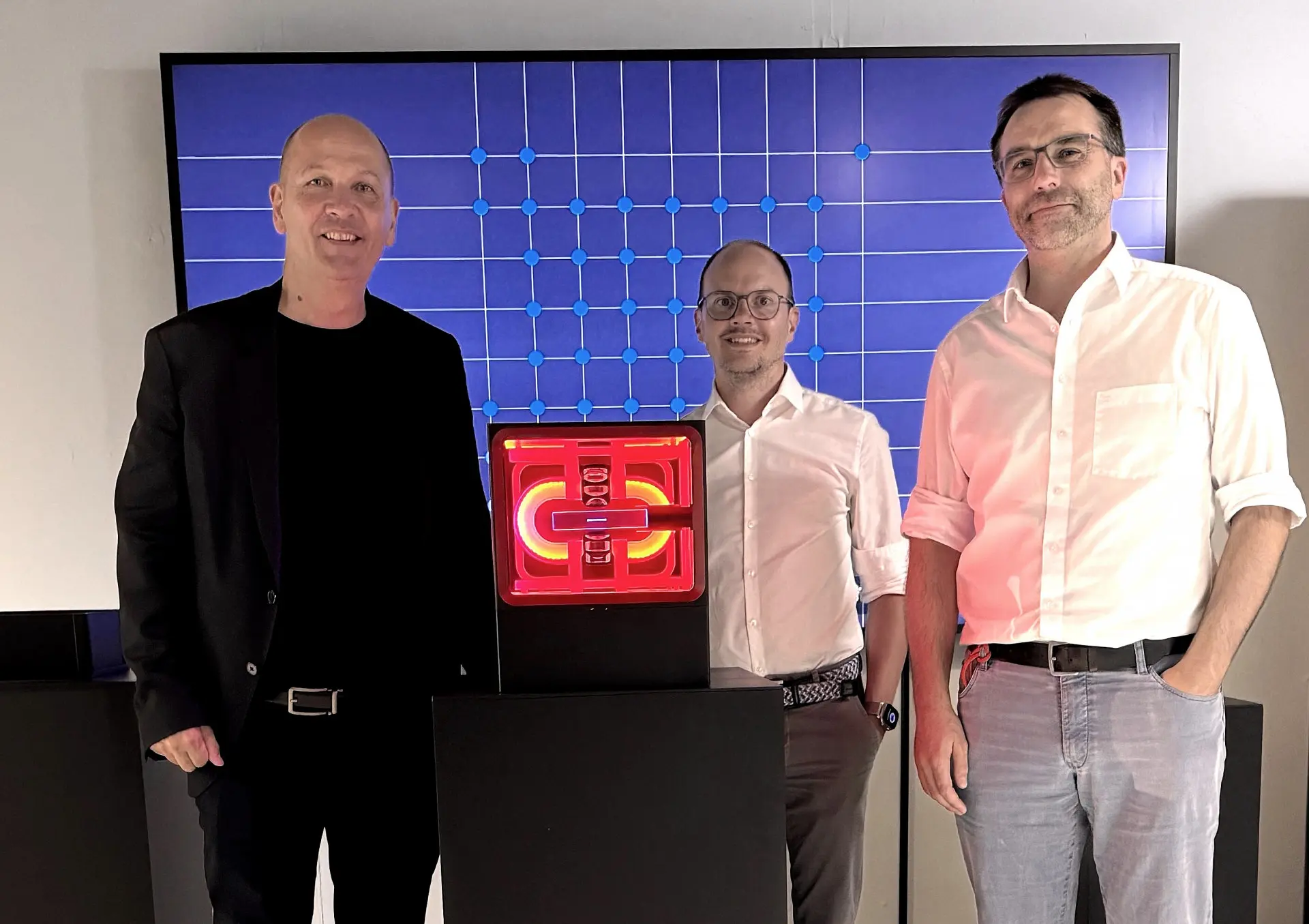
A member of the Swarovski family, Dr. Paul Swarovski, recently visited quantum computing firm planqc near Munich for an exchange of ideas connecting crystal technology and advanced computation. The visit, organized with Mag. Alexander Sarlay, focused on how quantum computers could unlock a deeper understanding of crystals and advanced materials at the atomic level, exceeding the capabilities of conventional computing.
“Quantum computing lets us understand and design materials at a level of detail that was previously out of reach,” says Dr. Alexander Glätzle, CEO and co-founder of planqc. He added that exchanges like this help identify potential applications and develop them further.
Swarovski Visit Sparks Quantum-Optics Innovation Exchange
Dr. Swarovski’s visit signaled a collaboration between a company known for crystal precision and a developer of quantum computers. Swarovski’s presence offered a unique perspective, bridging established precision technology and the emerging field of quantum computation. planqc’s CEO and co-founder, Dr. Alexander Glätzle, and CTO and co-founder, Dr. Sebastian Blatt, welcomed Swarovski and discussed the potential of quantum computers to solve complex problems. The conversation specifically addressed how quantum computation could surpass the limitations of classical computing in material design and analysis, potentially unlocking new possibilities for product development.
“It was a real pleasure to welcome Dr. Swarovski to Garching and to think together about where quantum technology can take us,” said Dr. Glätzle. This exchange highlighted the importance of interdisciplinary collaboration in accelerating quantum technology’s impact.
Participants agreed that significant innovations often arise at the convergence of different fields, and both sides expressed a commitment to continuing the dialogue. The company believes that fostering communication between science, industry, and creative disciplines is vital for realizing the full potential of quantum computing and translating it into practical applications. planqc stated that quantum technologies will ultimately reach far beyond classical IT and influence numerous industries, reinforcing their commitment to building the future of computing through open collaboration and shared innovation.
Quantum computing lets us understand and design materials at a level of detail that was previously out of reach, and that opens genuinely new perspectives for products and technologies.
Dr.




See today’s quantum computing news on Quantum Zeitgeist for the latest breakthroughs in qubits, hardware, algorithms, and industry deals.