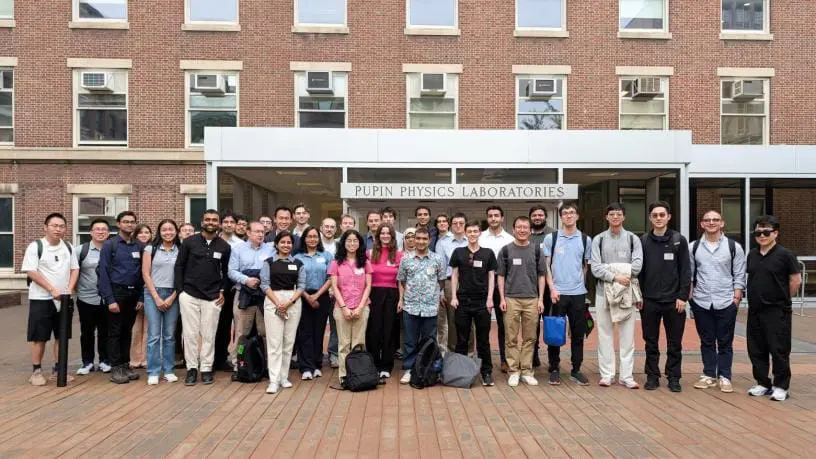
More than 75 researchers from nearly 15 institutions convened at Columbia University for the inaugural Photonics, Atomic Physics, and Optical Materials Student & Postdoc New York Conference (PANYC) on June 26, 2026, fostering connections and research sharing within the regional scientific community. The one-day symposium uniquely highlighted the importance of effective science communication, with a keynote delivered by Ellen Neff, science communications manager for the Columbia Quantum Initiative, who spoke about communicating research to diverse audiences. Dr. René-Jean Essiambre, a Distinguished Member of Technical Staff at Nokia Bell Labs, connected the history of telecommunications research at Bell Labs to his team’s current work in both classical and quantum communication, bridging established and emerging fields. The event provided a platform for 20 students and postdocs to present their work through oral and poster sessions, with the goal of establishing an annual tradition for NYC-area researchers.
Organized by Columbia PhD students Ali Binai Motlagh and Eric Rong, alongside postdoctoral researcher Sai Kanth Dacha, PANYC broadened its scope beyond traditional physics presentations to include a dedicated session on science communication. The organizers envision PANYC becoming an annual fixture, solidifying ties within the New York City research landscape.
This focus signals an effort to equip emerging researchers with the tools to translate complex findings beyond specialized circles. Dr. Essiambre’s presentation demonstrated a clear lineage of innovation by connecting established infrastructure with the potential of future networks. This regional network, supported by Columbia Electrical Engineering and the Department of Applied Physics and Applied Mathematics, underscores a commitment to fostering collaboration and elevating early-career voices within the field.
The event drew more than 75 attendees from nearly 15 institutions, including CUNY, NYU, Princeton, Rutgers, and Yale, with the goal of sharing research, building professional relationships, and strengthening ties between institutions.
Source: https://quantum.columbia.edu/news/columbia-hosts-inaugural-panyc-symposium-emerging-researchers



See today’s quantum computing news on Quantum Zeitgeist for the latest breakthroughs in qubits, hardware, algorithms, and industry deals.