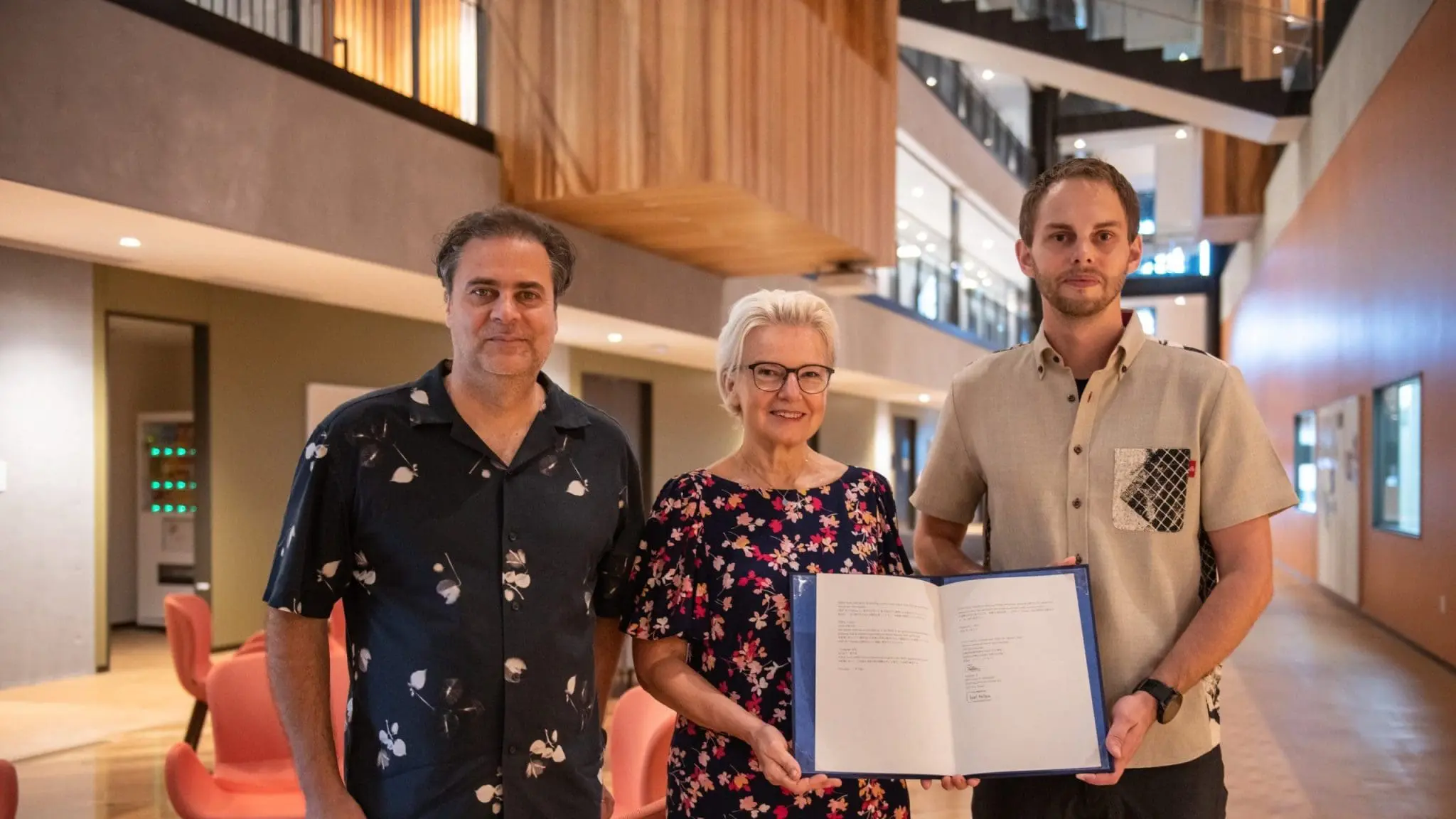
The Okinawa Institute of Science and Technology (OIST) and Danish software company Partisia have signed a Memorandum of Understanding to advance research in Multi-Party Computation (MPC) and develop innovative Privacy-Enhancing Technology solutions. This collaboration aims to deliver a global perspective on secure computation, quantum-safe cryptography, and cyber security by leveraging the combined knowledge and expertise of both parties.
Prof. Claudio Orlandi, Chief Cryptographic Protocol Designer at Partisia, and Prof. Carlos Cid, who leads the Applied Cryptography Unit at OIST, will work together to develop joint research projects in cryptography, secure computation, and cyber security. The partnership will facilitate research exchange visits and internships, jointly develop training materials, and collaborate on applications for research funding. By joining forces, they believe they can accelerate the research, development, and adoption of advanced privacy and cybersecurity technologies, contributing to a more secure digital future.
Bridging the Gap between Research-Driven Cryptography and Privacy through Secure Computations
The Okinawa Institute of Science and Technology (OIST) and Partisia, a Danish software company, have signed a Memorandum of Understanding (MOU) to strengthen their research ties in advancing multi-party computation and privacy-enhancing technologies. This collaboration aims to deliver a global perspective on secure computation, quantum-safe cryptography, and cyber security by leveraging the combined knowledge and expertise of both parties.
The primary objective of this partnership is to advance research in Multi-Party Computation (MPC), focusing on developing innovative Privacy-Enhancing Technology solutions. OIST will contribute its in-house expertise and the talents of its research community, while Partisia will bring its know-how and long-standing experience from its team of MPC researchers. This collaboration will facilitate joint research projects, exchange visits, and internships between the two parties.
One of the key areas of focus for this partnership is quantum-safe cryptography. As Prof. Carlos Cid, who leads the Applied Cryptography Unit at OIST, notes, Partisia has made significant contributions to multi-party computation, theory, and practice. The collaboration will enable the development of innovative solutions for secure data sharing and computation in both classical and quantum worlds.
Advancing Multi-Party Computation Research
Multi-Party Computation (MPC) is a subfield of cryptography that enables multiple parties to jointly perform computations on private data without revealing their individual inputs. This technology has far-reaching implications for privacy-enhancing solutions, particularly in the context of secure computation and cyber security.
The collaboration between OIST and Partisia will facilitate joint research projects in MPC, focusing on developing innovative solutions for secure data sharing and computation. By combining their expertise, the parties aim to accelerate the research, development, and adoption of advanced privacy and cybersecurity technologies globally.
Prof. Claudio Orlandi, Chief Cryptographic Protocol Designer at Partisia, notes that the collaboration will enable the identification of opportunities for both parties in Japan. This partnership will also facilitate the development of training materials and information on topics of mutual interest, further solidifying the research ties between OIST and Partisia.
Strengthening Research Ties through Collaboration
The MOU signed by OIST and Partisia marks a significant milestone in strengthening their research ties. By collaborating closely and proactively, the parties will facilitate joint research projects, exchange visits, and internships between the two parties.
This partnership will enable researchers from both parties to work together on applications for research funding in Japan, the EU, or elsewhere. The collaboration will also provide a framework for research visits, with OIST hosting Partisia cryptographers in Okinawa.
As Prof. Carlos Cid notes, this collaboration provides a great opportunity for both parties to further develop their activities in cryptographic research and strengthen their presence in Japan. By working together, OIST and Partisia aim to contribute to a more secure digital future globally.
Enabling Secure Data Sharing and Computation
The partnership between OIST and Partisia has significant implications for enabling secure data sharing and computation. By advancing research in MPC and privacy-enhancing technologies, the parties aim to deliver innovative solutions that protect individual data while still allowing for data analysis.
Partisia’s platform provides a secure environment where data from individuals, governments, and private companies can remain encrypted and protected while still being fully available for data analysis. This technology has far-reaching implications for various industries, including healthcare, finance, and government.
By collaborating with OIST, Partisia aims to further develop its platform and provide a more comprehensive solution for secure data sharing and computation. The partnership will enable the development of innovative solutions that cater to the needs of various stakeholders, ultimately contributing to a more secure digital future globally.
External Link: Click Here For More




See today’s quantum computing news on Quantum Zeitgeist for the latest breakthroughs in qubits, hardware, algorithms, and industry deals.