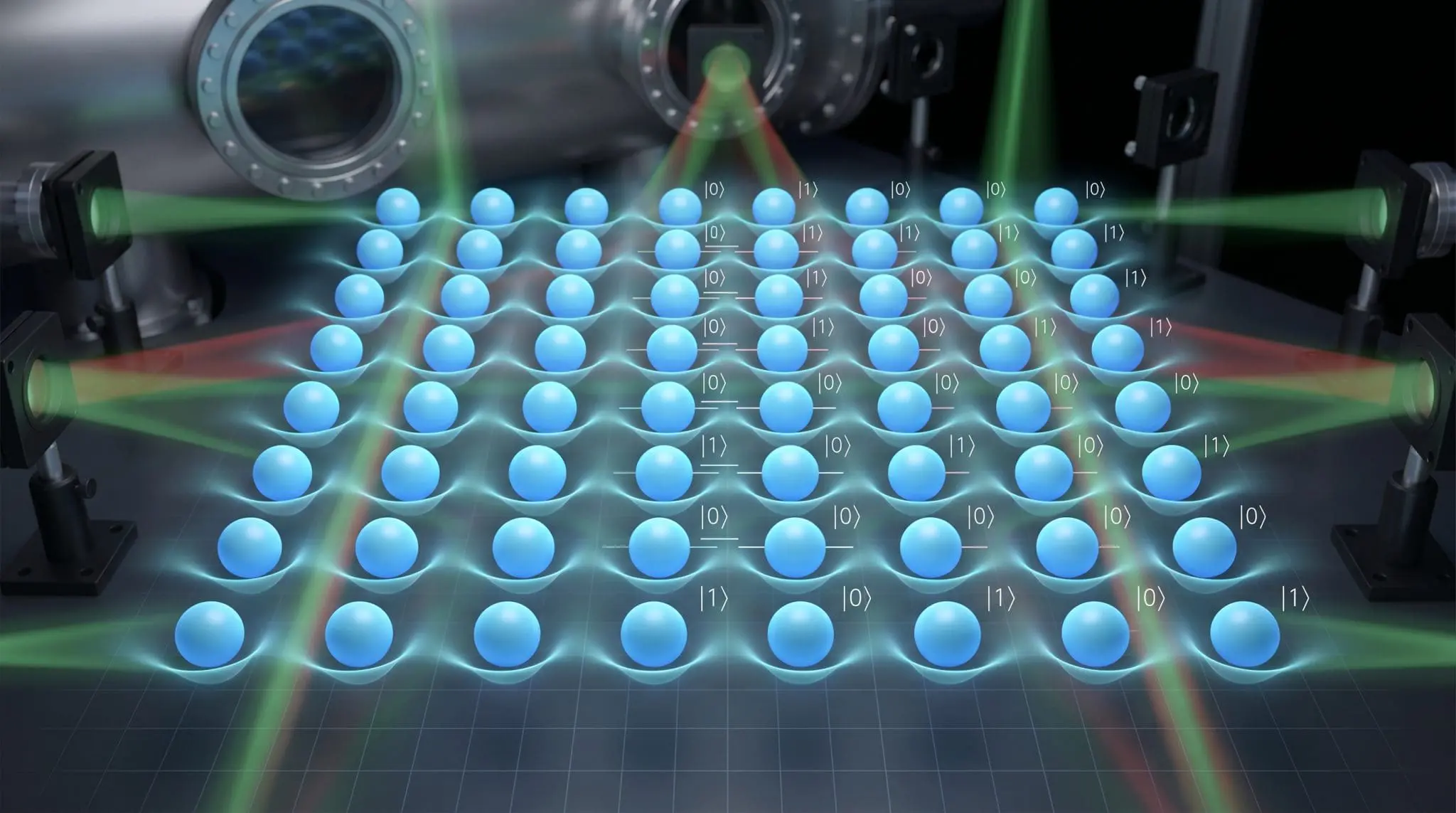
A new white paper from the EuRyQa consortium asserts that neutral-atom quantum computing has progressed from a promising research direction into one of the most credible paths toward building practical, scalable quantum computers. The report arrives as the European Commission prepares the proposed European Quantum Act, raising a critical question: how to translate a decade of investment in quantum science into lasting technological and industrial leadership. Unlike other quantum approaches potentially reliant on external supply chains, neutral-atom technology leverages Europe’s existing strengths in areas like photonics, precision lasers, and atomic physics, offering a pathway to both scientific advancement and technological sovereignty. The white paper emphasizes that useful quantum computers will require a complete technology stack, and Europe is uniquely positioned to deliver that, given its competitive capabilities in key enabling technologies.
Neutral-Atom Quantum Computing as a Scalable Path
The challenge now extends beyond fundamental science to encompass scalable systems, robust industrial capabilities, and secure supply chains needed to support quantum computing for decades to come. Only a few years ago, neutral atoms were primarily considered tools for analogue quantum simulation, but improvements in qubit fidelity and control techniques have dramatically altered that perception. The report highlights that all core ingredients required for fault-tolerant quantum computing have already been individually demonstrated within neutral-atom systems, though significant engineering and scientific challenges remain. The consortium emphasizes that a holistic, systems-level approach is crucial, extending beyond qubits to encompass control electronics, software, error correction, and classical high-performance computing. The white paper explains that useful quantum computers will depend on an entire stack of technologies working together. Europe’s existing capabilities in deep-tech engineering and scientific collaboration position it favorably to contribute to this future, provided it can coordinate efforts and align scientific excellence with long-term industrial strategy.
EuRyQa Report Highlights European Technological Sovereignty
After a decade of substantial investment in quantum science, the continent now faces the pivotal task of converting research excellence into sustained industrial and technological dominance; the forthcoming European Quantum Act will be instrumental in this transition. Neutral-atom systems offer a chance to build both scientific prowess and secure, independent supply chains, unlike other quantum approaches. The report emphasizes that the challenge now extends beyond simply building qubits, requiring a holistic approach encompassing control electronics, software development, and classical high-performance computing integration. A key argument centers on the potential for neutral-atom systems to reduce reliance on energy-intensive cryogenic cooling, a factor that could become increasingly significant as quantum computing scales. Europe has the talent, research base, and industrial capabilities to help shape that future, the report concludes, but realizing this potential hinges on coordinated ambition and effective policy support through initiatives like the Quantum Act, which could help Europe move beyond supporting excellent science toward building a coherent quantum industry strategy.
Quantum Act Needed to Align Science with Industry
The race to build practical quantum computers is intensifying, and for European researchers like those within the EuRyQa consortium, the focus is shifting from purely scientific advancement to establishing robust industrial capabilities. The report notes that Europe already possesses globally competitive capabilities in photonics, precision lasers, industrial engineering, and scientific instrumentation, highlighting a growing ecosystem of quantum startups and academic networks. However, the consortium warns against fragmentation, citing the aggressive, industrially-focused quantum programs underway in the US and China. The Quantum Act could facilitate a coherent European quantum industry strategy, supporting not only research but also supply chains, manufacturing, and workforce development. The report states that scaling quantum computing is an engineering, software, and systems-integration challenge as much as a physics problem, and that the most important message of the paper is not about one hardware modality winning over another. Europe’s potential extends to energy efficiency as well, with neutral-atom systems potentially requiring less cryogenic cooling than other platforms, a factor that will become increasingly important as quantum computing scales.
That means supporting not only breakthrough research, but also supply chains, manufacturing capability, workforce development, standards, infrastructure, and public-private partnerships.
Source: https://www.quantum-machines.co/blog/europes-quantum-act-must-go-beyond-research-excellence/


See today’s quantum computing news on Quantum Zeitgeist for the latest breakthroughs in qubits, hardware, algorithms, and industry deals.