Maybell Quantum has secured thousands of liters of helium-3 in a multi-year agreement with Interlune, indicating a substantial investment in the expanding infrastructure needed for quantum computing. The rare isotope will fuel Maybell’s advanced dilution refrigerators, capable of achieving base temperatures below 10 millikelvins, critical for maintaining the fragile quantum states essential to qubit operation. Current dilution refrigerators each require a few dozen liters of helium-3, but as systems scale, demand is expected to increase dramatically. “Helium-3 will fundamentally transform computing,” said Corban Tillemann-Dick, founder and CEO of Maybell Quantum. “In the coming years, we’ll go from a few hundred quantum computers worldwide to thousands, then tens of thousands, and they all need to get cold.”
Maybell Quantum’s Dilution Refrigeration Advances Quantum Computing
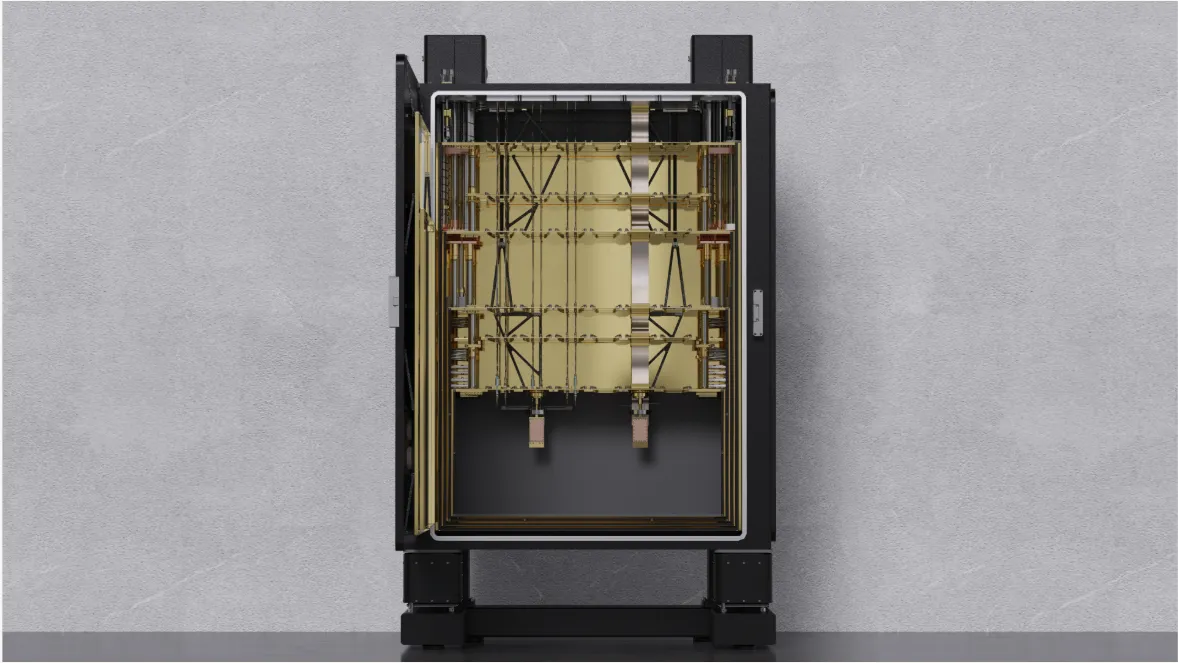
Maybell Quantum’s commitment to scaling quantum computing infrastructure is underscored by a multi-year agreement to purchase thousands of liters of helium-3 from Interlune, beginning in and continuing through ; this investment signals confidence in the growing field and a proactive approach to securing a critical resource. The demand for helium-3 stems from its essential role in dilution refrigerators, devices that achieve extraordinarily low temperatures, below 10 millikelvins (mK), necessary for maintaining the quantum states of qubits. These temperatures, hundreds of times colder than outer space, are not merely a technical challenge but a fundamental requirement for functional quantum computers, and Maybell Quantum’s “Big Fridge” exemplifies the extreme cooling capabilities now attainable. The scale of helium-3 consumption is noteworthy; current dilution refrigerators each utilize a few dozen liters, but as quantum computing systems expand, individual systems will require hundreds, potentially thousands, of liters to operate effectively.
Maybell Quantum’s refrigeration systems represent a significant leap in cryogenic technology, supporting three times the number of qubits within one-tenth the space of competing systems; this increased density is crucial for scaling quantum computing capabilities. Rob Meyerson, Interlune co-founder and CEO, emphasized this impact, stating, “Maybell’s innovation in cryogenic refrigeration is ahead of its time, making it possible for its quantum computing customers to innovate in turn.” By reaching temperatures below 10 mK, these refrigerators not only enhance computing performance but also improve experimentation capacity and overall system reliability, enabling more complex and powerful quantum computations.
Interlune Pioneers Helium-3 Harvesting from Lunar Regolith & Earth Sources
Interlune has secured its initial commercial contract with Maybell Quantum, a quantum infrastructure company, establishing a pathway for scaled helium-3 delivery from to ; this agreement signifies growing confidence in the long-term viability of helium-3 as a critical resource for emerging technologies. Beyond this initial commitment, Interlune has also forged a purchase agreement with the U. S. Department of Energy Isotope Program, broadening its supply network and demonstrating a multi-faceted approach to sourcing this rare isotope. Maybell Quantum’s “Big Fridge” exemplifies this need, achieving base temperatures critical for advanced quantum processing. Interlune is addressing this demand through dual strategies: terrestrial separation of helium-3 from existing helium supplies, supported by a Department of Energy Isotope Program research grant, and lunar harvesting techniques. The company’s lunar harvesting system is designed for efficiency, utilizing smaller, lighter, and less power-intensive machinery than competing concepts, reducing both transportation costs and operational demands on the Moon.
Maybell’s innovation in cryogenic refrigeration is ahead of its time, making it possible for its quantum computing customers to innovate in turn.
Rob Meyerson, Interlune co-founder and CEO



See today’s quantum computing news on Quantum Zeitgeist for the latest breakthroughs in qubits, hardware, algorithms, and industry deals.