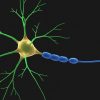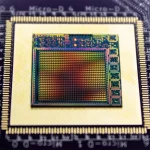
Researchers at Washington University in St. Louis are addressing a critical challenge in artificial intelligence: building systems capable of not just learning or inferring, but of independently finding optimal solutions to extraordinarily complex problems. Unlike ChatGPT, an example of an AI trained on the exact steps involved for that problem, these machines would tackle puzzles without prior instruction, requiring a fundamentally different architecture. The team’s work, recently published in Nature Communications, combines architecture modeled on human neurobiology with principles of quantum mechanics to achieve consistently reliable results. “These are the two ingredients you need,” explains Shantanu Chakrabartty, the Clifford W. Murphy Professor and vice dean for research in the McKelvey School of Engineering at Washington University in St. Louis, referring to the system’s core components, a hybrid approach designed to “find a needle in a haystack,” with guaranteed success.
Discovery Machines: Distinguishing AI Categories & Challenges
A new class of artificial intelligence is emerging, one that doesn’t simply learn or infer, but actively discovers solutions to complex problems. While familiar AI like ChatGPT excels at readily answering questions, researchers are now focused on building the rarest of the three main AI categories. This pursuit, detailed in Nature Communications, centers on a hybrid architecture combining neuromorphic computing, inspired by the human brain, with principles of quantum mechanics. Researchers at Washington University in St. Louis are pursuing this approach, aiming to create systems capable of tackling problems demanding more than just pattern recognition. “Imagine a machine that not only can find all possible solutions to a particular puzzle, but it can also find the fastest and most optimized solution, even with trillions of factors,” explains Shantanu Chakrabartty, the Clifford W.
The core of this innovation lies in a specific formula: neuromorphic-inspired auto encoding paired with Fowler-Nordheim annealing, a technique borrowed from quantum mechanics. Auto encoders compress large streams of data, and the machine repeats the compression process until its predictions are accurate. The team’s architecture also offers convergence guarantees; even if a solution takes months, one will ultimately emerge, a marked improvement over systems where researchers might wait indefinitely without success. “After six months, something useful will show up,” Chakrabartty confirms, referencing the famously long calculation of Deep Thought from The Hitchhiker’s Guide to the Galaxy.
Neuromorphic-Quantum Hybrid Architecture for Optimized Solutions
Beyond the current prevalence of inference and learning machines, a more ambitious category of artificial intelligence, discovery machines, is gaining traction, demanding novel architectural approaches to tackle previously intractable problems. Researchers are now demonstrating a pathway to building these systems with convergence guarantees, a critical advancement over existing AI types. The system utilizes auto encoders to compress large streams of data and repeats the compression process until its predictions are accurate. Complementing this is a technique borrowed from quantum mechanics that introduces controlled randomness, allowing the machine to bypass computational bottlenecks and “tunnel” directly toward optimized solutions. This approach offers a significant advantage over classical computing methods, potentially accelerating the path to breakthroughs. In some cases, if researchers don’t get the prompt right with supercomputers, they could be waiting a year without results.
It’s the third category, the discovery machines, where things get very difficult.
Fowler-Nordheim Annealing & Auto-Encoding for Scalability
Beyond simply mimicking learned responses, a growing field focuses on building artificial intelligence capable of genuine discovery, and researchers are increasingly turning to unexpected combinations of physics and neurobiology to achieve this goal. Shantanu Chakrabartty, the Clifford W. Murphy Professor at Washington University in St. Louis, is refining a blueprint for these systems designed to not only identify solutions but to optimize them even within extraordinarily complex parameters. This research, detailed in Nature Communications, centers on a specific pairing: auto-encoding and Fowler-Nordheim annealing. Auto-encoders compress large streams of data, enabling pattern prediction and the machine repeats the compression process until its predictions are accurate; however, tackling truly complex problems demands a method for navigating immense solution spaces efficiently. “These types of machines give you that guarantee,” he said.
The research shows that these machines can consistently produce state-of-the-art solutions with high reliability and with competitive time-to-solution metrics, Chakrabartty said.
Guaranteed Convergence & Reliability in Complex Problem Solving
Beyond simply processing information, a new breed of artificial intelligence is emerging focused on genuine discovery; these represent the rarest of these machines, demanding solutions to problems with trillions of potential factors. Researchers are demonstrating a pathway to building these systems with an answer guaranteed, meaning an answer will be found, even if it takes an extended period. This approach leverages a technique that compresses large streams of data, enabling pattern prediction and repeating the compression process until its predictions are accurate, coupled with a method for introducing controlled randomness.
It’s general enough you can apply it to any complex problem.
See today’s quantum computing news on Quantum Zeitgeist for the latest breakthroughs in qubits, hardware, algorithms, and industry deals.