A thorough investigation into charge noise, a key limitation to qubit performance in solid-state quantum devices, is presented by Katrin Hecker and colleagues at RWTH Aachen University, Research Centre for Electronic and Optical Materials, Research Centre for Materials Nanoarchitectonics, 1JARA-FIT and 2nd Institute of Physics, Peter Gr¨unberg Institute (PGI-9), and 2 other institutions. The study focuses on bilayer graphene quantum dots, a recently identified platform for spin- and valley-based qubits. Using Landau-Zener-Stückelberg-Majorana interference spectroscopy, the team measured a noise spectral density of 0.5-0.9 neV/\sqrt{Hz} at frequencies between 5 and 10GHz, showing comparability with established qubit technologies utilising III-V semiconductors and silicon. Analysis of temperature and frequency dependence reveals that thermal noise and electron-phonon coupling are primary contributors to decoherence, offering valuable insight for optimising future qubit designs.
Low electrical noise in bilayer graphene rivals silicon for qubit applications
A noise spectral density of 0.5 to 0.9 neV/√Hz was extracted from bilayer graphene quantum dots, representing a sharp step forward as previously quantifying such low-level electrical noise in this material proved elusive. The measurement, achieved via Landau-Zener-Stückelberg-Majorana interference spectroscopy, demonstrates performance comparable to silicon and III-V semiconductors, opening possibilities for bilayer graphene as a viable qubit platform. This finding establishes a key baseline, confirming that bilayer graphene can manage electrical interference as effectively as established materials, addressing a key obstacle to its use in quantum computing. Charge noise arises from fluctuating electric fields within the material, disrupting the delicate quantum states of qubits and leading to decoherence, the loss of quantum information. Until now, the extent of this noise in bilayer graphene, a material predicted to possess favourable quantum properties, remained poorly understood, hindering its development as a qubit host.
Thermal noise and electron-phonon coupling are the dominant sources of decoherence, providing valuable insight for optimising future qubit designs and mitigating performance limitations. Quantifying electrical noise in bilayer graphene quantum dots at 0.5 to 0.9 neV/√Hz is an important finding for assessing its potential in quantum technologies. Obtained using Landau-Zener-Stückelberg-Majorana interference spectroscopy, this technique is sensitive to subtle energy level changes and demonstrates performance comparable to silicon and III-V semiconductors, materials currently favoured for building qubits, the fundamental units of quantum information. The Landau-Zener-Stückelberg-Majorana (LZSM) interference spectroscopy method relies on repeatedly driving a quantum dot between two energy levels, inducing transitions governed by the Landau-Zener probability. Interference patterns arising from these transitions are exquisitely sensitive to charge noise, allowing for precise spectral density measurements. This technique offers a significant advantage over traditional methods, which often average out the crucial high-frequency noise components.
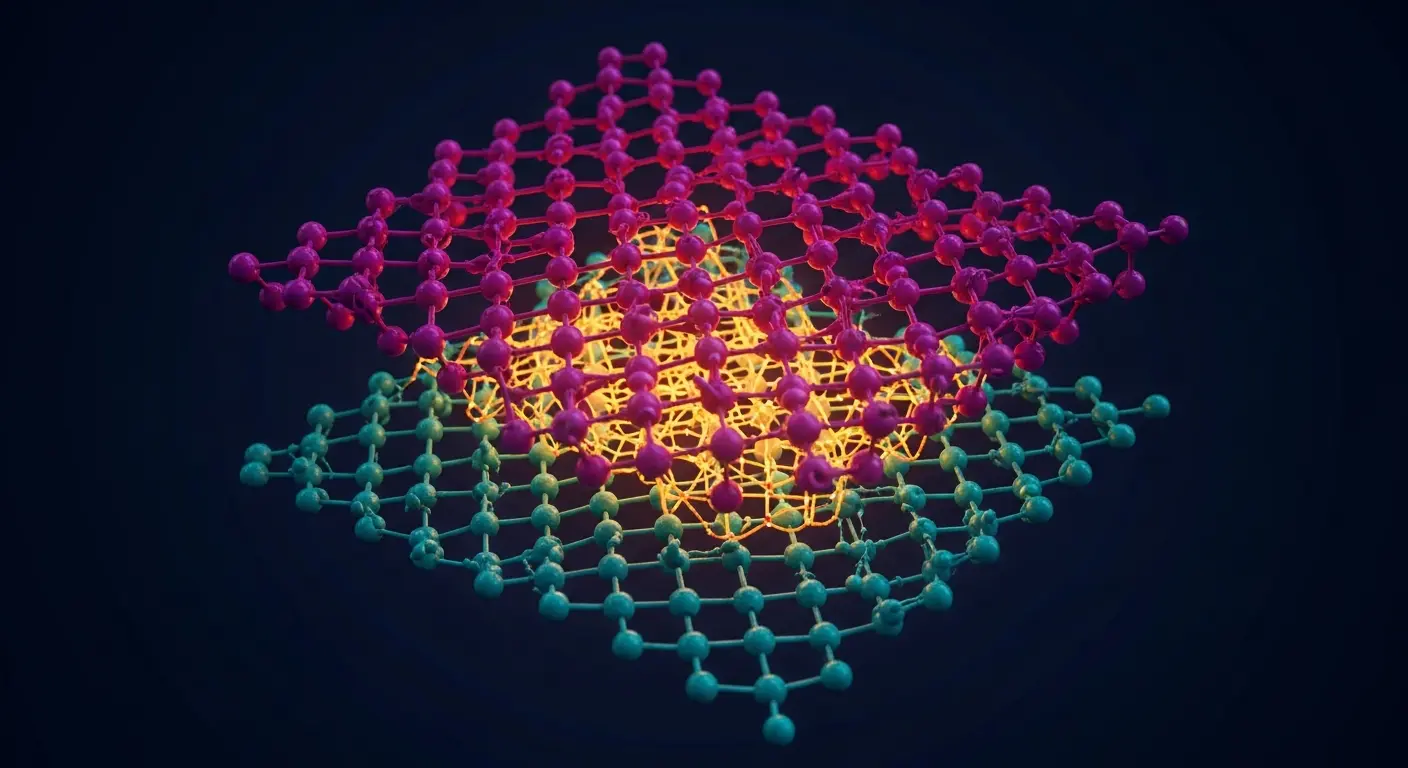
Detailed analysis of temperature dependence between 0.08 and 1.2 Kelvin, alongside frequency variations from 4 to 10GHz, indicates that thermal noise, specifically Johnson noise from nearby electrodes, and electron-phonon coupling are the primary causes of decoherence, impacting qubit stability. The bilayer graphene double quantum dots device utilised hexagonal boron nitride encapsulation and precisely controlled gate voltages to define and manipulate the quantum dot environment. Hexagonal boron nitride serves as an excellent dielectric, providing a clean and inert environment for the quantum dot, minimising extraneous noise and defects. Precise control of gate voltages allows for tuning the energy levels within the quantum dot, enabling the formation of a single-particle charge qubit. Increasingly, scientists are focused on building stable qubits, the fundamental building blocks of quantum computers, but maintaining their delicate quantum states remains a significant hurdle. Qubit stability, measured by coherence time, is paramount for performing complex quantum calculations; longer coherence times allow for more operations to be performed before the quantum information is lost.
Bilayer graphene can achieve noise levels comparable to silicon and III-V semiconductors, positioning it as a potential contender in the qubit race; however, the study stops short of definitively separating the contributions of thermal noise and electron-phonon coupling to overall decoherence. Despite acknowledging the uncertainty around pinpointing the exact source of decoherence, whether from heat or vibrations within the material, this finding remains significant. Demonstrably performing alongside established qubit materials like silicon and gallium arsenide, bilayer graphene broadens the options for building future quantum processors. Electron-phonon coupling refers to the interaction between electrons and lattice vibrations (phonons) within the material, which can also contribute to decoherence by introducing energy fluctuations. Further research is needed to fully disentangle these two noise sources and optimise the material accordingly. Understanding the relative contributions of these mechanisms is crucial for developing effective noise mitigation strategies.
Bilayer graphene matches the performance of silicon and gallium arsenide in maintaining qubit stability, materials vital for building quantum computers. The investigation confirms that bilayer graphene quantum dots exhibit charge noise levels comparable to those found in silicon and gallium arsenide, materials already used to build quantum computers. Identifying thermal noise and electron-phonon coupling as primary contributors to decoherence, the loss of quantum information, provides a key baseline for future material optimisation. Establishing this parity in performance validates bilayer graphene as a potential platform for scalable quantum technologies, alongside existing semiconductor options. Scalability is a major challenge in quantum computing; building systems with many interconnected, stable qubits is essential for tackling complex problems. The demonstrated compatibility of bilayer graphene with existing fabrication techniques and its comparable performance to established materials suggest it could play a significant role in achieving this goal. The ability to fabricate high-quality bilayer graphene quantum dots with well-defined properties is crucial for realising practical quantum devices.
The measured noise spectral density of 0.5-0.9 neV/√Hz at 5-10GHz provides a crucial benchmark for assessing the viability of bilayer graphene in quantum information processing. This level of noise is comparable to that observed in state-of-the-art silicon and III-V semiconductor qubits, suggesting that bilayer graphene is not inherently disadvantaged in terms of charge noise. Future work will focus on further reducing noise levels through material purification, device optimisation, and the development of novel qubit designs. Ultimately, the goal is to create qubits with sufficiently long coherence times to enable fault-tolerant quantum computation, a transformative technology with the potential to revolutionise fields such as medicine, materials science, and artificial intelligence.
The research demonstrated that bilayer graphene quantum dots exhibit charge noise levels of 0.5-0.9 neV/√Hz at frequencies between 5 and 10GHz, comparable to silicon and gallium arsenide. This finding indicates bilayer graphene performs similarly to established materials used in building quantum computers, offering another potential platform for qubit development. The study identified thermal noise and electron-phonon coupling as the main sources of decoherence, providing a baseline for improving material quality. Researchers plan to further reduce noise through material purification and device optimisation to enhance qubit coherence times.
👉 More information
🗞 Probing charge noise in bilayer graphene quantum dots by Landau-Zener-Stückelberg-Majorana spectroscopy
🧠 ArXiv: https://arxiv.org/abs/2605.12257
See today’s quantum computing news on Quantum Zeitgeist for the latest breakthroughs in qubits, hardware, algorithms, and industry deals.