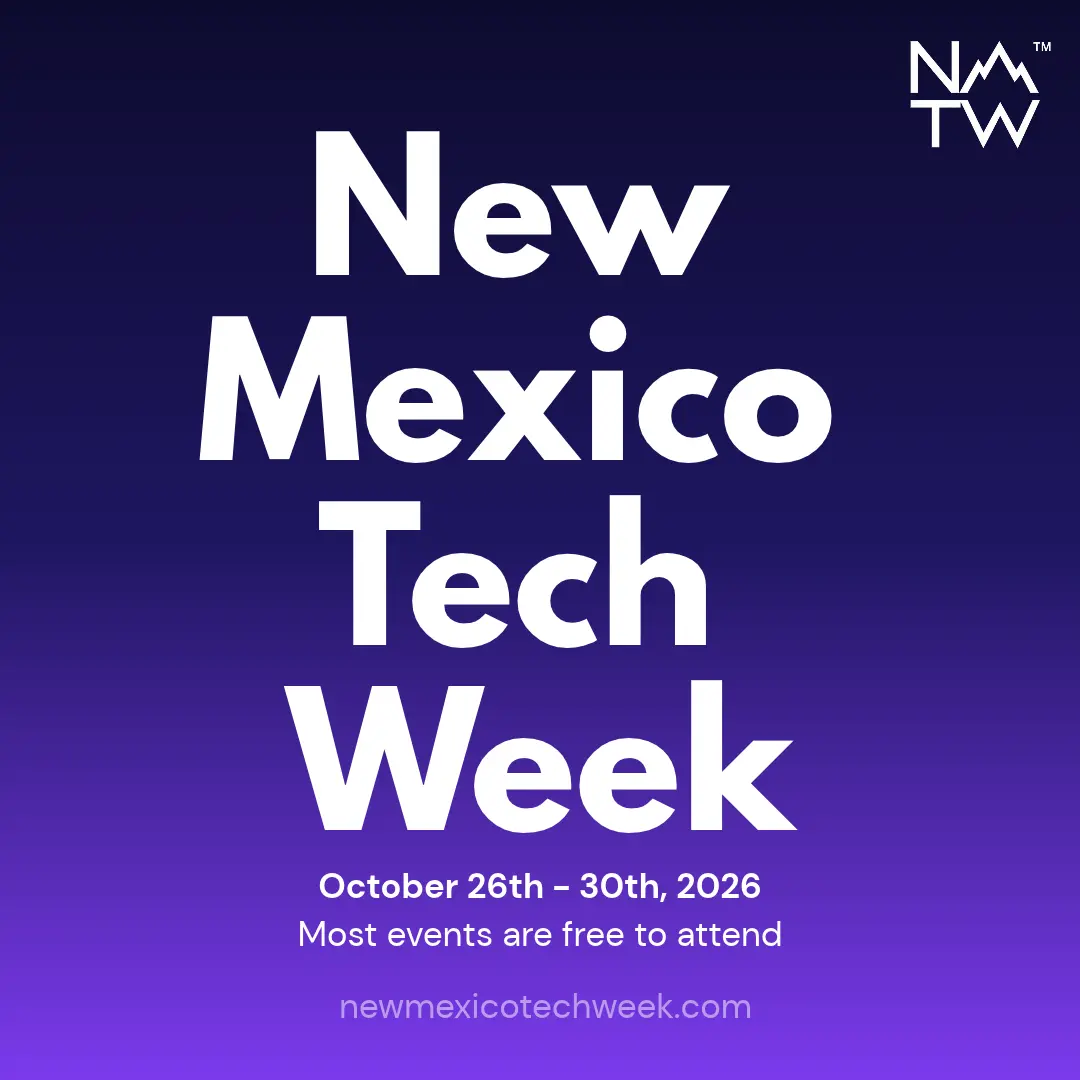
New Mexico will host its first New Mexico Tech Week from October 26-31, 2026, bringing together over 2,000 attendees and 200+ speakers to Albuquerque and Santa Fe. In May 2026, New Mexico’s Economic Development Department launched a $25 million state-backed New Mexico Quantum Venture Studio, including a campus in downtown Albuquerque’s Innovation District. “This is about putting New Mexico on the map as a serious place to build and invest in technology,” said Paul Zelizer, co-founder of New Mexico Tech Week, as the state’s venture capital investment has climbed 50% year-over-year.
$25M Quantum Venture Studio Launches Alongside New Mexico Tech Week
This investment follows the recent launch of ABQ-Net, the nation’s first open-access entanglement-based quantum network, and a $4 million partnership between Roadrunner Venture Studios, signaling a concentrated effort to cultivate a robust quantum ecosystem. New Mexico Tech Week, running from October 26-31, is designed to showcase these advancements and attract further investment.
Vicki Apodaca, New Mexico Tech Week Co-Founder, explained that the event is “designed to help national investors, founders, and partners see that opportunity up close,” highlighting the state’s potential as a technology hub. The week’s programming, including TechFest, a quantum hackathon, and startup workshops, is intended to encourage connections and drive innovation.
Angelica Maestas, Director of Strategic Partnerships at Builders VC, emphasised the importance of these interactions, saying, “New Mexico has no shortage of smart people building really interesting things. What we need more of are the collisions between founders, investors, industry, research, and the people who can actually open doors.” The state’s investment extends beyond quantum computing, with significant growth in advanced energy as well. Since 2019, New Mexico has added 6 gigawatts of renewable capacity, creating 14,000 clean-energy jobs and attracting over $10 billion in private investment.
The State Investment Council has deployed $1.7 billion in strategic venture capital over the past three years, with $1 billion of that investment occurring in the last six months, demonstrating a commitment to supporting emerging technologies, the company says. Has also expanded its Albuquerque presence and is a NMTW sponsor.
“From quantum and aerospace to advanced energy and beyond, New Mexico has made rapid progress in fostering the technology fields that will define our future,” said Nora Meyers Sackett, Director of the New Mexico Technology & Innovation Office and New Mexico Tech Week sponsor. “We’re proud to be showcasing that progress and bringing researchers, startups and innovators together with investors and key stakeholders to celebrate what we’ve built and foster the connections that will take this ecosystem to even greater heights.”
From quantum and aerospace to advanced energy and beyond, New Mexico has made rapid progress in fostering the technology fields that will define our future.
Nora Meyers Sackett, Director of the New Mexico Technology & Innovation Office and New Mexico Tech Week sponsor




See today’s quantum computing news on Quantum Zeitgeist for the latest breakthroughs in qubits, hardware, algorithms, and industry deals.