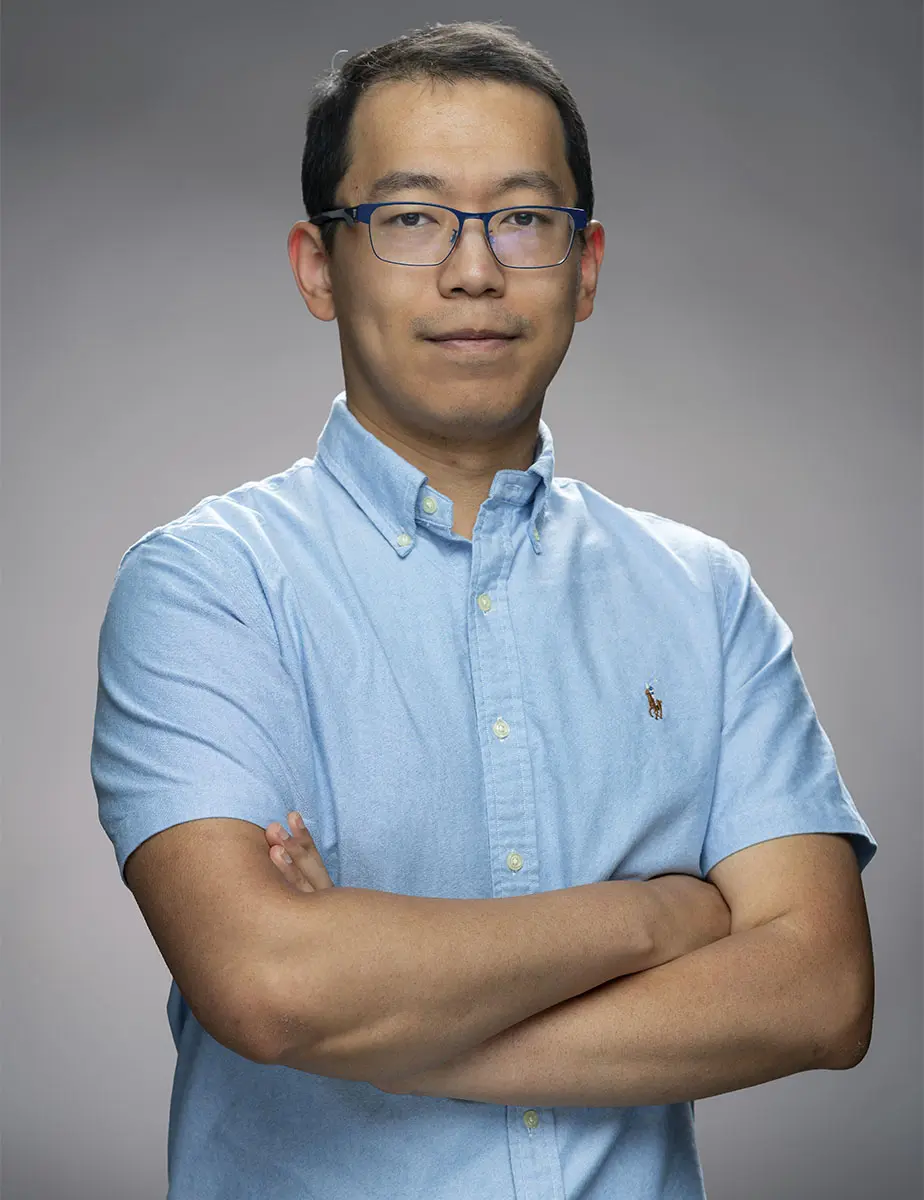
Fermilab associate scientist Yao Lu has received a 2025 DOE Early Career Award to build a device designed to detect dark photons, hypothetical particles that could reveal the nature of dark matter, using a novel approach to signal detection. Lu’s project centers on a “scalable superconducting cavity array,” a significant advancement beyond traditional single-cavity searches, promising increased speed and sensitivity in the hunt for these elusive particles. The challenge, he explains, is similar to “stumbling upon a lone, faint broadcast from an unknown station” within an endless range of microwave frequencies. This research, conducted within Fermilab’s Superconducting Quantum Materials and Systems Center, is part of a larger national effort involving five DOE National Quantum Information Science Research Centers focused on building both the world’s most powerful quantum computers and sensors. “The key is not just building better cavities,” Lu said, “it is learning how to make many ultra-coherent sensors work together so entanglement becomes a real advantage in the experiment.”
DOE Award Funds Scalable Superconducting Dark Photon Detector
Lu’s array focuses on creating a coordinated system rather than simply improving individual sensors; the architecture is designed to scale, beginning with a four-cavity prototype intended as a foundation for much larger configurations. “If we can demonstrate the right architecture and control at that scale, we can extend the same framework to much larger arrays,” Lu said, highlighting the potential for exponential growth in detection capabilities. The core of this advancement lies in combining ultra-coherent cavity hardware with quantum entanglement, allowing multiple cavities to function as a unified sensor. This allows the system to scan through potential frequencies more rapidly than conventional methods.
Entangled Cavity Arrays Enhance Quantum Sensing
Fermilab’s pursuit of dark matter detection is evolving beyond traditional single-cavity methods, with a new emphasis on leveraging the principles of quantum entanglement to improve sensor capabilities. Lu’s team is focused on interconnecting multiple ultra-coherent sensors to function as a unified system, rather than simply building better individual cavities. By employing remote quantum entanglement, these cavities can share signals efficiently, allowing the array to scan frequencies more rapidly than a single detector. This approach draws on techniques developed for superconducting quantum computing, enabling the preparation and measurement of highly excited quantum states crucial for enhancing sensing capabilities. Beyond dark matter, this technology promises advancements in other areas of quantum sensing, including the search for axions, and contributes to the development of modular quantum computers and secure communication networks, furthering SQMS’s broader goals.
The rest is dark matter, a mysterious substance that does not reflect, emit or absorb light.
Fermilab
SQMS Center Advances Quantum Computing & Communication
Unlike traditional searches that methodically scan microwave frequencies, Lu’s project aims to accelerate the process by employing multiple, interconnected quantum sensors. Lu’s innovation lies in moving beyond single microwave cavities, traditionally used as sensitive antennae, to a coordinated array functioning as a single unit through remote quantum entanglement. This allows for a parallel search across a broader spectrum, increasing the probability of detecting a dark photon should one exist. SQMS represents a substantial national investment in both quantum computing and sensing technologies, with over 40 partner institutions collaborating to advance the field. Beyond the search for dark matter, the hardware and interconnect architecture developed by Lu’s team are directly applicable to modular quantum computing and secure quantum communication networks, promising benefits that extend beyond particle physics.
If we can demonstrate the right architecture and control at that scale, we can extend the same framework to much larger arrays.



See today’s quantum computing news on Quantum Zeitgeist for the latest breakthroughs in qubits, hardware, algorithms, and industry deals.