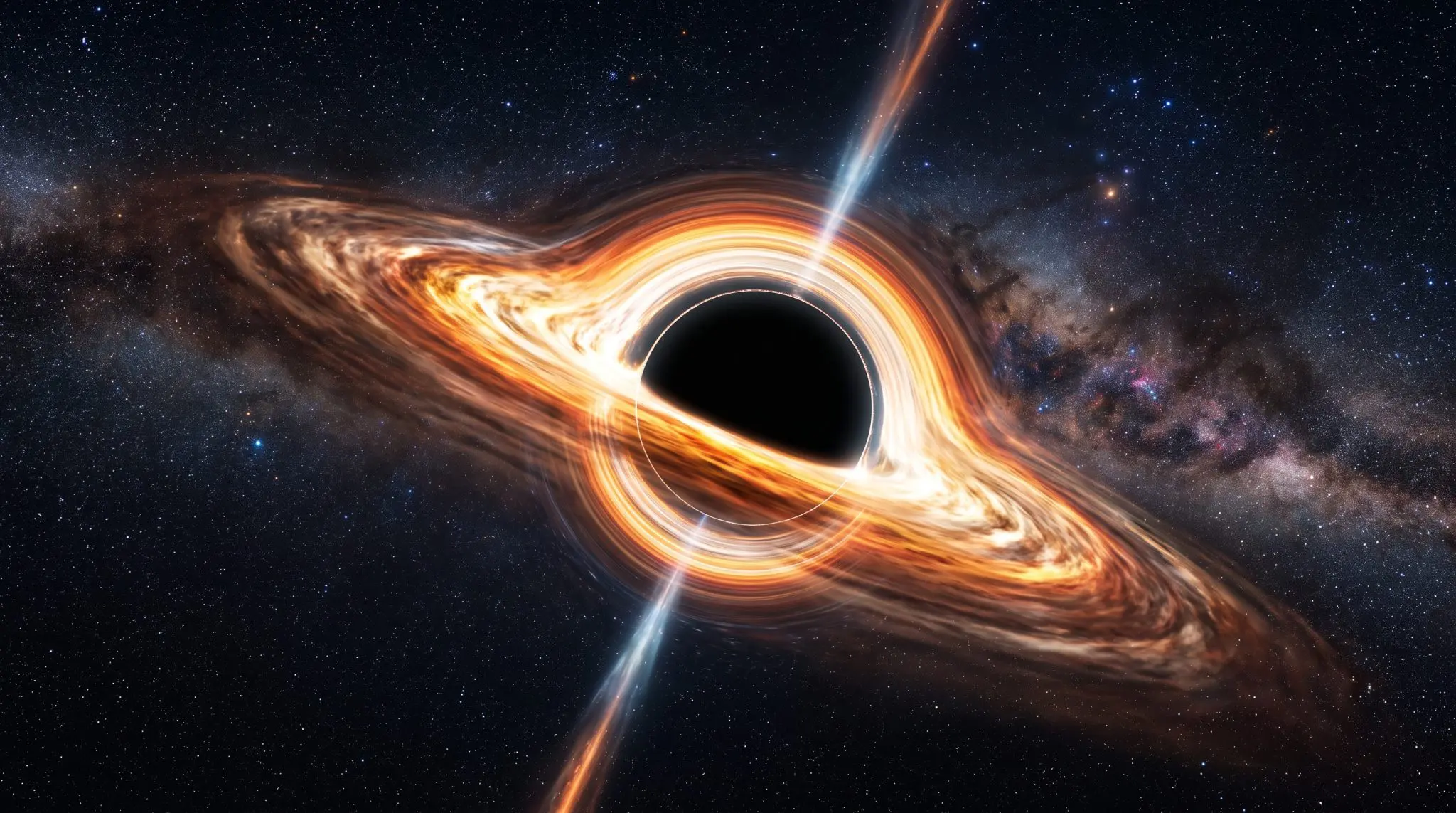
A method simulates how gravitational waves affect atoms interacting with light within an optical cavity. Precise control over the movement of mirrors forming this cavity, specifically modulating their boundary conditions, replicates changes expected from spacetime distortions caused by gravitational waves. An experimental approach replicates how gravitational waves influence atoms interacting with light within specially designed systems called optical cavities.
Careful adjustment of mirror movements alters reflective boundaries and successfully simulates effects anticipated from distortions in spacetime caused by gravitational waves. The technique enables investigation into fundamental physics linking gravity and quantum mechanics without needing direct detection of actual gravitational waves. Researchers at the University of Warsaw and Stockholm University have engineered a new method to simulate gravitational waves using atoms interacting with light within optical cavities.
The approach centres on meticulous control of mirror movement; modulation of their reflective boundaries allows replication of spacetime distortions expected from these cosmic events. Understanding how gravity affects quantum systems is a vital goal in physics, and this technique offers a way to investigate that link without directly detecting actual gravitational waves.
The team’s setup relies on ‘strong atom-cavity coupling’, where interactions between an atom and light become remarkably efficient, imagine gently rocking a child on a swing; pushing at just the right frequency creates large swings even with small effort. Oscillating one of the cavity mirrors induces changes in the electromagnetic field mirroring those caused by ripples in spacetime itself, much like disturbances affecting floating objects on water.
Resonant mirror modulation amplifies simulated gravitational wave effects on atoms
The researchers Stockholm University, Polish Academy of Sciences achieved a resonant enhancement factor of ω0/ω ∼107 in their simulated gravitational wave experiment. This amplification exceeds the capabilities of previous analogue gravity setups which were limited to perturbative regimes with undetectably weak effects. The substantial increase enables observation of measurable imprints upon atomic transition probability, a feat previously impossible due to limitations in signal strength and sensitivity.
Modulating mirror positions simulates gravitational wave distortions, affecting atom-light interaction under strong coupling conditions; observations confirm this effect. Calculations reveal that impact on atom-field interactions is enhanced near Rabi frequency resonance, allowing for detectable changes in excited state population via repeated measurements. Optimising interrogation times can minimise uncertainty when determining displacement amplitude, maximising sensitivity regardless of initial phase at specific coupling ratios.
Modelling guides development of tabletop gravity simulations for quantum investigations
This technique provides a significant approach to studying the subtle effects of gravity on quantum systems, sidestepping the need for direct detection of gravitational waves, a notoriously difficult undertaking. However, accurately replicating complex phenomena within simplified laboratory setups presents challenges and inherent limitations. The team acknowledges their current modelling prioritises theoretical feasibility over confirmed experimental results, creating tension between prediction and observation.
Pinpointing how gravitational-wave-like modulations impact atomic behaviour through alterations in an atom’s emission spectrum offers a pathway towards experimentally verifying predictions about gravity’s influence on the quantum world without requiring actual gravitational waves. Modulating boundary conditions, specifically moving mirrors, can simulate gravitational wave impacts upon atoms trapped within optical cavities; these devices confine light between reflective surfaces. Consequently, scientists observe alterations to an atom’s emission spectrum, a key signature of subtle interactions, and investigate quantum phenomena under strong gravity analogues for exploring fundamental physics.
The research demonstrated that modulating mirror positions alters interaction between atoms and light when they are strongly coupled within an optical cavity. This allows researchers to examine how variations in spacetime affect atomic behaviour by simulating gravitational-wave distortions without directly detecting them. By observing changes in the resulting atomic transition probability, scientists were able to create measurable imprints indicative of general relativistic effects. The authors suggest further work will focus on refining models to better align theoretical predictions with experimental observations.
👉 More information
🗞 Strongly coupled atom-cavity systems under boundary modulation: simulating gravitational-wave effects
✍️ Patryk Michalski, Jerzy Paczos, Navdeep Arya and Magdalena Zych
🧠 ArXiv: https://arxiv.org/abs/2608.19333


See today’s quantum computing news on Quantum Zeitgeist for the latest breakthroughs in qubits, hardware, algorithms, and industry deals.