Researchers demonstrated a circuit-model blind quantum computation protocol on a superconducting quantum system, testing a method for secure remote computation. The protocol decouples encryption and decryption keys, preventing decryption information from spreading through each step of a calculation on the client side. Verification relies on estimating expectation values of randomly chosen Pauli observables, substantially reducing the overhead needed to confirm security. This key-decoupled structure and low verification cost create a promising framework for secure delegated quantum computation, with potential applications in quantum cloud computing, the researchers write.
Pauli Observables Verify Key-Decoupled Blind Quantum Computation
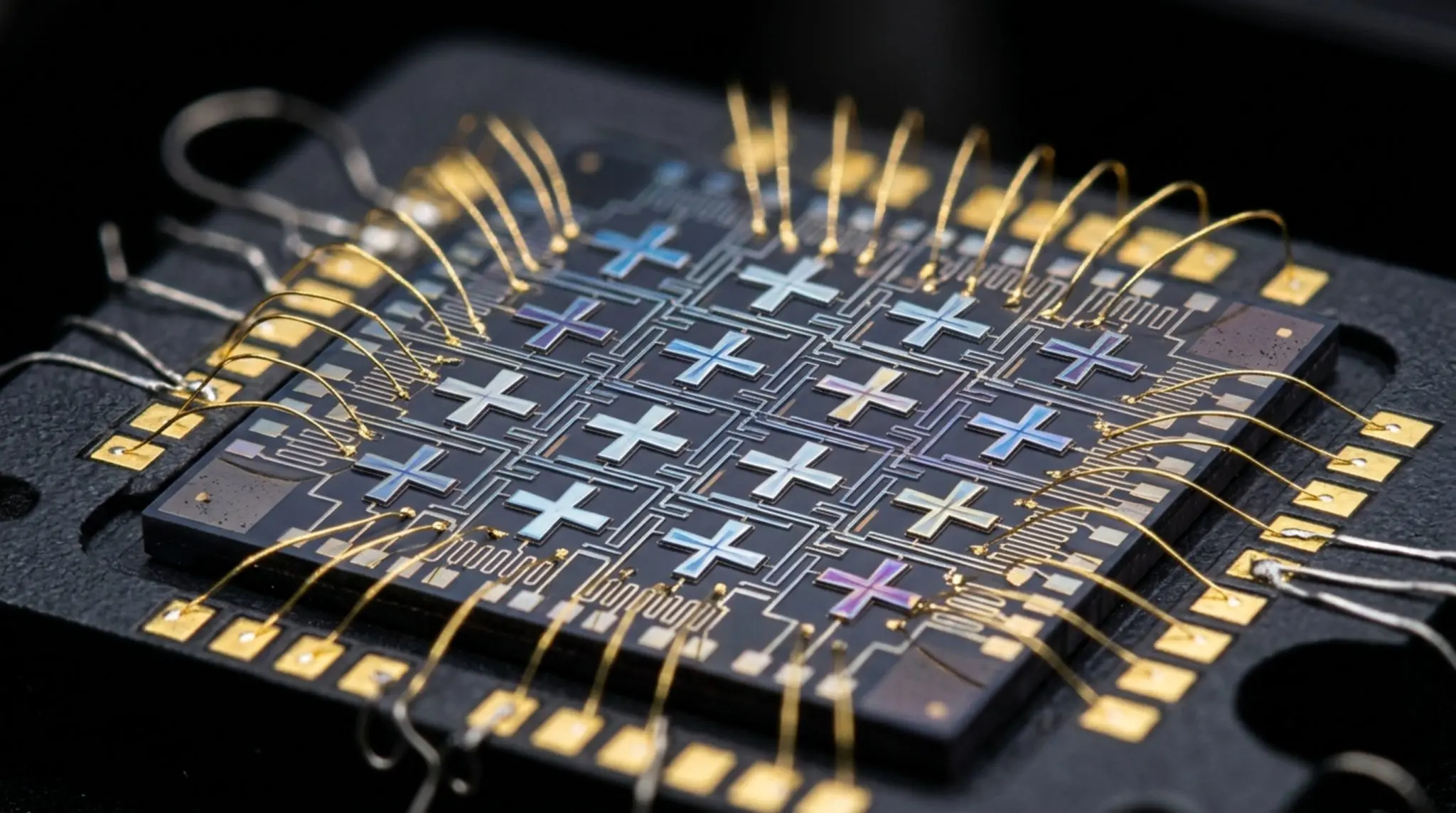
This approach contrasts with methods requiring extensive classical communication, streamlining the process for remote quantum computing tasks. The protocol’s structure avoids decryption information spreading through each gate operation on the client side, enhancing data protection during delegated computations. International Business Machines Corporation (IBM) hardware hosted a single-qubit demonstration of the CMBQC protocol, confirming its feasibility beyond theoretical models. This implementation utilized a superconducting quantum system, showcasing the protocol’s adaptability to current quantum technologies.
By decoupling encryption and decryption keys, the CMBQC protocol establishes blindness within the target operation’s Pauli equivalence class, which is an important step toward practical, secure quantum cloud services. This key decoupling, combined with the efficient verification method, positions the protocol as a viable solution for protecting sensitive quantum computations performed on remote servers.
👉 More information
🗞 Circuit-model blind quantum computation with key decoupling
✍️ Ting Xiang, Bingwen Feng and Xiaoqian Zhang
🧠 DOI: https://www.elspub.com/doi/10.55092/qr20260004




See today’s quantum computing news on Quantum Zeitgeist for the latest breakthroughs in qubits, hardware, algorithms, and industry deals.