Florida State University will establish a multi-location quantum communication testing platform after securing $2.1 million in federal Community Project Funding from the National Institute of Standards and Technology, with support from U.S. Representative Daniel Webster. The testbed will physically link the university’s Interdisciplinary Research and Commercialization Building with receiver nodes at both the FAMU-FSU College of Engineering and the National High Magnetic Field Laboratory.
Researchers plan to test quantum communication performance under conditions including strong air turbulence, high magnetic fields and cryogenic thermal cycling, moving beyond typical lab environments. “This investment gives us a platform to connect fundamental quantum science with engineering validation,” said Suvranu De, dean of the FAMU-FSU College of Engineering.
FSU Establishes Real-World Quantum Communication Testbed with Federal Funding
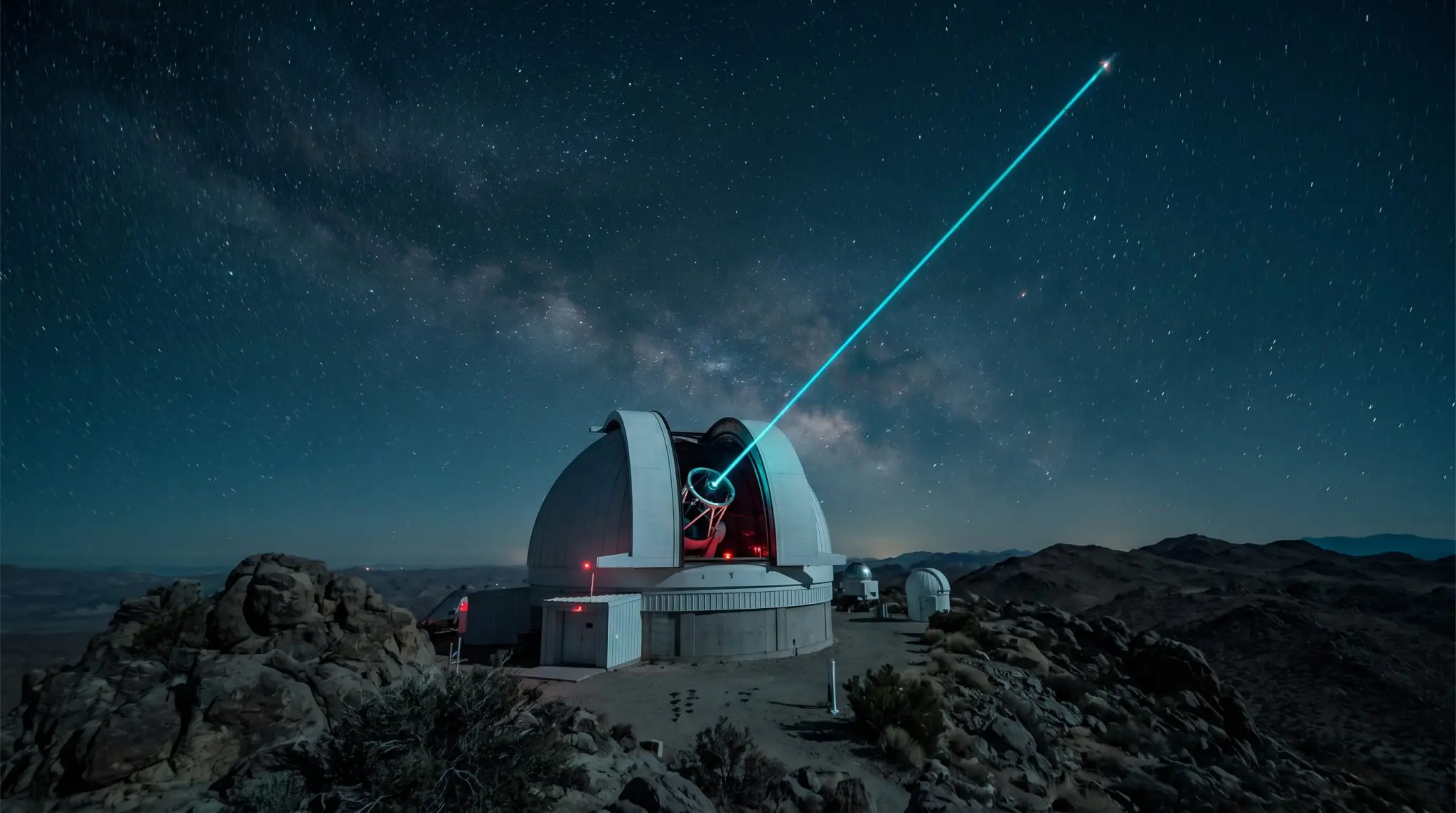
The new testbed at Florida State University will deliberately subject quantum communication links to stressors like turbulent air, intense magnetic fields and extreme temperature swings, simulating conditions beyond standard laboratory settings. This approach moves beyond simply demonstrating quantum communication in controlled environments and addresses the critical need to establish reliable performance in practical applications. Researchers will use existing campus fiber resources to transmit and monitor entangled photons, assessing link reliability and identifying areas for system improvement.
The testbed’s reconfigurable optical links will allow for controlled exposure of components to environmental stresses, providing data on performance degradation and resilience. This detailed analysis will focus on key metrics, enabling researchers to refine hardware and protocols for robust quantum networks.
Wei Guo, professor of mechanical and aerospace engineering and co-director of the FSU Quantum Initiative, emphasizes the importance of this infrastructure investment, stating, “This is an important research infrastructure investment that can support future quantum-networking activities and position FSU for larger-scale opportunities.” The project builds on FSU’s existing quantum research momentum, including the launch of the FSU Quantum Initiative in 2023 and the development of a graduate credential in quantum information science and engineering. The testbed’s design also prioritizes hands-on experience for students and researchers, providing exposure to the entire quantum-networking stack. From photon generation and detection to data analysis and network control, the facility will offer practical training in a demanding operational environment.
Co-principal investigators from the FAMU-FSU College of Engineering, including Ivan Djordjevic, Lukasz Dusanowski, Xianjing Zhou, and Jingjiao Guan will contribute to network construction and ongoing equipment maintenance. The funding will not only expand FSU’s research capabilities but also strengthen American innovation in a field critical to national security and technological competitiveness. The university’s broader efforts, including its participation in the Florida Alliance for Quantum Technology and leadership of multiple projects under the Department of Energy’s Genesis Mission demonstrate a sustained commitment to advancing quantum technologies.
The Genesis Mission projects include developing AI for real-time quantum computer diagnostics and improving understanding of atomic nuclei and other quantum systems. This investment extends beyond the immediate technical challenges of building a resilient quantum network, offering a platform for workforce development and encouraging collaborations with government, industry and other universities, bridging the gap between research and application.
The next frontier is not simply demonstrating quantum communication in an ideal laboratory, but understanding how to make these systems reliable in the environments where they will ultimately operate.
Suvranu De, dean of the FAMU-FSU College of Engineering


See today’s quantum computing news on Quantum Zeitgeist for the latest breakthroughs in qubits, hardware, algorithms, and industry deals.