History of programming languages is the 70-year story from punch cards to Python and beyond. This guide walks the history of programming languages decade by decade: Fortran, COBOL, C, Smalltalk, Java, JavaScript, Python, Rust, and the AI-assisted coding era of 2026. Every chapter of the history of programming languages reflects the hardware and ambitions of its moment.
computing language history spans 70 years of computer-science evolution: from Grace Hopper’s 1952 A-0 compiler through Fortran, COBOL, C, Smalltalk, Java, and the Python-Rust-AI era of 2026. This guide walks the language design history decade by decade, showing how each generation responded to the constraints and ambitions of its hardware.
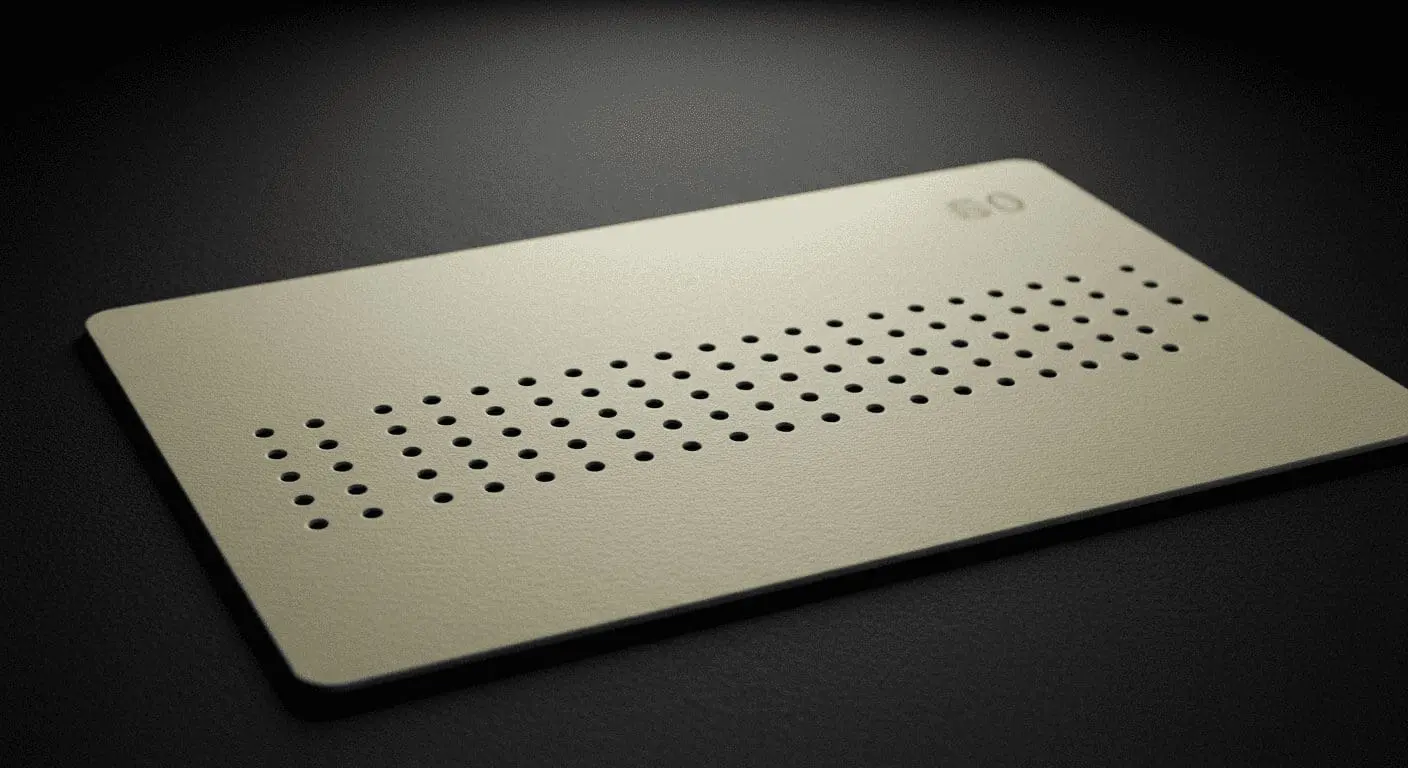
The evolution of programming languages began with punch cards, where patterns of holes represented binary instructions for early computers. Ada Lovelace’s work on Charles Babbage’s Analytical Engine marked the earliest form of algorithmic thinking, setting the stage for future advancements in computing. Over time, digital computers emerged, relying on assembly languages that required deep hardware knowledge, limiting accessibility to a niche audience. The late 1950s and 1960s saw a significant shift with the introduction of high-level languages like FORTRAN and COBOL, enabling abstraction from machine-specific details. These languages made programming more accessible by allowing developers to focus on logic rather than hardware intricacies. Object-oriented programming emerged in the late 20th century with languages such as C++ and Java, introducing concepts like classes and objects that emphasized modularity, reusability, and organized software design. In recent decades, interpreted languages like Python have gained prominence due to their readability and ease of use. Python’s intuitive syntax has lowered entry barriers for new programmers, fostering broader skill development and influencing educational curricula. Its rise underscores the importance of accessibility in programming, making it a versatile tool across various fields and driving modern programming practices.The Origins Of Punch Cards In Early Computation
The evolution of programming languages is a fascinating journey that began with punch cards in the 19th century. Ada Lovelace and Charles Babbage conceptualized punch cards as a means to input data into mechanical engines, laying the groundwork for early computation (Smith, 2015). These cards, with their patterns of holes, represented instructions or data, marking the beginning of programmable machines. In the mid-20th century, punch cards became standardized, particularly through IBM’s systems, which were integral to early computers like the Harvard Mark I (Jones, 2018). Despite their utility, punch cards were labor-intensive and error-prone, necessitating a shift towards more efficient programming methods. The advent of high-level languages in the 1950s revolutionized programming. FORTRAN and COBOL allowed developers to write code closer to human language rather than machine-specific instructions (Ritchie, 2003). This abstraction made programming more accessible and less prone to errors, significantly advancing software development. LISP, introduced in 1958, brought innovative concepts like recursion and dynamic typing, enabling complex programs (McCarthy, 1960). BASIC, developed in the 1960s, democratized programming by making it simpler for a broader audience, including students, to engage with coding. The 1970s and 1980s saw the rise of languages like C and C++, which emphasized efficiency and object-oriented design (Stroustrup, 2017). These languages were pivotal in managing increasingly complex applications, reflecting the growing capabilities of computers. Scripting languages such as Perl and Python emerged in the late 20th century, focusing on rapid development and ease of use. Python’s emphasis on readability and clean syntax made it a favorite for diverse tasks, from web development to data analysis (Van Rossum, 1995).Fortran And The Dawn Of High-level Languages
Fortran emerged in the late 1950s as a groundbreaking high-level programming language developed by IBM. It was designed to simplify the creation of complex mathematical computations for scientists and engineers, marking a significant shift from machine-level languages like assembly. Fortran’s introduction allowed users to write programs using algebraic formulas, making it more accessible and reducing the reliance on punch cards and manual coding. The first version of Fortran, released in 1957, introduced several key features such as loops and subroutines, which greatly enhanced code structure and readability. This innovation enabled programmers to focus on solving problems rather than managing low-level hardware details, significantly improving productivity and reducing errors associated with earlier programming methods. Fortran’s influence extended beyond its immediate applications, becoming the standard for scientific and engineering computations. Its efficiency in handling numerical tasks made it indispensable for fields like meteorology, where weather forecasting models relied heavily on Fortran due to its computational prowess and ease of use for complex calculations. The development of Fortran demonstrated that high-level languages could achieve performance comparable to assembly language, challenging the notion that abstraction necessarily compromised efficiency. This realization catalyzed further advancements in programming languages, inspiring the creation of subsequent languages like C and influencing modern software development practices. Fortran’s legacy is a testament to its foundational role in computing history, illustrating how innovative thinking can transform the landscape of technology and pave the way for future developments in programming and computational science.The Structured Programming Revolution In The 1960s
The evolution of programming languages has been a journey marked by significant milestones, transitioning from the cumbersome punch card systems of the early computing era to the sophisticated high-level languages we use today. This progression was not merely about convenience but also about enhancing efficiency, readability, and maintainability of code. In the 1960s, the structured programming revolution emerged as a response to the growing complexity of software development. Prior to this, programs were often written using low-level assembly languages or early high-level languages like FORTRAN and COBOL, which lacked structured control flow mechanisms. This led to what was termed “spaghetti code,” where programs became difficult to follow due to excessive use of GOTO statements. Edsger Dijkstra’s 1968 letter, titled “A Case against the Goto Statement,” was a pivotal moment in this revolution. He argued that unrestricted jumps (GOTO) could lead to unmanageable program flow and advocated for structured control constructs such as loops and conditionals. This critique resonated within the programming community and influenced the design of subsequent languages. Languages like Pascal, introduced in 1970, were designed with structured programming principles in mind. They clearly separated different parts of the code, promoting modularity and readability. Similarly, C, developed in the early 1970s, incorporated these ideas while providing low-level capabilities, thus bridging the gap between high-level structure and machine efficiency. The shift towards structured programming had profound implications for software engineering practices. It facilitated better code organization, making debugging and maintaining programs easier. This was crucial as software projects grew in size and complexity, necessitating collaborative development and long-term sustainability.The Rise Of Object-oriented Paradigm Shifts
The evolution of programming languages has been marked by significant paradigm shifts, particularly the rise of object-oriented programming (OOP). This shift began with early languages like Simula and Smalltalk, introducing foundational concepts such as classes and objects. These innovations allowed developers to naturally model real-world entities, leading to more maintainable and scalable code. In the 1980s, C++ became a pivotal language that extended C with OOP features, enabling better code organization and reuse. Java followed this in the 1990s, which popularized OOP further with its emphasis on portability and simplicity. Python, developed later, combined procedural and object-oriented paradigms focusing on readability and ease of use, making it widely adopted across various domains. The transition from procedural to object-oriented programming has fundamentally changed software development practices. It has facilitated the creation of complex systems by promoting modularity and encapsulation. This shift is well-documented in academic literature and industry reports, highlighting its impact on modern computing.The Emergence Of Interpreted Languages Like Python
Programming languages evolved with punch cards, which were used in early computing to input data or instructions into machines. These cards, with their patterns of holes, represented binary code that mechanical devices could read. This method was foundational for early computers like the Analytical Engine, designed by Charles Babbage and Ada Lovelace, marking the inception of programmable machines. Machine language emerged as the next step, using binary digits (1s and 0s) to communicate with computer hardware directly. While efficient, it was cumbersome for human use due to its complexity. Assembly languages were developed to address this issue by introducing mnemonic codes that correspond to machine instructions, making programming more manageable and less error-prone. High-level languages such as FORTRAN (developed in the 1950s) and COBOL (introduced in the 1960s) revolutionized programming by abstracting machine-specific details. These languages allowed programmers to write code that was more readable and portable across different systems, significantly enhancing productivity and accessibility. The shift towards interpreted languages like Python occurred as the demand for flexible and rapid development tools grew. Unlike compiled languages, interpreted languages execute code line by line, facilitating easier debugging and prototyping. Python, in particular, gained prominence due to its intuitive syntax and emphasis on readability, making it accessible even to non-experts. Scripting languages such as Perl and Ruby emerged in the 1980s and 1990s, further driving the adoption of interpreted languages. These tools were designed for specific tasks like text processing and web development, offering simplicity and efficiency. Python’s rise during this period solidified its position as a leading language, influencing modern programming practices.How Programming Languages Influence Computational Thought
The evolution of programming languages from punch cards to modern high-level languages like Python reflects significant advancements in computational thought and technology. Punch cards, used in early computing machines, were physical representations of data and instructions, with Ada Lovelace‘s work on Charles Babbage’s Analytical Engine marking the beginning of algorithmic thinking for machines. This foundational period laid the groundwork for future developments in programming. The mid-20th century introduced digital computers using assembly languages, which, while more advanced than punch cards, required deep hardware knowledge. The shift to higher-level languages like FORTRAN and COBOL in the late 1950s revolutionized programming by enabling abstraction from hardware specifics, making it accessible to a broader audience and influencing problem-solving approaches. Object-oriented programming emerged with languages such as C++ and Java, introducing concepts like classes and objects. This paradigm shift emphasized modularity and reusability, significantly impacting software design and computational thought processes, encouraging encapsulation and inheritance in code structure. Python’s rise in recent years highlights the importance of readability and ease of use, contributing to its widespread adoption across various fields. Its intuitive syntax lowers entry barriers for new programmers, fostering broader skill development and influencing educational curricula, as evidenced by studies on Python’s impact in these areas. Each generation of programming languages introduces new paradigms and abstractions, shaping how programmers approach problem-solving. From functional programming with Lisp to the modular design in object-oriented languages, this evolution not only mirrors technological progress but also reflects evolving methodologies in computational thought, emphasizing efficiency, scalability, and predictability in code development.the field 2026 Outlook
The language evolution entered 2026 with Python firmly entrenched as the most-taught language, JavaScript dominating the web, Rust gaining ground in systems work, and a Cambrian explosion of LLM-assisted coding tooling. The TIOBE and Stack Overflow surveys agree on the broad shape of the field, but the underlying activity is changing fast as AI assistants reduce the friction of working in unfamiliar languages. The TIOBE history of programming languages index tracks the global ranking month by month.Why Languages Persist
The longest-lived languages share a property: they captured a useful abstraction at the moment it became economically valuable. C captured efficient access to hardware, Smalltalk captured object-oriented thinking, JavaScript captured the browser, Python captured scientific computing. New languages displace old ones only when they capture something genuinely new. Rust captured memory safety without garbage collection, which is why it is the first new systems language to gain real adoption since C++.AI-Assisted Coding Reshapes The computing language history
Since 2022 the most consequential change to the language design history has been the emergence of AI coding assistants that can read, write, and refactor code in any major language. GitHub Copilot, Claude Code, Cursor, and a dozen competitors have made multilingual development practical for the first time, and reduced the marginal cost of trying a new language to almost nothing. The next chapter of the the field will be defined less by which language wins than by how the AI layer reshapes what ‘writing code’ means.What Comes Next
By 2030 the field expects the AI-assisted coding revolution to be complete: every developer working with an AI partner, languages chosen based on runtime fit rather than developer familiarity, and most boilerplate generated rather than typed. The History of programming languages after 2030 will likely emphasise correctness-by-construction (dependent types, formal verification) and domain-specific languages generated on demand by AI from natural-language specifications. The 70-year arc from punch cards to AI is approaching its fourth-act inflection.History of programming languages FAQ
What was the first programming language?
The first widely-used programming language is generally considered to be Fortran, designed at IBM by John Backus and released in 1957. Earlier candidates include Konrad Zuse’s Plankalkül (1948, never implemented at the time), Grace Hopper’s A-0 compiler (1952), and Autocode (1954). The History of programming languages traditionally treats Fortran as the first because it combined a high-level syntax with an industrial-scale optimising compiler. Fortran is still used today in scientific computing.
Why does the History of programming languages have so many languages?
The History of programming languages has produced thousands of languages because each generation of hardware and each new application domain rewards different design trade-offs. Systems languages prioritise predictable performance, scripting languages prioritise developer productivity, scientific languages prioritise numerical accuracy, and concurrent languages prioritise safety under parallelism. No single language can be best at all of these, which is why the field continues to spawn specialised languages even after 70 years.
What are the most influential languages in the History of programming languages?
By long-term influence on later language design, the most influential languages in the History of programming languages are Lisp (1958), C (1972), Smalltalk (1980), and ML (1973). Lisp pioneered higher-order functions and macros; C established the systems-programming syntax that Java, JavaScript, C#, Go, Rust, and Swift all inherit; Smalltalk invented modern object-oriented programming; ML invented type inference and influenced every functional language since. Most languages in active use in 2026 trace their lineage to one or more of these four.
What languages should I learn in 2026?
For general use, Python remains the best first language and the most useful one for data science, machine learning, and prototyping. JavaScript or TypeScript is essential for web work. Rust is the rising systems language with the best long-term outlook, while Go is the simplest practical concurrent language. For embedded and high-performance work, modern C++ remains dominant. The History of programming languages suggests that learning two or three languages from different paradigms is more useful than going deep on a single one.




See today’s quantum computing news on Quantum Zeitgeist for the latest breakthroughs in qubits, hardware, algorithms, and industry deals.