Gonzalo Camacho of the German Aerospace Center (DLR) and Benedikt Fauseweh of DLR and TU Dortmund University have proposed a new classification framework for time crystals, moving beyond existing understandings of these quantum phenomena. Their work addresses a growing diversity in time-crystalline phases, differing in both physical characteristics and how they are stabilized. The researchers review recent time crystal implementations on quantum platforms and aim to provide a unified picture of time-crystallinity as the field matures. This framework identifies promising avenues for discovering novel time-crystalline phases of matter.
Quantum Devices as Simulators for Time Crystals
Recent advances in quantum technologies are enabling detailed simulations of time crystals. Researchers have now proposed a new classification framework to organize the growing diversity of these exotic quantum phases. The proposed classification considers time crystals as realizations that are discrete, continuous, closed, open, critical, topological, quasiperiodic, and controlled, reflecting the increasing complexity researchers are encountering. This detailed categorization acknowledges that time crystals are not a monolithic entity, but rather a spectrum of behaviors arising from different quantum interactions and external controls.
The framework is intended as an organizing map of present evidence and theoretical possibilities, rather than a mutually exclusive taxonomy of phases, allowing for a more detailed understanding of these systems. Entries marked as observed may represent different levels of evidence, ranging from robust finite-time signatures on noisy devices to stronger indications of an asymptotic phase.
Quantum devices are proving essential for studying time crystals, offering a platform to move beyond theoretical models and explore experimental regimes. Trapped-ion devices are currently focused on reducing measurement times and developing scalable approaches to quantum simulation. Neutral atoms, laser cooled and entangled using Rydberg states, also present promising scalability and flexibility in qubit manipulation. These platforms allow researchers to locally address qubits or couple them in arbitrary geometries, opening avenues for complex time crystal designs.
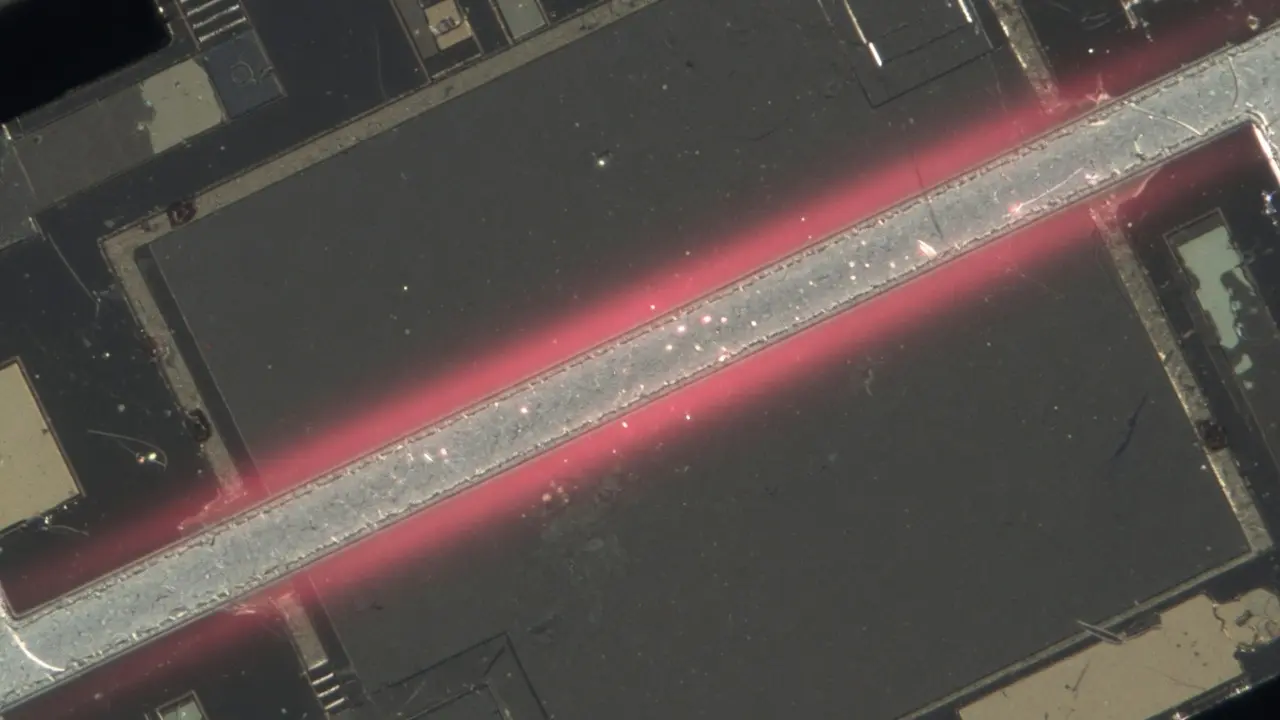
Photonic time crystals have also been realized experimentally by applying mode-locked lasers in semiconductors, building on earlier theoretical proposals. The researchers’ work also outlines the advantages and limitations of different quantum platforms for implementing time crystals, providing a guide for future experimental efforts. The classification of time crystals based on their stabilization mechanisms, including many-body localization (MBL), prethermalization, and effective chaotic tunneling (ECT), provides a systematic way to compare and contrast different approaches.
Entanglement as a Defining Feature of Quantum Time Crystals
Recent work establishes entanglement as a key characteristic distinguishing genuine quantum time crystals from those merely simulated on classical computers. Unlike classical simulations, systems requiring a description by quantum mechanical laws, and thus containing minimal entanglement, cannot be efficiently replicated by conventional computing methods. This focus on entanglement directly links the study of time crystals to the fields of quantum information theory and quantum computing, marking a shift toward using quantum devices for fundamental investigations.
A separate study reported time crystal behavior in a driven rubidium-xenon spin-maser system, where a feedback-induced retarded interaction generates a specific system response if the feedback is sufficiently strong. These implementations, alongside recent realizations of discrete time quasicrystals in nitrogen-vacancy (NV) centers, suggest a connection between stabilization mechanisms and critical time crystals. Prethermal quasicrystals have also been created using superconducting quantum circuits, expanding the range of platforms explored.
The emergence of time rondeau crystals, a new form of spatiotemporal order, has led to experimental realization on NV center quantum platforms, further diversifying time crystalline phases. “A classification of time crystals is desirable to establish a connection between the various time crystals and the available quantum devices for their implementation,” the researchers state, highlighting the growing complexity of the field.
A new classification framework aims to connect the observed diversity of time crystals with the quantum devices used to implement them. While only a few classes of time crystals have been experimentally realized to date, the expectation is that new theoretical proposals will soon be tested on these platforms.
Classification Framework for Time-Crystalline Phases
Researchers are now focused on categorizing time crystals not simply by finding them, but by detailing their characteristics and how they differ, indicating a maturation of the field beyond initial discovery. This work builds on the theoretical understanding of discrete time crystals, acknowledging an increasing diversity in their physical characteristics and the mechanisms that stabilize them. Experiments employing solid-state nuclear magnetic resonance (NMR) devices have witnessed prethermal discrete time crystals, using a crystal structure of Ca5(PO4)3F to create a quasi-one-dimensional nuclear spin ensemble driven by high-frequency periodic signals.
A unified picture of time-crystallinity remains elusive, as identifying a system as a discrete time crystal requires demonstrating a correlation between the system’s response and the applied drive; without this correlation, even with broken symmetries, the classification becomes ambiguous. This consideration suggests a more flexible classification system than the current discrete/continuous time crystal dichotomy. The framework’s utility lies in its ability to provide a systematic approach to these complex phenomena, enabling researchers to better understand and categorize the growing number of observed time crystal behaviors.
Prethermal vs. Many-Body Localization Discrete Time Crystals
Recent experiments reveal regimes beyond established paradigms. These developments call for an extended classification of time-crystalline phases according to both their stabilization mechanisms and their physical character, including discrete and continuous, closed and open, critical, topological, quasiperiodic and controlled realizations. The observation extends beyond traditional expectations for time crystal formation, suggesting a broader range of conditions under which these phases of matter can arise. A trapped-ion qudit processor recently demonstrated this prethermal discrete time crystal behavior, using a spin-1 chain where Hilbert-space localization emerges as the key stabilizing factor.
The resulting effective Hamiltonian locks initial low-temperature states into a specific symmetry sector, preserving the time-crystalline order. Beyond qubit-based systems, researchers are exploring the potential of dissipative systems to host time crystals, even though dissipation typically leads to stable steady states. Strong electric fields, for example, have been employed to induce discrete time crystal behavior via the Stark effect.
This approach, demonstrated with BEC magnon condensates, highlights the possibility of realizing time crystals in systems that are not strictly closed, expanding the range of accessible platforms. A quantum processor utilizing nitrogen-vacancy (NV) centers on carbon-13 was used to create a frequency-selective quantum sensor of time-varying AC fields, using the dynamics of the system to achieve this.
Recent investigations into NV centers on carbon-13 ordered structures suggest a connection between the stabilization mechanism and critical time crystals. Prethermal quasicrystals have also been realized on superconducting quantum circuits, demonstrating the versatility of these platforms for exploring time-crystalline phenomena.
Spontaneous Time Translation Symmetry Breaking (SτB)
The emergence of long-range order along the temporal dimension defines time crystals, systems exhibiting perpetual periodic motion distinct from the period governing their underlying equations. This allows even high-temperature initial states, which would normally disrupt the process, to display nontrivial dynamics under periodic driving. Beyond the initial focus on equilibrium conditions, researchers are now exploring mechanisms like Many-Body Localization (MBL) to stabilize time crystals. The classification of these diverse time crystal phases is becoming increasingly refined, moving beyond simple categorization.
The ability to realize prethermal time crystal behavior without spontaneous symmetry breaking highlights the complexity of these systems. This framework aims to connect observed diversity in time crystal behavior, and is critical for understanding the stabilization mechanisms at play. Quantum platforms are central to these investigations, serving as both experimental grounds and potential computing architectures.
These platforms employ digital, analog, or hybrid approaches to simulate and observe time crystal behavior, allowing for precise control and measurement of the delicate quantum states involved. The current focus on quantum devices and processors indicates a shift from purely theoretical study to active experimentation and simulation, pushing the boundaries of what is known about these exotic phases of matter. The development of a systematic approach to classifying these phases is important for guiding future research and unlocking the full potential of time crystals.
Quantum Platforms for Implementing Time Crystals
Quantum devices now serve as both experimental grounds and potential computational tools for time crystal research, moving beyond purely theoretical study. Trapped-ion devices prioritize reducing measurement times and developing scalable architectures for more complex simulations. Researchers are actively combining techniques to make use of their individual strengths. The development of a classification system for time crystals, based on stabilization mechanisms, is underway to outline both experimentally observed and theoretical cases.
Recent investigations have expanded beyond traditional discrete time crystals, revealing new forms of temporal order. Superconducting quantum circuits have demonstrated prethermal quasicrystals, while NV center platforms have realized time rondeau crystals, a newly emergent form of spatiotemporal order.
These realizations of discrete time quasicrystals and prethermal quasicrystals demonstrate the growing complexity of observed time crystal behavior. The researchers state, indicating a focus on both current findings and future possibilities. The ongoing research seeks to identify which theoretical proposals hold the strongest potential for immediate implementation on quantum devices, furthering the field’s progression toward practical applications and a deeper understanding of these exotic phases of matter.
Experimental Results: Time Crystals on Quantum Hardware
Recent experiments demonstrate time crystals realized exclusively on quantum devices, requiring a description rooted in quantum mechanical laws, and establishing a direct connection to quantum information theory and computing. These implementations necessitate minimal entanglement within both the studied system and the device itself, differentiating them from classical simulations achievable on conventional computers. Researchers deliberately excluded cases involving digitization of classical equations of motion, as those systems lack inherent entanglement and could be efficiently simulated without quantum resources.
A classification of these time crystals now considers their stabilization mechanisms, outlining both experimentally confirmed instances and those still awaiting realization. Quantum platforms currently used for simulation each present unique advantages and limitations for implementing time crystals, a topic explored in detail within the review. Current challenges are being addressed through this classification, which categorizes implementations based on how temporal order is achieved.
Many-body localized time crystals have been digitally implemented on superconducting quantum processors using a periodically kicked one-dimensional Ising chain model with random local fields. The review does not aim to provide an exhaustive theoretical introduction, but instead offers a classification of identified time crystal types and an overview of their implementation on various quantum hardware.
Researchers are also identifying unobserved cases with potential for implementation on currently available hardware, expanding the possibilities for future exploration. This work provides a broad outlook on theoretical proposals for realizing time crystals on quantum devices, assessing which approaches hold the strongest potential for near-term implementation.



See today’s quantum computing news on Quantum Zeitgeist for the latest breakthroughs in qubits, hardware, algorithms, and industry deals.