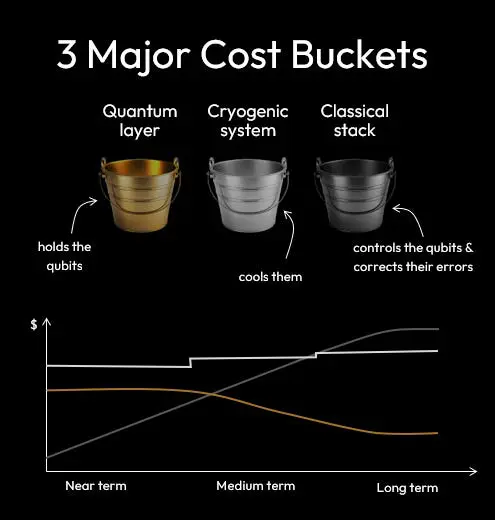
Diraq is targeting a per-qubit cost of one dollar, a figure the company believes is critical to expanding quantum computing beyond specialized labs and into widespread application. While many in the field focus on achieving “useful” quantum machines, Diraq asserts that cost is the deciding factor in determining whether the technology becomes globally accessible. Cost has been a primary focus from the beginning. Currently, the dominant expense in Diraq’s systems is cryogenics, but this is expected to shift as the company uses more of the hundreds of chips from its 300 millimeter wafer foundry runs, meaning they are not yet seeing the benefits of CMOS scaling. The company states that the math allows for a fixed cryogenic cost to be spread across millions of qubits and leverages continued semiconductor manufacturing improvements.
Diraq’s Silicon CMOS Approach to Qubit Manufacturing
Diraq is building on a foundation where cost is the primary barrier to widespread adoption; the company asserts that “cost is what decides whether quantum computing becomes a planetary-scale tool or a handful of expensive science experiments.” Unlike many developers focused solely on qubit counts, Diraq is building its platform on silicon CMOS technology, believing it is the only manufacturing base capable of delivering millions of qubits at an economically viable price point due to the inherent cost reductions offered by semiconductor scaling. Currently, Diraq utilizes 300 millimeter wafers for commercial foundry runs, though they are not yet seeing the benefits of CMOS scaling, as only a few of the hundreds of chips per wafer are employed. A key advantage lies in the operating temperature of Diraq’s qubits, which function at approximately 1 kelvin, a significantly warmer temperature than the 10, 20 millikelvin required by competing superconducting platforms.
This difference isn’t merely incremental; it fundamentally alters the cryogenic cooling requirements and associated expenses, allowing for the use of more accessible and less power-intensive helium cooling systems. “That difference alone changes the class of cryogenic cooling we need, and it’s a difference that compounds as we scale,” explains the company, highlighting the long-term implications of this thermal efficiency. While the quantum chip itself carries a cost, cryogenics currently represents the dominant expense in Diraq’s systems, a situation Diraq anticipates will change as CMOS scaling is fully realized. Looking ahead, Diraq projects a shift in cost drivers as qubit counts increase. By the early 2030s, with millions of qubits integrated onto a single chip, the primary expense will transition from cryogenics to the classical compute stack, the decoders, GPU clusters for error correction, and cryogenic electronics.
This shift is predicated on optimizing foundry runs and leveraging the semiconductor manufacturing curve, ultimately aiming for a per-qubit cost of less than one dollar. Diraq states that “per-qubit cost in this phase trends toward less than a dollar per qubit,” emphasizing that this estimate encompasses the entire system, with the qubit chip itself costing less than one cent. This approach, maintaining a consistent chip size regardless of qubit count, is central to their strategy, mirroring the trajectory of Moore’s law and facilitating integration into existing data center infrastructure.
Cryogenic Cooling: 1 Kelvin Operation & Cost Benefits
The pursuit of scalable quantum computing faces numerous hurdles, but increasingly, attention is focusing on the economic realities of building and operating these complex machines. This warmer operating temperature translates directly into lower power consumption and access to more readily available and affordable helium refrigerants, a critical advantage as systems grow. The company is initially limited by only utilizing a few of the hundreds of chips produced per wafer, which means they’re not yet seeing the benefits of CMOS scaling. However, as production is optimized, the fixed cost of cryogenics will be spread across a larger number of qubits, dramatically reducing the per-qubit expense. Looking ahead, Diraq projects a future where the cost driver shifts from cryogenics to classical compute, the supporting electronics and processing power needed to control and interpret quantum calculations. By the time millions of qubits are achieved, the cryogenic component will become a relatively fixed cost.
This projection is based on the assumption that the quantum chip itself will ultimately cost less than one cent per qubit, with the majority of expenses stemming from the supporting classical compute and networking, roughly $1,000 per logical qubit. Ultimately, Diraq believes that achieving a cost of one dollar per qubit is the crucial factor determining whether quantum computing will remain a niche scientific endeavor or become a planetary-scale tool.
At a dollar per qubit, useful quantum computing stops being a projection and becomes an economic reality.
As quantum processors increase in complexity, the challenge isn’t solely about building more qubits; it’s about managing the escalating system costs, a point Diraq emphasizes with its focus on CMOS manufacturing. Cost has been a primary focus from the beginning, and this is expected to shift as CMOS scaling is fully utilized. This trajectory, they believe, is essential for transitioning quantum computing from a niche scientific pursuit to a broadly accessible technology.
One Dollar Per Qubit: Achieving Utility Scale Quantum Computing
Achieving a commercially viable quantum computer hinges not on qubit count alone, but on drastically reducing the cost per qubit; a figure of one dollar is increasingly viewed as the key to unlocking planetary-scale quantum capabilities. While the field largely concentrates on demonstrating “useful” quantum machines, cost has been a primary focus for Diraq from the beginning, believing silicon CMOS manufacturing represents the only path to delivering millions of affordable qubits. The company’s approach centers on leveraging existing semiconductor infrastructure to drive down expenses over time, a strategy that fundamentally alters the economics of quantum computing. Currently, cryogenic systems represent the dominant expense in Diraq’s systems, despite the quantum chip itself carrying a significant cost. As qubit counts increase, the cost drivers are projected to shift.
See today’s quantum computing news on Quantum Zeitgeist for the latest breakthroughs in qubits, hardware, algorithms, and industry deals.