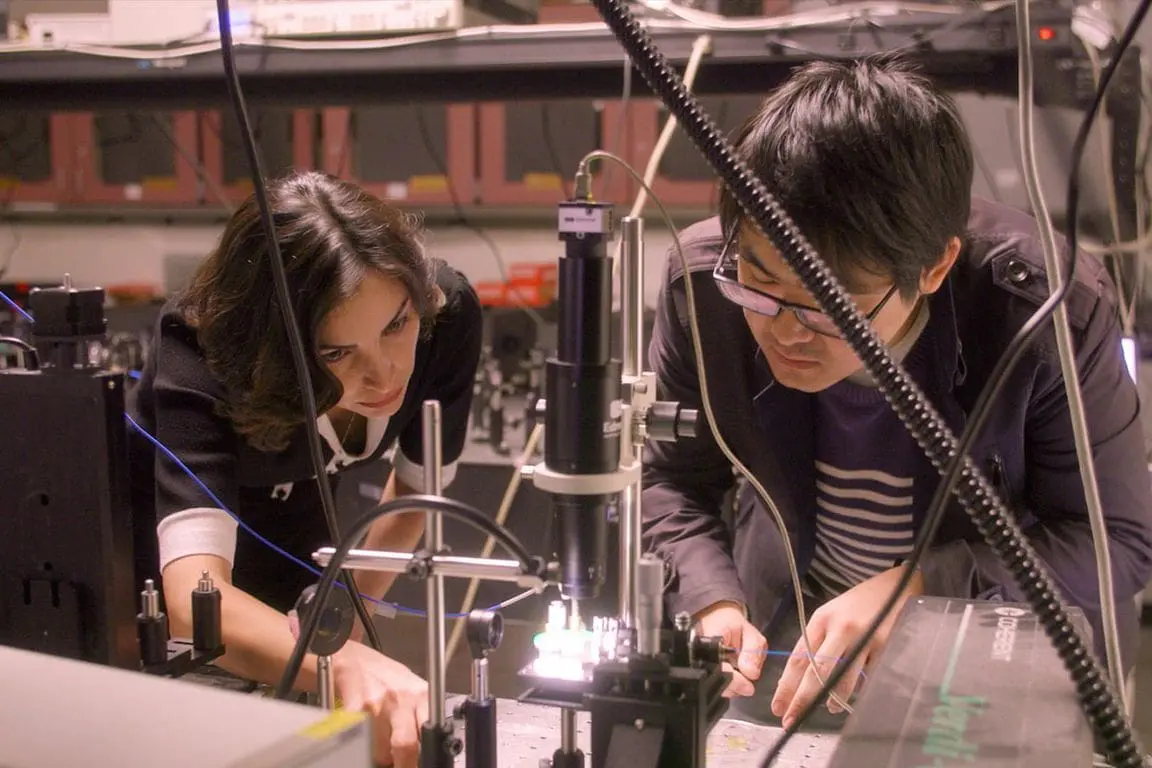
UCLA engineers have integrated the core functions of terahertz systems, generation, detection, modulation, and amplification, onto a single semiconductor chip, potentially unlocking widespread applications for this underused portion of the electromagnetic spectrum. High-frequency terahertz waves, positioned between infrared light and microwaves, hold promise for ultrafast wireless communication, security screening, and advanced imaging, but have been hampered by bulky and complex systems. The UCLA Samueli School of Engineering team achieved this miniaturization through the use of quantum well semiconductor structures, ultrathin layers engineered to control light. “Terahertz optoelectronic systems have been bulky, expensive, power-hungry and difficult to scale for widespread use,” said study leader Mona Jarrahi, a professor of electrical and computer engineering and holder of UCLA Samueli’s Northrop Grumman Chair in Electrical Engineering. “By demonstrating that many of these functions can be integrated onto a single chip using proven industry-standard fabrication platforms, our study opens the door to practical, scalable terahertz technologies for real-world applications.”
Researchers at the UCLA Samueli School of Engineering have successfully integrated these functions, overcoming the limitations of bulky, discrete components that have historically hampered widespread terahertz technology adoption. The team’s innovation centers on adapting quantum wells, already commonplace in photonic integrated circuits, to support terahertz signal generation and detection through a process called gain-enhanced interband photomixing. This technique combines two laser beams to create signals at a specific wavelength, offering a pathway to efficient terahertz production. Unlike earlier single-chip terahertz systems that relied on specialized fabrication techniques, the UCLA approach leverages existing industry-standard platforms, promising scalability and cost-effectiveness. The researchers demonstrated both efficient terahertz generation and sensitive detection using their quantum well substrates within photonic integrated circuits, surpassing the performance of existing light interference-based terahertz technologies. This advancement is particularly significant given the growing demand for photonics-based terahertz systems, which offer superior bandwidth and power efficiency compared to conventional electronics.
Terahertz optoelectronic systems have been bulky, expensive, power-hungry and difficult to scale for widespread use.
This achievement moves beyond simply miniaturizing existing components; it reimagines how these functions are created using established industry practices. The team’s approach leverages the existing infrastructure of photonic integrated circuits, mirroring the transformation of computers from room-sized machines to modern microprocessors. By demonstrating compatibility with standard fabrication platforms, the researchers suggest a pathway toward mass-producible terahertz chips for real-world applications.
By demonstrating that many of these functions can be integrated onto a single chip using proven industry-standard fabrication platforms, our study opens the door to practical, scalable terahertz technologies for real-world applications.



See today’s quantum computing news on Quantum Zeitgeist for the latest breakthroughs in qubits, hardware, algorithms, and industry deals.