Six graphene layers show superconductivity and magnetism, a new platform for quantum control

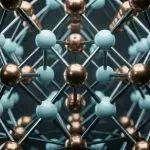
Stacking graphene into a specific six-layer structure unlocks a rare combination of superconductivity and electrically controllable orbital magnetism, researchers report in Nature Physics on October 22. Xiaomeng Liu, assistant professor of physics and colleagues achieved this by arranging the layers in a rhombohedral pattern, resembling steps in a staircase. These findings reveal how a simple carbon-based material can host a remarkably rich collection of quantum states, Liu said, and establish it as a promising platform for controlling quantum materials. Jinghao Deng, Hongyuan Li, and Jiabin Xie are co-first authors on the study.

The arrangement, involving six graphene layers each shifted slightly sideways from the one below, creates a semimetallic structure with unusual quantum properties. This configuration allows for the exploration of both superconductivity and magnetism simultaneously, a rare pairing in single materials. The discovery potentially enables new methods for controlling quantum materials, moving beyond the limitations of conventional approaches, and could lead to advances in quantum technology.

Stay current

See today’s quantum computing news on Quantum Zeitgeist for the latest breakthroughs in qubits, hardware, algorithms, and industry deals.


Avatar of Ivy Delaney

Ivy Delaney

Ivy Delaney has been working with neural networks and machine learning since the mid-nineties, back when a couple of hidden layers and a long afternoon of training counted as ambitious. She has watched the field go from academic curiosity to the thing quietly running underneath everything, and she brings that long view to quantum computing. For Quantum Zeitgeist she covers the ground where the two fields meet. That means quantum machine learning and the variational algorithms it leans on, and it also means the less glamorous but more interesting story of classical machine learning already doing real work inside quantum machines, decoding error-correcting codes, calibrating noisy hardware and learning the error models that simulators depend on. She writes about the hardware those algorithms have to run on too, and about the post-quantum cryptography scramble that the same hardware has set off. Her stories typically start with the paper, whether that is peer-reviewed work, conference proceedings or an arXiv preprint, with the source linked so you can hold a claim up against the research it came from. She is unimpressed by benchmarks that will not say what they beat, and by demonstrations that only work in the press release.

Latest Posts by Ivy Delaney: