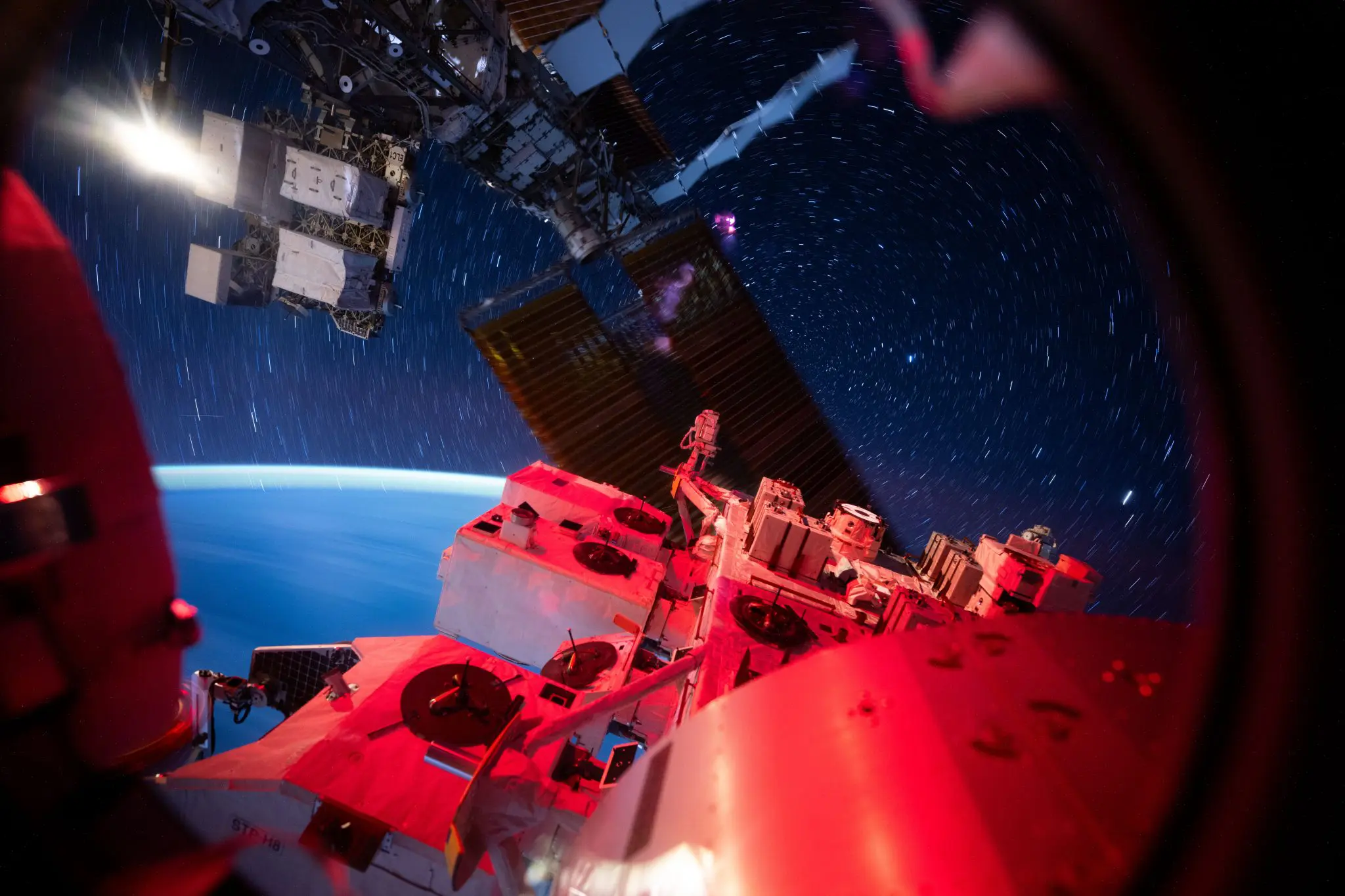
Researchers completed more than 750 investigations aboard the International Space Station in a single year, demonstrating the orbiting laboratory’s continued value for advancing both space exploration and life on Earth. Researchers used rubber bands to simulate surgical tasks, enabling evaluation of a miniature robotic system and observation of communication delays during remote operations. Results revealed that while timing delays increased procedure duration, they had minimal impact on robotic accuracy, suggesting remote surgery is more feasible in space than previously thought. This research, alongside investigations into levitating bone growth and radiation-resistant materials, advanced understanding of life in space, benefited people on Earth, and supported NASA’s exploration of the Moon and Mars.
Robotic Surgery Demonstrates Precision in Microgravity
Remote surgical capabilities are closer to reality as researchers demonstrated precision robotic operation in the unique environment of the International Space Station. NASA recently evaluated the potential for a miniaturized robotic system to perform surgical tasks in microgravity, using rubber bands to simulate surgical procedures. This allowed for observation of communication delays originating from ground control and assessment of the robotic system’s accuracy during remote operation. This is particularly significant for long-duration space missions, where immediate access to specialized surgical expertise is unavailable. The implications extend beyond space exploration, offering a compact, reliable option for performing medical procedures in remote places on Earth. This research builds upon the extensive scientific output generated aboard the ISS; in the past year alone, researchers using the orbital laboratory conducted more than 750 investigations. These investigations advanced understanding of life in space, benefited people on Earth, and supported NASA’s exploration of the Moon and Mars. The successful robotic surgery demonstration, alongside these broader research efforts, underscores the ISS’s continued value as a platform for scientific advancement and technological development.
Magnetic Levitation Advances Synthetic Bone Tissue Growth
Advancements in tissue engineering are increasingly leveraging the unique conditions of microgravity, with recent investigations aboard the International Space Station demonstrating promising results in synthetic bone tissue growth. The Roscosmos investigation used magnetic levitation to form complex tissue structures in microgravity with high precision and minimal materials. Researchers used this technique to position calcium crystals into structures that can serve as synthetic bone grafts to promote new bone growth; samples formed in microgravity showed superior structural organization and a high capacity for bone tissue regeneration. Astronauts experience bone loss in space and may face a higher risk of bone fractures during long-duration exploration missions. This research could one day allow astronauts to fabricate medical treatments on demand to address skeletal injuries far from Earth, and the ability to fabricate medical treatments on demand could revolutionize care for patients on Earth. This research could one day allow astronauts to fabricate medical treatments on demand to address skeletal injuries far from Earth, but the implications for terrestrial medicine are equally profound, offering a pathway toward personalized bone regeneration therapies.
Melanin-Infused Polymers Resist Space Radiation Damage
Materials scientists at NASA are actively investigating biologically derived compounds as a means of shielding spacecraft and astronauts from the damaging effects of space radiation, a persistent challenge for long-duration missions. Recent experiments aboard the International Space Station examined the performance of polymers infused with various types of melanin, a naturally occurring pigment known for its protective qualities against ultraviolet radiation. The research, part of the Materials International Space Station Experiment-13-NASA (MISSE-13-NASA), exposed materials to the harsh vacuum of space for six months to assess their durability. Notably, the materials infused with fungal melanin demonstrated the greatest resistance to radiation damage, surpassing other tested compounds. This finding suggests a potential pathway toward lighter, more sustainable radiation shielding, moving beyond traditional metallic solutions.
Biologically derived materials offer a lightweight, sustainable option for radiation shielding during future missions beyond Earth, with potential applications on Earth in medical protection, UV defense, and radiation-resistant structures. The implications extend beyond space travel; melanin-infused polymers could find applications in terrestrial fields such as medical protection, UV defense, and the construction of radiation-resistant structures. Researchers believe this approach offers a compelling alternative to conventional shielding, which often adds significant weight and complexity to spacecraft. The ongoing research aims to refine these biomaterials and assess their long-term performance in the demanding conditions of deep space exploration.
All Solid-State Batteries Show Stability in Long-Duration Tests
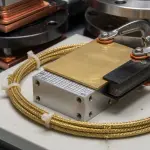
The demand for safer, more durable energy storage is driving innovation in battery technology, and recent tests aboard the International Space Station suggest all solid-state lithium ion batteries are a promising contender. A Japanese Aerospace Exploration Agency (JAXA) investigation focused on assessing the stable operation of these batteries under the harsh conditions of space, including extreme temperature fluctuations and vacuum exposure. Unlike conventional lithium ion batteries, all solid-state designs are theorized to offer a wider operating temperature range, enhanced chemical stability, and improved resistance to ignition, critical features for demanding applications. Researchers assembled a battery pack from multiple all solid-state lithium ion batteries and exposed it to space for 434 days to track performance, degradation, and radiation response. The battery pack exhibited no discernible signs of degradation and a minimal capacity loss of only 2 percent.
This level of stability is particularly significant for extended missions, where battery reliability is paramount, but also has implications for terrestrial use in extreme environments. These findings demonstrate that all solid-state batteries could provide safer, more reliable power systems for missions to the Moon and Mars, as well as for applications on Earth requiring robust energy storage.
These results demonstrate that these batteries could provide safer, more reliable power systems for missions to the Moon and Mars, as well as for use in extreme environments on Earth.


See today’s quantum computing news on Quantum Zeitgeist for the latest breakthroughs in qubits, hardware, algorithms, and industry deals.