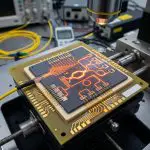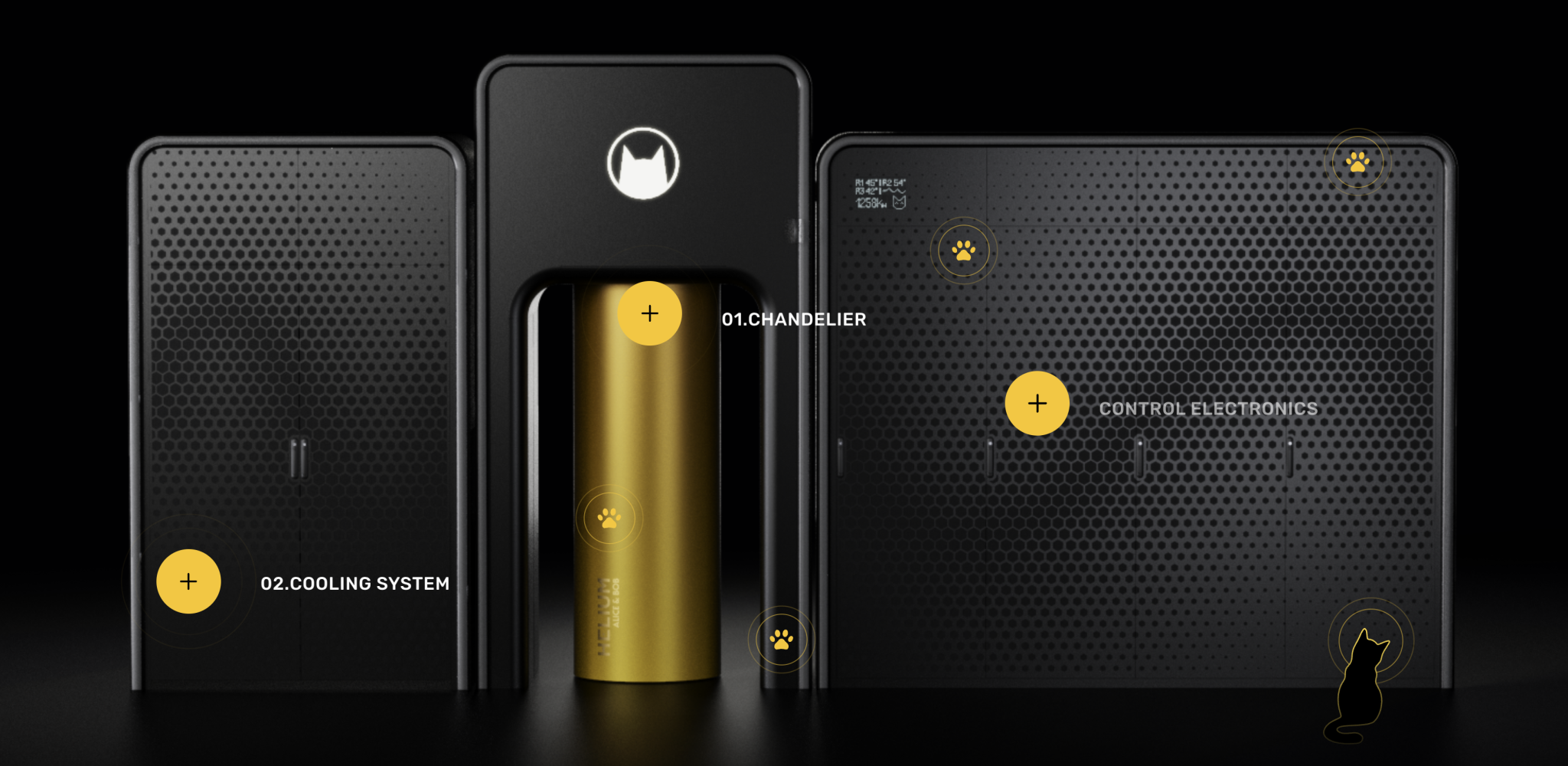
Alice & Bob has unveiled the Helium Quantum System, a complete quantum computing platform designed for on-premise deployment and marking the company’s shift from chip development to full system delivery. Engineered for efficient quantum error correction, the system encodes the company’s first logical qubit using just 18 cat-qubits, a low number compared to approaches demanding more physical qubits. “The Helium Quantum System is an important milestone on our journey, giving researchers direct access to the architecture underpinning our roadmap to universal, fault-tolerant quantum computing,” said Théau Peronnin, CEO and co-founder of Alice & Bob. The company is now inviting research partners to experiment with the system, fostering collaboration aimed at overcoming key challenges in building practical, fault-tolerant quantum computers.
Helium Quantum System: 18 Cat-Qubit Architecture for Logical Qubit Encoding
The system’s architecture encodes a single logical qubit using only 18 cat-qubits, a remarkably low number that suggests a potential advantage in efficiency compared to other quantum error correction methods, which often demand substantially more physical qubits for comparable logical encoding. This focus on minimizing qubit requirements stems from Alice & Bob’s belief that progress in quantum computing relies on developing better qubits capable of achieving fault tolerance with fewer resources; the company recently demonstrated its cat architecture could reduce hardware needs for large-scale quantum computers by up to 200 times compared to competing approaches. The Helium Quantum System is not simply a processor, but encompasses the entire computing stack, including cabling, control electronics, and software, all optimized for quantum error correction.
Designed as a modular and upgradeable platform, the system is already prepared to accommodate Alice & Bob’s 48 cat-qubit chip, which is projected to support multiple logical qubits and enhance computational capabilities. Operational efficiency is also a key design consideration, with the system consuming approximately 40 kW of power, a factor intended to lower the overall cost of deploying advanced quantum computing infrastructure, a persistent challenge within the field. This collaborative approach is supported by Starboard, a custom monitoring interface providing administrators with comprehensive visibility into the 18-cat qubit system, allowing them to visualize system behavior, monitor qubit performance, schedule workloads, and track live hardware metrics. The system’s compatibility with common high-performance computing schedulers, like Slurm, through the open-source QRMI library, and its integration with Alice & Bob’s Felis software framework, further streamlines integration with existing computing infrastructure.
The Helium Quantum System has been engineered to encode Alice & Bob’s first logical qubit with as few as 18 cat-qubits.
Théau Peronnin, CEO and co-founder of Alice & Bob




See today’s quantum computing news on Quantum Zeitgeist for the latest breakthroughs in qubits, hardware, algorithms, and industry deals.