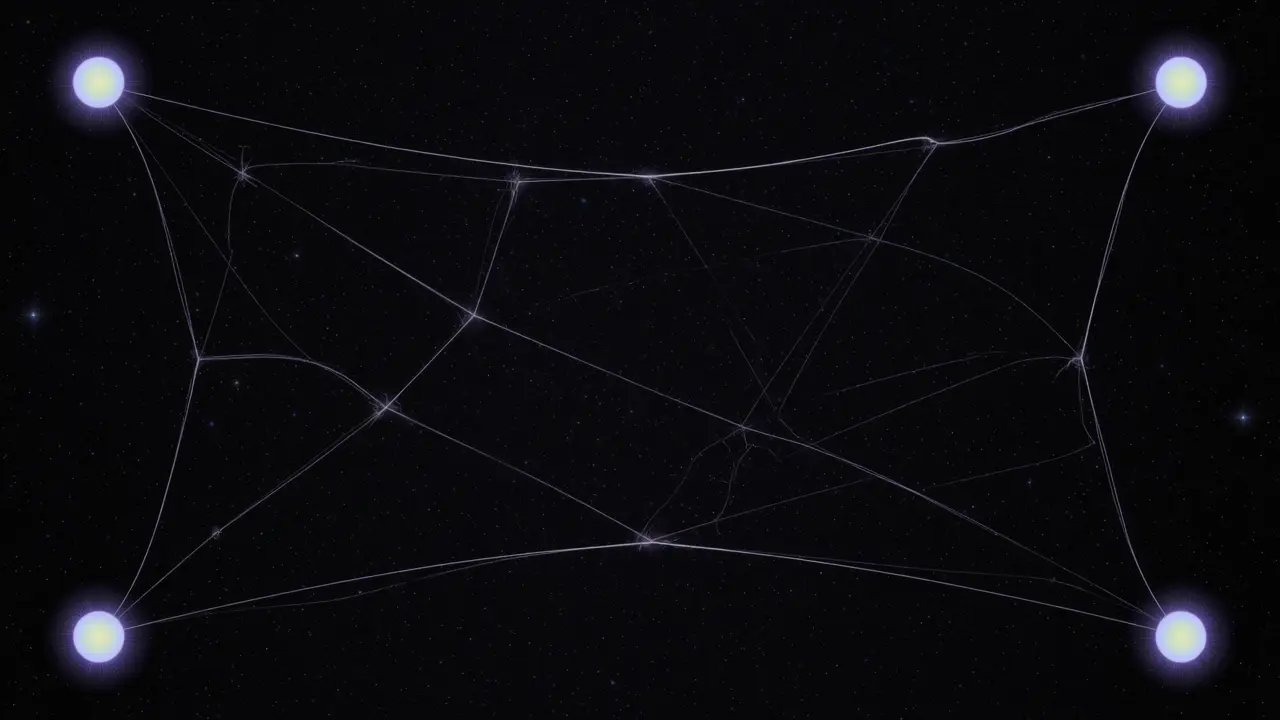
Blockchains can now shrug off the threat posed by future quantum computers. Category Labs has unveiled Quantum Cadence, a new consensus protocol for high-performance blockchains that eliminates reliance on vulnerable signature schemes; it achieves this by removing quorum certificates altogether. Instead, each validator independently verifies quorums directly from received messages. Simulations with two hundred validators demonstrate Quantum Chorus, replacing existing protocols like Chorus, offers comparable speed and improved scalability as proposer numbers increase.
Current blockchain systems use digital signatures bundled into certificates to confirm transactions, but these methods face potential attacks from powerful quantum computers. Category Labs has developed Quantum Cadence, a new system where each validator independently checks information rather than relying on these vulnerable certificates; this approach aims for greater security without compromising speed. Simulations with two hundred participants indicate it performs as well as existing fast protocols and scales effectively as network size increases.
Category Labs has unveiled Quantum Cadence, a new blockchain consensus protocol designed to withstand attacks from future quantum computers by eliminating reliance on vulnerable signature schemes. Current systems use digital signatures bundled into what can be thought of as ‘group photos’, quorum certificates, confirming enough parties agreed on a transaction; however these become problematic with larger networks and potential security breaches.
Simulations involving two hundred participants demonstrate that this approach, replacing existing protocols like Chorus with “Quantum Chorus”, offers comparable speed while improving scalability as more proposers join the network. The team is now detailing how this system functions step-by-step, including its fallback mechanisms and integration within their broader Cadence framework; but will it truly deliver quantum resistance without sacrificing performance.
Quantum Cadence enhances scalability by replacing certificate based consensus with direct quorum
Finalisation in simulations now occurs approximately 200 milliseconds after proposal broadcast, matching existing protocols like Chorus. Large certificate sizes previously limited scalability because each member required a large post-quantum signature for verification; this system allows validators to independently verify quorums directly from received messages instead, bypassing reliance on others proving agreement via signed confirmations and removing the need for potentially cumbersome data bundles.
The team integrated Coda, a signature-free Byzantine agreement mechanism, as a fallback when an initial attempt fails, enhancing durability without compromising speed or efficiency. Simulations with 200 validators show Quantum Cadence achieves latency comparable to that of Chorus while scaling better alongside increasing proposers; speculative finality is reached around 50ms earlier than in Chorus under identical conditions. Avoiding quorum certificates, bundles of signatures previously limiting scalability due to post-quantum signature size, is key to this improvement.
The design limits signatures within each slot to two votes covering all proposers, unlike Chorus where they increase with proposer count. By tracking support for proposals as data arrives rather than depending on external proof, it avoids the scalability issues caused by large certificate sizes used with current signature schemes; this approach offers significant advantages over traditional methods.
Quantum Cadence bypasses signature vulnerabilities with independent stream verification
Proactive blockchain design is now necessary given the changing march of computing power. Current systems lean heavily on digital signatures via ‘quorum certificates’ to confirm transactions, but these face existential threats from quantum computers capable of breaking existing cryptographic standards. Quantum Cadence presents a radical departure: eliminating certificate requirements altogether and allowing each validator to independently verify agreement directly from incoming message streams.
Acknowledging concerns about deploying entirely new consensus mechanisms within established ecosystems is valid, as transitioning away from well-understood signature schemes isn’t trivial. However, proactive preparation against quantum computing threats remains vital for long-term viability; this protocol avoids reliance on vulnerable digital signatures and ensures blockchain durability by eliminating certificates, validators count quorums directly from received messages. While deployment poses challenges due to its divergence from traditional methods, it offers durability beyond incremental improvements to cryptography and provides an alternative path forward without dependence on potentially compromised systems.
Quantum Cadence represents a departure from conventional protocols reliant on vulnerable signature schemes: validators independently verify agreement directly from received messages, eliminating quorum certificates altogether. The team integrated Coda, a Byzantine agreement mechanism operating without signatures, to provide durability should the primary fast path fail during operation. This new consensus mechanism promises future networks safeguarded through independent verification of incoming data streams.
Quantum Cadence is a post-quantum consensus protocol that eliminates the need for traditional quorum certificates, bundles of validator signatures, to secure blockchain transactions. This approach avoids dependence on cryptographic schemes susceptible to quantum computer attacks and maintains low latency comparable to existing systems like Chorus. The researchers also integrated Coda, a signature-free Byzantine agreement mechanism, as a backup should standard operation fail.
👉 More information
🗞 Quantum Cadence: Post-Quantum Consensus with Multiple Concurrent Proposers
✍️ Mohammad Mussadiq Jalalzai, Tobias Klenze and Jovan Komatovic
🧠 ArXiv: https://arxiv.org/abs/2610.32803


See today’s quantum computing news on Quantum Zeitgeist for the latest breakthroughs in qubits, hardware, algorithms, and industry deals.