A hypothetical cryptanalysis attack could demand 1 million exabytes of memory, thousands of times more data than currently stored in S3, which holds hundreds of exabytes as of March 2026. In cryptanalysis, the memory requirements are often the bottleneck, and not the time. For example, an attack taking time and memory would translate to approximately 1 trillion terabytes. This means a sufficiently well-funded attacker could face a memory bottleneck, even with ample processing power.
Quantum Circuit Resource Tradeoffs for ECDSA Cryptanalysis
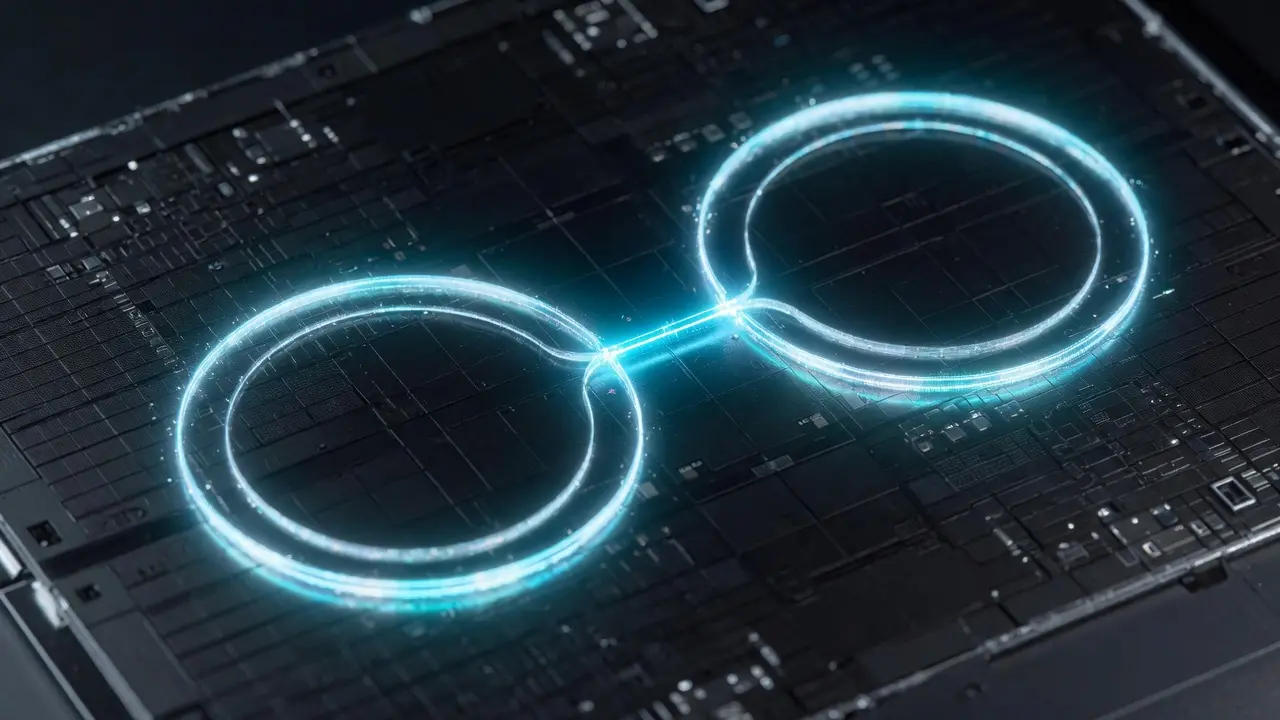
These figures highlight a critical tradeoff; minimizing qubit numbers often necessitates a substantial increase in the number of Toffoli gates, a fundamental reversible operation in quantum computation, and vice versa. The number of Toffoli gates is a proxy for computational effort, analogous to counting operations in classical computing.
The team reports that circuits currently require between approximately 800 qubits and 4,000,000 Toffoli gates, or up to 1,000 qubits and 2,000,000 Toffoli gates, demonstrating the wide range of potential configurations. These estimates, however, assume ideal, error-free logical operations, a condition that remains a significant hurdle in the development of practical quantum computers.
Amazon S3 Capacity Vastly Exceeds Quantum Memory Needs
The scale of data required to mount a cryptographically relevant attack dwarfs current storage capabilities; a hypothetical assault demanding memory equates to approximately 1 trillion terabytes. The implications extend beyond theoretical exercises, impacting practical resource allocation for organizations investing in post-quantum cryptographic migrations.
These migrations divert resources from other critical areas, and rushing the process introduces both cost and risk, according to recent analyses of timelines consistent with the White House Executive Order 14412 and European Commission recommendations. Quantum computer memory is measured in qubits, and uses the principle of superposition to exist as a blend of 0 and 1, unlike classical bits limited to a single state.
Toffoli Gates and Qubits Measure Quantum Computational Complexity
Participants in the ecdsa.fail initiative are actively seeking circuits that minimize both the number of qubits and Toffoli gates needed to compute elliptic curve point addition, a core step in Shor’s algorithm. This trade-off highlights a fundamental principle in quantum circuit design; reducing one resource often necessitates increasing the other. The gate’s reversible nature is essential for maintaining quantum coherence, but its implementation is resource intensive.
While circuit estimates often assume ideal, error-free logical operations, real-world quantum computers will require additional qubits and gates for error correction, further complicating resource allocation. “Optimizing a quantum computation involves reducing the number of qubits and/or the number of Toffoli gates,” according to the research, and finding the optimal balance remains a central challenge in the field.
The smallest circuit discovered to date uses 660 qubits, but the sheer volume of 500 million Toffoli gates emphasises a critical point about quantum computational complexity. Reducing the gate count to approximately 1,000,000 requires an increase to around 1,500 qubits, demonstrating the inherent tension between these two parameters.
Logical Qubit Stability Defines Cryptographically-Relevant Quantum Computers
Demonstrating a decrease in error rate with increased physical qubit count, Google’s 2024 Willow experiment marked a critical step toward stable logical qubits, though current quantum computers remain distant from cryptographic relevance. While tens of encoded logical qubits have been demonstrated by other groups, direct comparisons are complicated by differing methodologies in error rates, logical operations, error-correction rounds, and data filtering. These variations highlight the difficulty in establishing a universal benchmark for assessing progress toward cryptographically-relevant quantum computing.
The central challenge in building these machines lies in achieving sufficiently low error rates and robust error correction to maintain stable, correct logical qubits throughout a computation. Error correction encodes a logical qubit across multiple physical qubits, requiring continuous detection and correction of errors. The remaining error rate must be low enough to ensure computational success.
This pursuit is not merely academic, as organizations face difficult decisions regarding resource allocation between immediate cybersecurity threats and long-term post-quantum migration strategies. Determining appropriate funding priorities is complicated by the lack of a clear timeline for when a cryptographically-relevant quantum computer will be built. The ambiguity surrounding timelines forces difficult trade-offs, such as prioritizing deepfake prevention versus preparing for quantum-enabled code breaking. A cryptographically-relevant quantum computer is defined as a machine capable of supporting the number of logical qubits needed to break current cryptographic schemes, like running Shor’s algorithm against elliptic curve cryptography.



See today’s quantum computing news on Quantum Zeitgeist for the latest breakthroughs in qubits, hardware, algorithms, and industry deals.