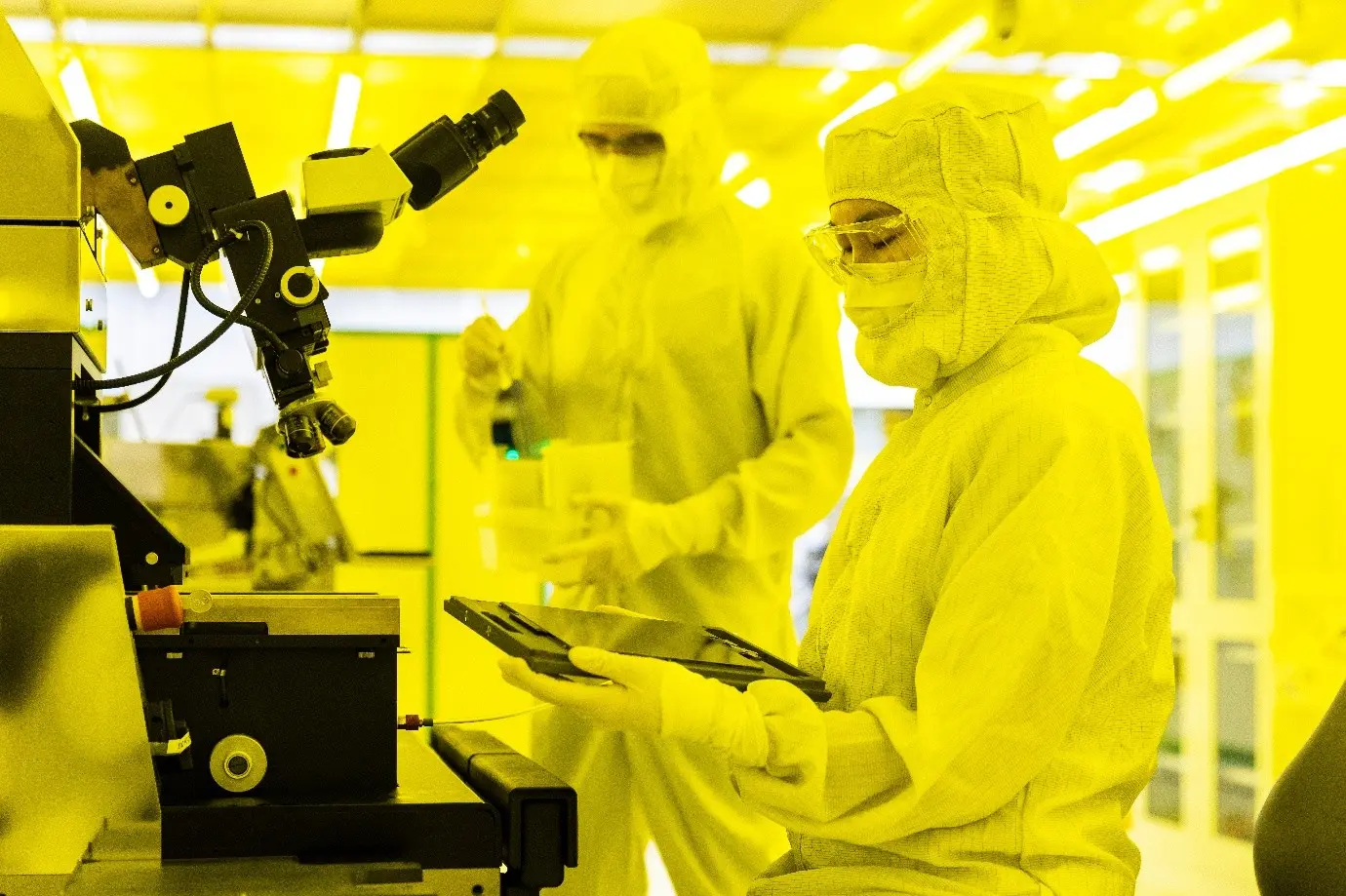
Aalborg University will be among the first engineering universities in Europe to offer students hands-on experience with a quantum computer, with delivery and installation expected in 2027. Unlike many institutions focusing on scientific applications, Aalborg University intends to use the technology primarily for teaching purposes, educating engineers to build future quantum systems.
“We do not look at the quantum computer from the perspective of a physicist or mathematician, but from that of an engineer,” says Professor Rafal Wisniewski of the Department of Electronic Systems. The university aims to translate classroom learning into practical advancements in areas like energy and materials.
Aalborg University’s 2027 Quantum Computer Implementation
Aalborg University’s quantum computer, slated for delivery and installation in 2027, will integrate a control system designed to give students direct experience manipulating qubits and extracting information. This focus on practical application distinguishes the university’s approach, prioritizing hands-on learning over purely theoretical exploration of quantum phenomena.
Itamar Sivan, CEO and co-founder of, explains that the next generation of quantum engineers requires more than just theoretical knowledge. They must also master the control and readout of qubits, a skill this system aims to cultivate. The university’s investment extends beyond the quantum processor itself, incorporating cryogenic infrastructure to maintain the extremely low temperatures necessary for qubit operation.
Mikko Nurminen, Chief Sales Officer at, emphasizes the growing need for individuals with practical experience in quantum hardware as the technology transitions from research labs to real-world applications. “Plug’N’Teach gives Aalborg University’s students and researchers that experience, and we are proud to provide the cryogenic infrastructure that makes it possible,” Nurminen stated. Professor Rafal Wisniewski notes that Denmark’s future engineers require access to physical hardware during their studies to fully grasp the technology and translate experiments into practical applications.
This emphasis on engineering applications is deliberate; the university intends to contribute to the development of future quantum computers by focusing on component miniaturization and energy efficiency. “At the time, no one had foreseen the full potential of satellites,” Wisniewski observed, drawing a parallel between the current stage of quantum computing and the early days of space exploration.
“Investing in quantum computing is a bold move because, while expectations for quantum technology are currently high, it has yet to make a significant impact in the real world. We are still at the very beginning of the process of turning the promises of quantum technology into reality.” While the quantum computer will also support research in areas like energy, materials science and the green transition, its primary function remains educational.
The university’s approach differs from institutions prioritizing quantum computing for applications like vaccine development or artificial intelligence training, instead concentrating on the foundational skills needed to advance the field itself. Wisniewski added, outlining the potential for quantum computing to address increasingly challenging computational tasks.
Denmark’s future engineers need access to the physical hardware while they are still studying. Our students and researchers will gain a better understanding of the technology, enabling us to take quantum technology out of the laboratory and put it to use in the real world.
Rafal Wisniewski, Professor at the Department of Electronic Systems at Aalborg University
Engineering Focus Distinguishes AAU’s Quantum Computing Approach
The university’s approach diverges from those prioritizing applications in fields like vaccine development, artificial intelligence, or nuclear physics, instead centering on educational purposes and the development of quantum hardware components. This unique focus stems from a distinctly engineering perspective on quantum computing, as articulated by Rafal Wisniewski. This emphasis on practical application extends to research areas such as energy, materials science and the broader green transition, where quantum computing may offer solutions to complex computational challenges.
Wisniewski explained the potential for quantum technology to address increasingly demanding calculations. The quantum computer itself will initially be delivered with two qubits but will subsequently be expanded to seven, and requires cooling to approximately minus 273°C, near absolute zero, to maintain stability. Most of the facility will therefore be dedicated to the complex cooling equipment, electronics, and shielding necessary to isolate the qubits from external disturbances.
At the time, no one had foreseen the full potential of satellites. Investing in quantum computing is a bold move because, while expectations for quantum technology are currently high, it has yet to make a significant impact in the real world. We are still at the very beginning of the process of turning the promises of quantum technology into reality.
Rafal Wisniewski, Professor at the Department of Electronic Systems at Aalborg University


See today’s quantum computing news on Quantum Zeitgeist for the latest breakthroughs in qubits, hardware, algorithms, and industry deals.