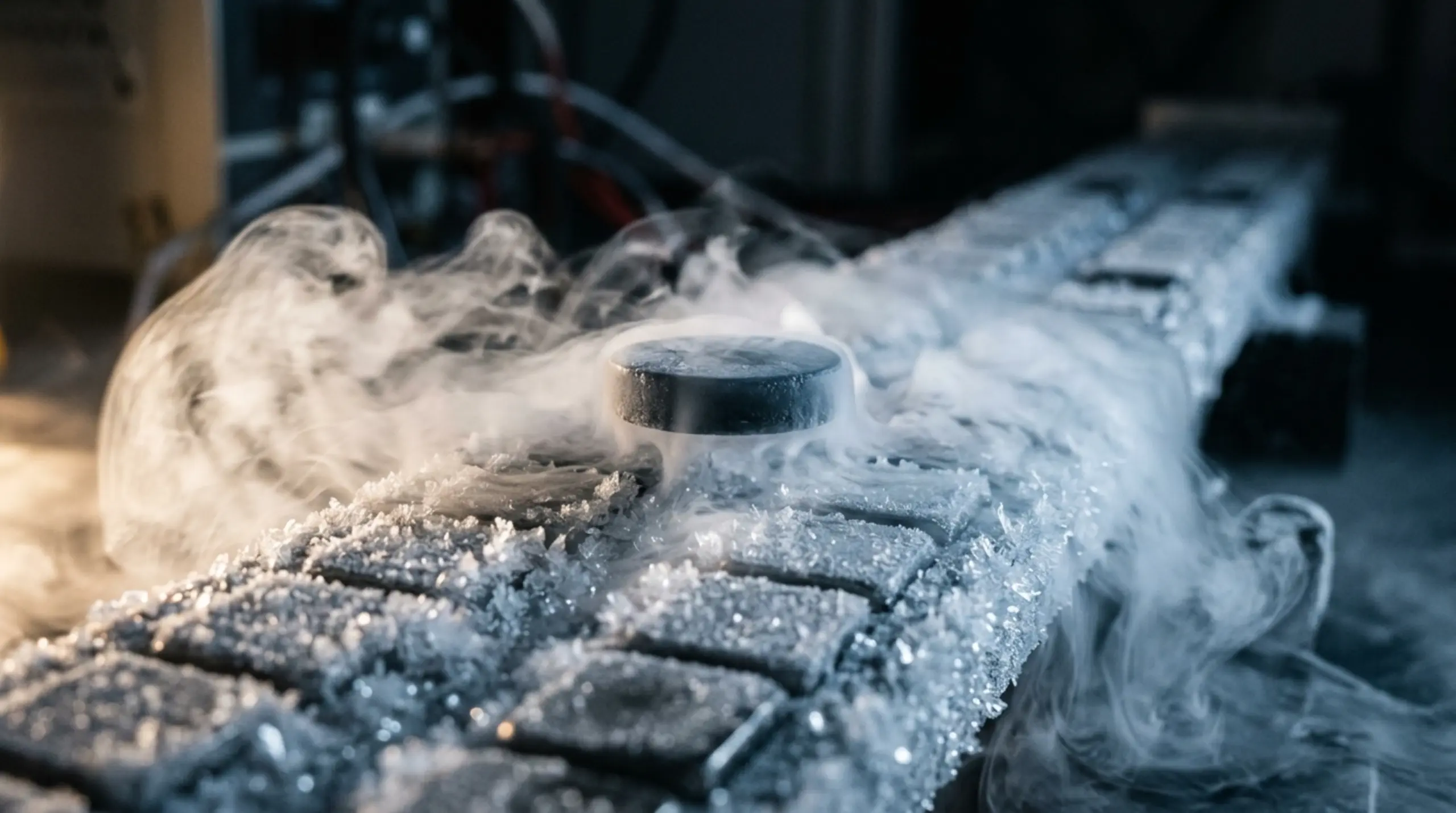
Since 1911, scientists have discovered thousands of superconductors, yet few have become commercial wire. SuperMatics, a Berkeley company, is applying artificial intelligence to bridge this gap by predicting material properties and simulating manufacturable wire for applications like data centers and fusion energy, the company says. The International Energy Agency expects data center electricity use to more than double by 2030, intensifying the need for efficient power delivery. “Records make headlines, but wires change industries,” said Davis Rens, Co-founder of SuperMatics and a former quantum engineer at Rigetti Computing.
AI Predicts Manufacturable Superconductors Using Modulated Electron Lattice Framework
SuperMatics employs a Modulated Electron Lattice (MEL) framework within its artificial intelligence to predict materials suitable for manufacturing into wire, moving beyond simply discovering new superconductors. This approach addresses a longstanding bottleneck in the field, where thousands of superconducting materials have been identified since 1911. But only a limited number have transitioned into commercially viable products. The company’s AI agents predict material properties and generate synthesis recipes, also simulating the performance of the resulting wire or device. This methodology differs from traditional materials discovery by prioritizing manufacturability from the initial design phase.
Candidates predicted by the AI are synthesized and tested in collaboration with researchers at UC Berkeley and Georgia Tech, creating a closed-loop system where experimental results continuously refine the AI models. This iterative process includes analyzing failures, a critical component often overlooked in conventional research. Focusing on practical application is increasingly vital given the escalating energy demands of emerging technologies; the next breakthrough is not the highest temperature on paper.
SuperMatics is currently engaging with global materials and technology companies to explore joint development programs for existing high-temperature superconductors while simultaneously building a pipeline of novel materials, according to the company. CEO Charlie Moon leads the company alongside co-founder Dr. Jaehwahn Kim, who brings 25 years of experience in superconductivity as Hyunsung T&C’s CTO. The company’s multimodal foundation models are designed to predict properties, write synthesis recipes and simulate the finished wire or device, ultimately aiming to accelerate the transition from discovery to industrial application.
Records make headlines, but wires change industries.
Davis Rens, Co-founder of SuperMatics and a former quantum engineer at Rigetti Computing


See today’s quantum computing news on Quantum Zeitgeist for the latest breakthroughs in qubits, hardware, algorithms, and industry deals.