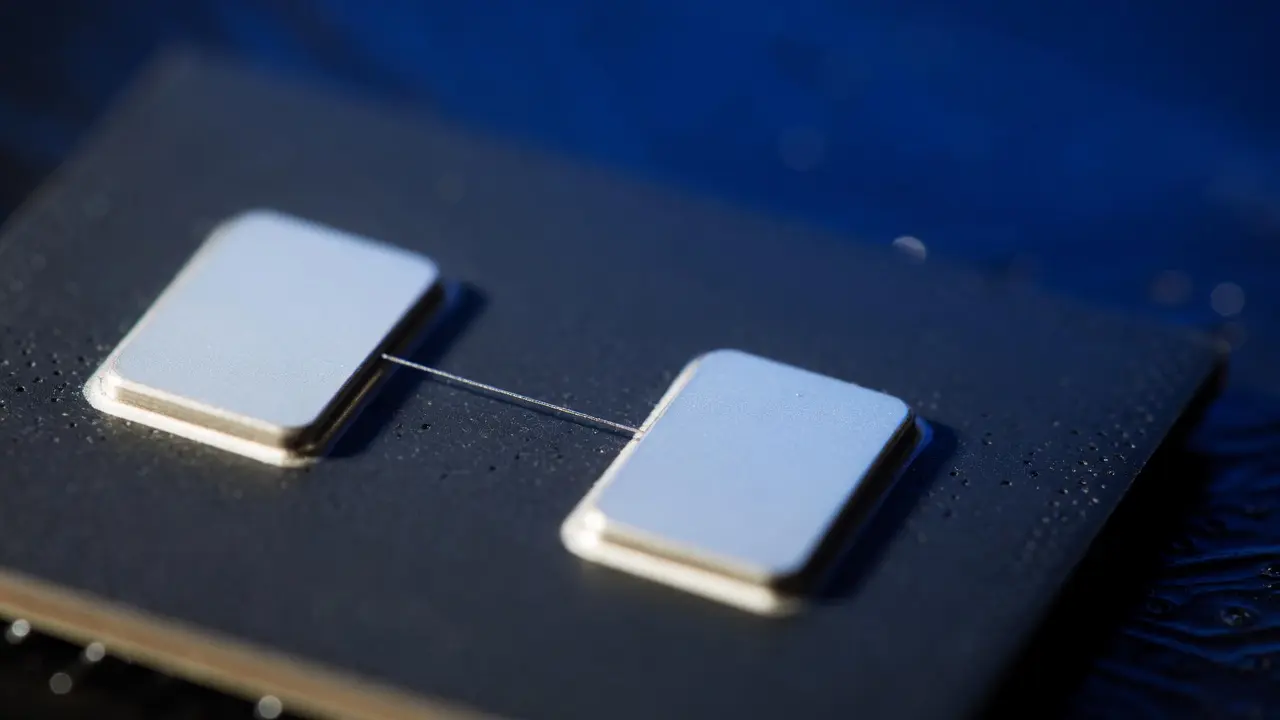
Achieving universal quantum gate sets previously demanded compromises between operating temperature and control fidelity; leading implementations operated at room temperature. High-fidelity universal quantum gates now operate within a cryogenic atom array of caesium atoms, achieving single-qubit operations at 99.970 ±0.002% and two-qubit entangling gates at 99.76 ±0.08%. Highly accurate quantum gates are created using neutral caesium atoms cooled to extremely low temperatures, overcoming a longstanding challenge in building more effective systems.
Operating at cryogenic levels sharply reduces unwanted errors caused by environmental noise, resulting in single-qubit operations exceeding 99.97% accuracy and two-qubit interactions above 99.76%. This approach demonstrates that cooling can improve performance without requiring fundamentally different hardware designs for future quantum computers.
The team from Princeton University achieved high-fidelity quantum gates using individual caesium atoms cooled to extremely low temperatures; this represents a step towards building more effective quantum computers.
A key element of their approach involves harnessing Rydberg interactions, exciting an atom temporarily allows strong interaction with neighbours for complex calculations, but these are typically hampered by unwanted disturbances akin to static on a radio signal. Their success demonstrates that cooling can improve performance without fundamentally altering hardware designs; the gate speed, or Rabi frequency, operated like quickly flipping a switch controlling information flow. But how will this improved control translate into more complex quantum computations.
High Fidelity Quantum Gates Enabled By Suppressed Blackbody Radiation
Single-qubit gate fidelity exceeded 99.97%, marking substantial improvement over previous benchmarks; achieving such precision was previously impossible because environmental noise shortened qubit lifespans. A team at Princeton University demonstrated universal quantum gates using a cryogenically cooled caesium atom array, overcoming longstanding challenges in maintaining atomic coherence despite restricted optical access within their experimental apparatus. This success hinged on suppressing blackbody radiation, disruptive to excited states crucial for calculations, allowing Rydberg interactions, where atoms temporarily gain enhanced interaction with neighbours, to be used more effectively.
Using caesium atoms, the Princeton University team achieved a raw two-qubit entangling-gate fidelity of 99.76 ±0.08%; this accomplishment stemmed from employing direct single-photon coupling between ground and Rydberg states, avoiding complications found in typical two-photon excitation methods. The gate operated at a Rabi frequency of 2π × 4.3MHz, demonstrating effective control despite restricted optical access within their cryogenically cooled apparatus.
Analysis revealed that fundamental error stemming from excited state decay during interactions remained below 3x 10⁻⁴; currently atomic motion is the primary limitation to further improvements through enhanced cooling techniques. Suppressing blackbody radiation induced transitions, which disrupt calculations, by more than an order of magnitude compared to room temperature experiments was also achieved with this cryogenic setup, though these numbers do not yet reflect fully scalable systems or demonstrate coherence across many qubits needed for complex computations.
Cryogenic Cooling Confirms Decoherence Mitigation Despite Scalability Challenges
The team’s results match current room-temperature gate fidelities, a remarkable feat given the challenges of cryogenic operation, but true potential lies in pushing beyond this benchmark. A vital question remains regarding scalability; these high numbers are based on “raw” two qubit fidelity which doesn’t account for all error sources present when building larger quantum processors with many qubits working together.
These impressive figures represent “raw” two-qubit fidelity, a measure that doesn’t fully reflect errors accumulating in larger systems with many interacting qubits, and remain a key hurdle for practical quantum computers.
Individual caesium atoms cooled to extremely low temperatures were used by Princeton University scientists and colleagues to demonstrate a universal set of quantum gates, validating cooling as an effective strategy to combat decoherence, the loss of quantum information due to environmental noise.
Researchers successfully demonstrated a universal set of quantum gates using arrays of 133Cs atoms cooled to cryogenic temperatures, achieving single-qubit gate fidelity of 99.970 ±0.002% and two-qubit entangling-gate fidelity of 99.76 ±0.08%. This work confirms that reducing blackbody radiation through cryogenics can suppress errors caused by Rydberg atom decay, currently below 3times10-4. The direct coupling method used for the entangling gate at a Rabi frequency of $2πtimes4.3$ MHz offers an alternative approach to existing techniques; current limitations are primarily due to atomic motion, suggesting improvements with enhanced cooling methods.
👉 More information
🗞 High-Fidelity Universal Quantum Gates in a Cryogenic Atom Array
✍️ Junlan Jin, Donghyuk Seo, Yue Shi, Yukai Lu, Jeff D. Thompson and Waseem S. Bakr (Princeton University)
🧠 ArXiv: https://arxiv.org/abs/2610.40329




See today’s quantum computing news on Quantum Zeitgeist for the latest breakthroughs in qubits, hardware, algorithms, and industry deals.